What's actually in this tuna and salmon recipe?
What makes this grain free fish dog food different from a chicken or beef recipe?
Fish replaces the usual land-animal protein. This recipe is built on tuna and salmon at 50% of the ingredients, with sweet potato (24%) taking the place of grains. It is described as a low-fat recipe suitable for dogs with grain intolerance or sensitivity.
How much tuna and salmon is in the bag?
Tuna and salmon together make up 50% of the recipe, including 26% freshly prepared tuna, 19% dried salmon, 3% salmon oil and 2% salmon stock. The label highlights the freshly prepared tuna as a responsibly sourced, highly digestible protein source.
Why is broccoli in dog food?
Broccoli appears at 0.3% and is described as a good source of fibre with a range of vitamins and minerals. It is a small inclusion, so treat it as a supporting ingredient rather than the main event.
Does this recipe contain artificial colours or preservatives?
No added artificial colours or preservatives. The food is naturally preserved using rosemary extract.
Label facts behind the fish-first recipe
-
Grain Free Dog Food - Tuna with Salmon, Sweet Potato & Broccoli: Tuna & Salmon 50% (including Freshly Prepared Tuna 26%, Dried Salmon 19%, Salmon Oil 3% & Salmon Stock 2%) Shows fish is the primary protein source, not a flavouring, which matters if you are choosing a fish based diet deliberately.
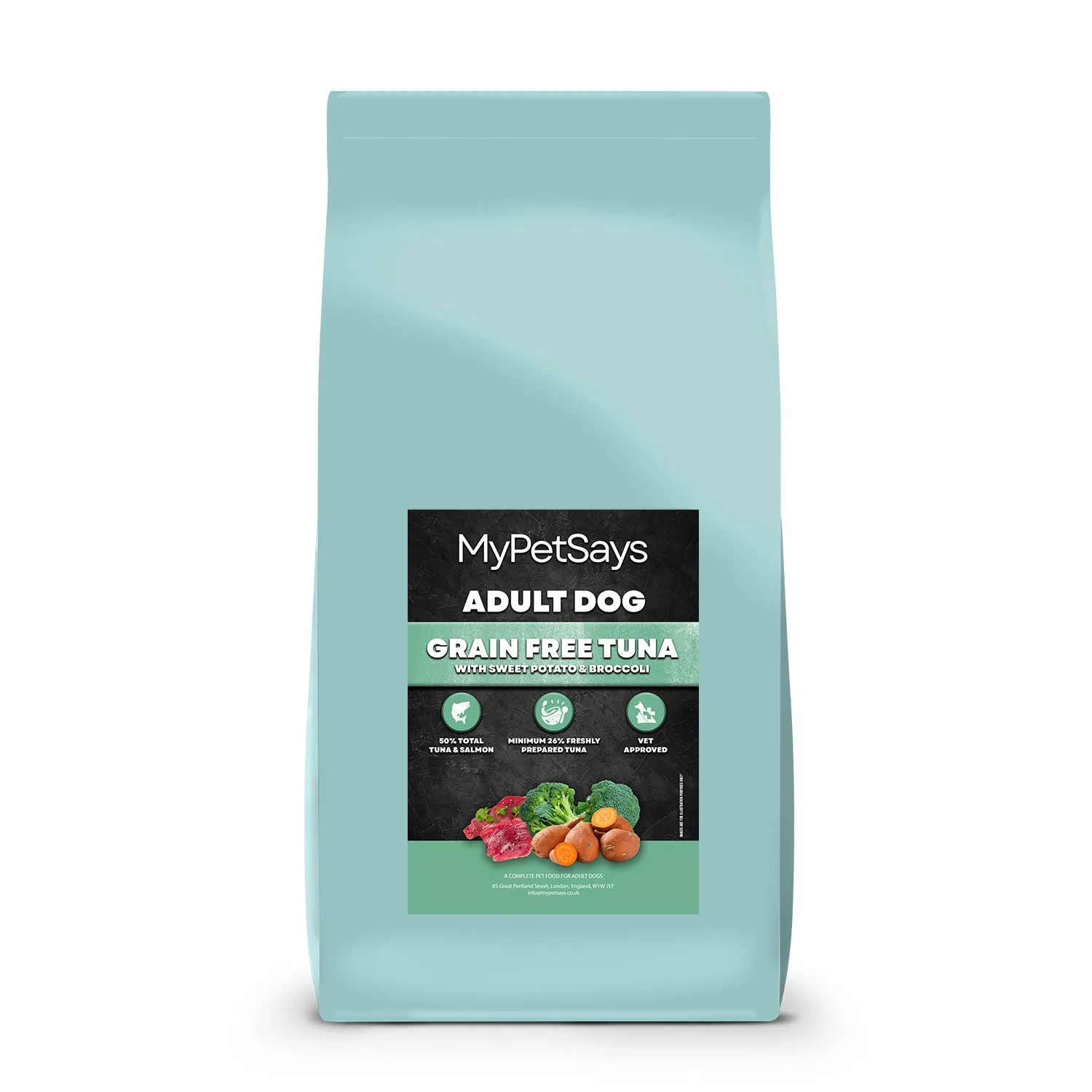
Grain Free Dog Food - Tuna with Salmon, Sweet Potato & Broccoli
-
Grain Free Dog Food - Tuna with Salmon, Sweet Potato & Broccoli: Analytical constituents: Crude Protein 26%, Crude Fat 10%, Crude Fibre 3%, Omega 3 2.6% The 10% fat is on the lower side, and the omega 3 figure reflects the salmon oil and fish content.
-
Grain Free Dog Food - Tuna with Salmon, Sweet Potato & Broccoli: Sweet Potato (24%), Potato, Peas (9%) Sweet potato and potato replace grains as the carbohydrate base, which is the point of a grain free recipe.
-
Grain Free Dog Food - Tuna with Salmon, Sweet Potato & Broccoli: Metabolisable Energy 352 kcal/100g Gives you a reference point if your vet or weight plan uses calorie counting, without guessing at portion sizes.
Fish, allergies and everyday feeding questions
Is fish good for dogs with allergies?
Fish can be a useful alternative protein for dogs that react to chicken, beef or grains, but food sensitivity is individual. This recipe is described as suitable for dogs with grain intolerance or sensitivity and contains no grains, but it is not a veterinary hypoallergenic diet. If your dog has a diagnosed allergy, confirm the recipe with your vet before switching.
What are the benefits of a fish based dog food?
The label highlights omega 3 fatty acids from tuna and salmon oil to support healthy skin and coat, plus B vitamins and minerals from tuna. It also includes prebiotics MOS and FOS, described as helping promote healthy gut bacteria and aid digestion.
Can I feed this to a dog that is sensitive to chicken?
The recipe uses tuna and salmon as its animal protein sources, so chicken is not part of the named ingredients. That said, the supplied information does not confirm the manufacturing environment, so if your dog's sensitivity is severe, check with the brand or your vet before relying on it.
Is this food low fat enough for a dog that needs to lose weight?
At 10% crude fat it is described as a low-fat recipe, but the bag does not supply feeding amounts for weight loss. Use the 352 kcal/100g figure with your vet's portion guidance rather than guessing.
Switching your dog to a fish-based food
A sudden change of protein and carbohydrate base is a common cause of loose stools. The supplied information does not include a manufacturer transition schedule, so the sensible approach is a gradual swap over roughly a week, watching your dog's digestion as you go.
- Days 1–2: Most of the old food, a small spoon of the new tuna and salmon recipe mixed through.
- Days 3–4: Roughly half and half, keeping an eye on stool quality and appetite.
- Days 5–6: Mostly the new food, with a little of the old to finish the bag.
- Day 7 onward: Fully on the new recipe if digestion has stayed settled. Slow down if it has not.
Bag sizes and the Working Dog label
What sizes does this recipe come in?
Four options: 6kg, 12kg, 13.5kg and 27kg.
Why are the 13.5kg and 27kg bags labelled Working Dog?
The larger two sizes carry a Working Dog label and come in a different bag. The composition and kibble size are exactly the same as the other sizes, so you are not buying a different recipe.
Which size should I start with?
If you are trying fish for the first time, the 6kg bag limits how much you commit before you know whether your dog accepts it. If fish is already a proven fit, the 12kg or larger bags reduce how often you reorder.
Product facts for this decision
- Grain Free Dog Food - Tuna with Salmon, Sweet Potato & Broccoli: Grain Free Dog Food - Tuna with Salmon, Sweet Potato & Broccoli, available in 6kg, 12kg, 13.5kg - Working Dog and 27kg - Working Dog Confirms the sizes and that the Working Dog bags share the same composition and kibble size.
- Grain Free Dog Food - Tuna with Salmon, Sweet Potato & Broccoli: Naturally preserved using rosemary extract, with no added artificial colours or preservatives Relevant if you are moving away from heavily preserved foods as part of the same change.