The honest starting point for this comparison
Turkey tail and shiitake extracts are often marketed with sweeping wellness claims, but the supplied product records for both are thin on the details that matter most for a buying decision: no ingredient standardization, no serving instructions, no safety or compatibility evidence, and no preparation guidance. That doesn't make either product bad — it means the label in your hand, not this article, has to carry the deciding information.
What the records do give you is a clear picture of format and stated positioning. Use that to narrow the field, then check the bottle before you commit.
What the turkey tail record actually confirms
-
NeoGenesis Health - Turkey Tail Mushroom Extract (60 Caps): NeoGenesis Health - Turkey Tail Mushroom Extract comes as 60 capsules; the bottle contents are listed simply as 60 turkey tail extract capsules. This is the concrete format fact: a 60-count capsule bottle, which lets you compare supply size against the shiitake option.
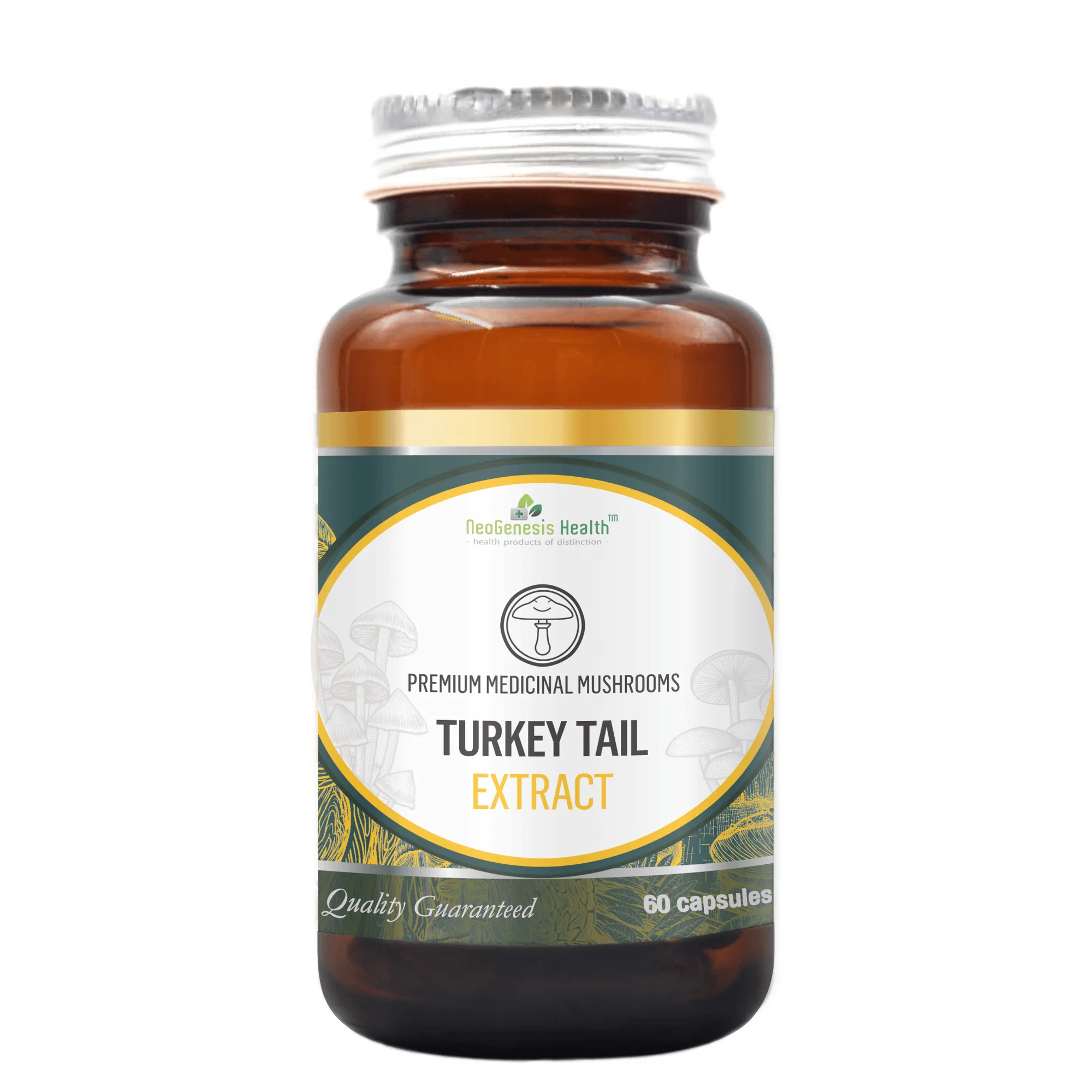
NeoGenesis Health - Turkey Tail Mushroom Extract (60 Caps)
-
NeoGenesis Health - Turkey Tail Mushroom Extract (60 Caps): The catalog describes turkey tail as a prebiotic mushroom positioned around immune support, gut health, cellular regeneration, detoxification, mental clarity, and stress relief. These are the manufacturer's stated themes, not independently verified effects. They tell you what the product is marketed for, not what it will do for you.
-
NeoGenesis Health - Turkey Tail Mushroom Extract (60 Caps): The supplied record contains no preparation instructions, no serving size, and no safety or compatibility evidence. You cannot build a dosing routine from this record alone; the physical label or a qualified professional has to fill that gap.
Turkey tail vs shiitake extract on the facts we have
- Format and bottle count: Turkey tail: 60 capsules. Shiitake: the supplied record describes a 60-capsule extract as well, so both are comparable in count — but neither record confirms capsule strength or extract ratio.
- Stated positioning: Turkey tail is framed around immune, gut, and stress themes. Shiitake is typically framed around general daily mushroom supplementation; check its label for the exact claims rather than assuming they match.
- Serving instructions: Neither supplied record includes a serving schedule. This is the single biggest gap for daily-use planning, and it applies equally to both.
- Safety and compatibility: No safety, allergy, or drug-interaction evidence is supplied for either product. If you take medication or have a health condition, that is a conversation for a qualified professional, not a blog comparison.
- Price context: The turkey tail catalog price is USD 486.35 against a comparison price of USD 685.00. Price alone doesn't tell you which fits — value depends on serving size and how long the bottle lasts, which the record doesn't specify.
Why 'shiitake vs turkey tail benefits' is the wrong question to lead with
Search results are full of benefit lists for both mushrooms, and the turkey tail record itself leans heavily on promotional language — 'immune powerhouse,' 'cellular regeneration,' 'detoxification.' Treat that as marketing copy, not evidence. The supplied record gives no clinical data, no standardized extract percentage, and no tested outcomes.
A more useful question is: which product's label gives you enough information to take it confidently? That means looking for a clear serving size, extract specification, and any cautions — details the supplied records for both products leave open. If a bottle doesn't answer those questions, no comparison article can answer them for you.
A label-led way to choose between the two
Since neither record settles dosing or safety, let the physical label drive the decision.
- 1. Read the supplement facts panel first: Check the serving size and how much extract each capsule delivers. A 60-capsule bottle with a two-capsule serving lasts 30 days; one with a one-capsule serving lasts 60. That changes the real cost per day.
- 2. Look for extract standardization: Mushroom extracts vary widely in concentration. If the label states a standardized extract or a specific ratio, that is useful information; if it doesn't, note the gap rather than assuming quality.
- 3. Check for cautions and allergen notes: Neither supplied record includes safety information. The label is where any warnings, contraindications, or 'consult a physician' statements should appear.
- 4. Match the bottle to your actual routine: If you already take a daily mushroom capsule, choose the one whose serving schedule you can realistically keep. A product you skip half the time is poor value regardless of price.
- 5. Ask a professional if you're unsure: If you take medication, are pregnant or nursing, or have a health condition, get advice from a qualified healthcare provider before starting either product. This article cannot substitute for that.
Where the evidence ends and your judgment begins
The supplied records confirm format and marketing positioning for the NeoGenesis turkey tail capsules, and they confirm the shiitake extract is also a 60-capsule product. Neither record confirms serving size, extract strength, safety, or efficacy. That is not a reason to dismiss either product — it is a reason to treat the label as the primary source and to be skeptical of any article, including this one, that claims to know which mushroom is 'better' for you.
If you want a turkey tail capsule with a clearly stated 60-count format and are comfortable confirming the rest from the label, the NeoGenesis option is a reasonable starting point. If you prefer shiitake or already use it, the same label-first approach applies. The right choice is the one whose label you can read, understand, and follow consistently.