Quick answer
The Tuttle Twins Guide to Logical Fallacies is a compact guidebook that helps readers spot flawed arguments, making it a practical pick for families who want a shared vocabulary for discussing ideas. Pair it with the storybooks and their PDF parent guides when you want younger kids to meet the same concepts through story first. If you only want one critical-thinking title on the shelf, this is the one to start with.
What age or reading stage is this guidebook written for?
The catalog describes the guidebook as a tool for sifting good ideas from bad ones, and for learning to point out a flaw in an opponent's argument. That framing suits upper-elementary readers through teens who can follow an argument across a few sentences. Younger children can still enjoy the ideas, but they usually need an adult to read aloud and pause for examples. If your child is new to the Tuttle Twins world, start with a storybook and use the guidebook as the next step once they ask why a character's reasoning was wrong.
How do I teach logical fallacies without turning it into a lecture?
Keep it conversational. Read one fallacy, then ask your child to invent a silly example from their own life, like a sibling claiming a game is unfair because the last round did not go their way. The guidebook gives you the names and definitions; your family supplies the jokes and the dinner-table debates. Ten minutes at a time works better than a long session, and revisiting the same pages a week later helps the terms stick.
Can this guidebook work as a homeschool resource?
Yes, and it fits neatly into a logic or rhetoric slot without a heavy teacher's manual. Use one fallacy per week, have your student find a real example from a news article, ad, or conversation, and write a two-sentence explanation of the flaw. That routine builds critical thinking for children while keeping your prep time low. If you want a ready-made discussion script, the companion PDF parent guides for the storybooks show how the Tuttle Twins team frames questions, which you can adapt to the guidebook.
Do I need the parent guides, and what do they actually add?
The parent guides are optional but useful if you want help asking better questions. They are written for adults who want to understand the ideas behind a storybook before discussing it with a child. They do not replace the guidebook; they support the storybooks. If your child is reading the guidebook directly, you can use the parent guides as a model for the kind of open-ended questions that keep a conversation going instead of turning into a quiz.
What if I disagree with an example or want more depth?
The guidebook is a starting point, not a complete logic curriculum. Its value is the shared vocabulary it gives your family, not exhaustive coverage of every fallacy. When an example feels thin, treat that as an opening: ask your child to find a stronger one, or to explain why the original example works or does not. That habit of checking the argument, including the arguments in a book you like, is the real skill you are teaching.
Parent questions, answered fast
Is the logical fallacies guidebook a story or a reference?
It is a guidebook, not a storybook. It explains fallacies directly, so it works best as a read-and-discuss title rather than a bedtime story. Choose it when your child is ready to talk about arguments, not just follow a plot.
Should I buy the guidebook or a storybook first?
If your child is new to the Tuttle Twins, a storybook is the gentler entry point. The guidebook is the natural next purchase once they are comfortable discussing ideas. Storybook first for younger kids; guidebook first for older readers who already like debate.
How do the PDF parent guides fit in?
They are adult-facing companions to specific storybooks, not to the guidebook. Use them to build your own confidence in asking questions, then apply that style to the guidebook. Optional, but helpful if you want a script for the first few conversations.
What is the realistic time commitment?
One fallacy per sitting is plenty. A short read plus a five-minute example hunt is enough to make the term stick without turning it into a chore. Consistency beats volume; weekly is better than daily.
Product facts
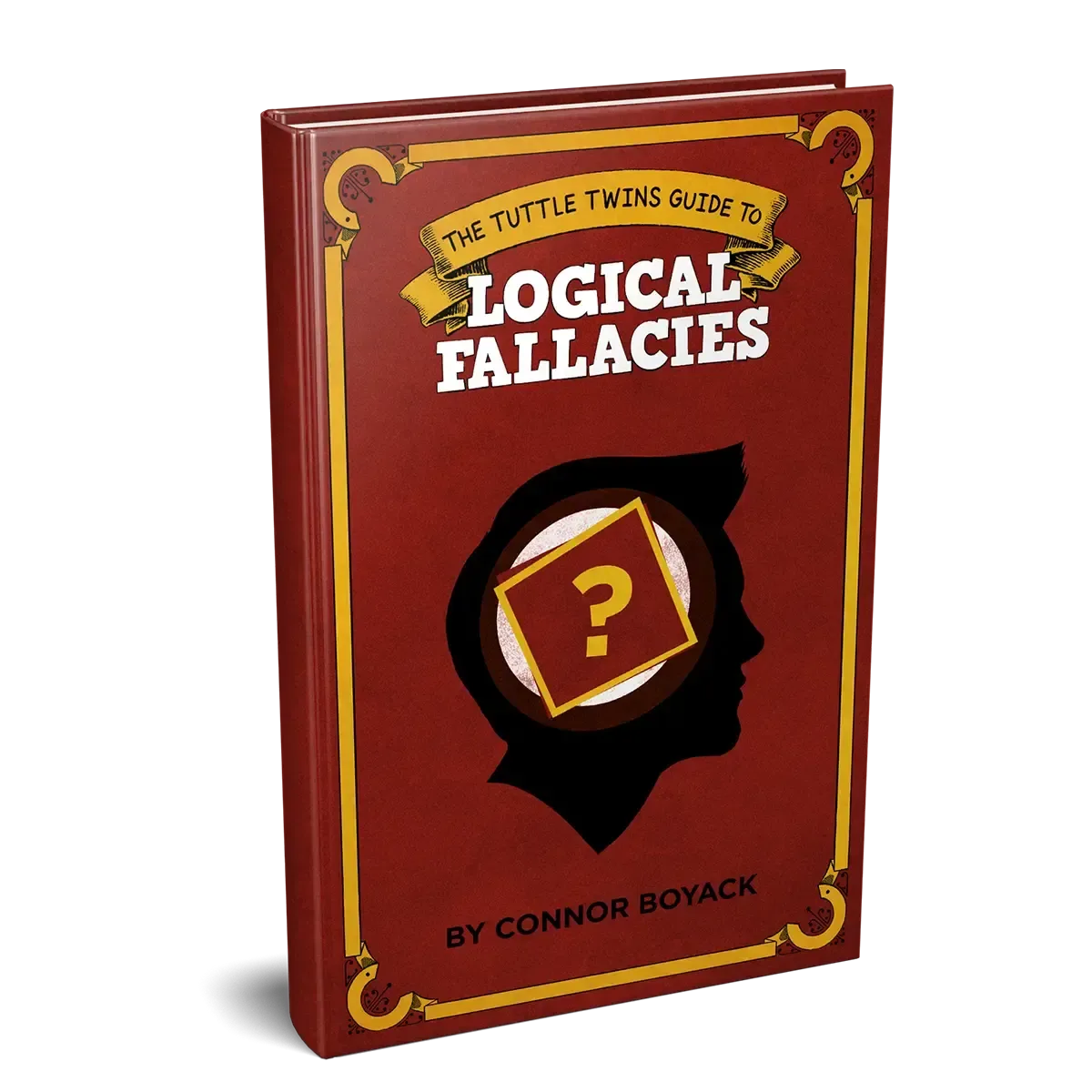
- The Tuttle Twins Guide to Logical Fallacies: The guidebook is described in the catalog as helping readers sift good ideas from bad ones and become better debaters by spotting a flaw in an opponent's argument. That is the core promise of the book, so judge it by whether your child starts naming flaws in everyday arguments, not by how many pages they finish.
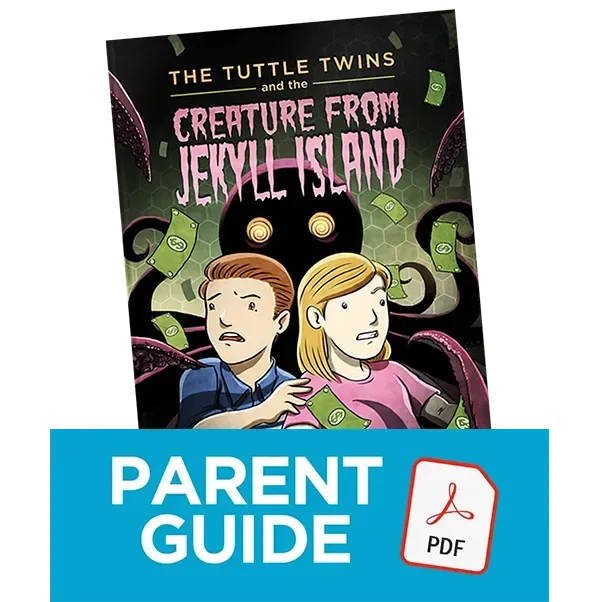
- Creature from Jekyll Island (PDF Parent Guide): The Creature from Jekyll Island PDF parent guide is a downloadable guide for adults who want to ask good questions and have answers ready while helping a child learn the ideas from that storybook. It is a low-cost way to rehearse the discussion before you sit down with your child, especially if the underlying topic is new to you.
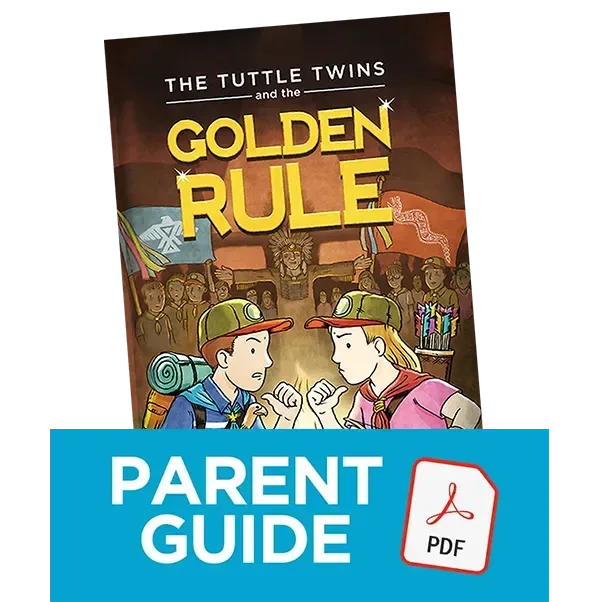
- Golden Rule (PDF Parent Guide): The Golden Rule PDF parent guide is a downloadable guide for adults who want to help a child apply the storybook's ideas in daily life. It shows how the Tuttle Twins team turns a story into everyday application, a pattern you can copy when discussing the logical fallacies guidebook.