Quick answer
If you want a Ukrainian-language story that makes inflation and hidden money costs concrete for kids, this third Tuttle Twins adventure is a strong fit: Ethan and Emily trace a "monster" draining their grandparents' hard-earned savings and discover they are under the same influence. It works best as a read-aloud for roughly ages 7–11, with a short parent-led discussion after each chapter.
Why the inflation theme lands with children
The book turns an abstract economic idea into a mystery: something is stealing value from Grandma and Grandpa's savings, and the twins have to figure out what. That framing gives kids a concrete villain to follow instead of a lecture on price levels.
The twist that the twins themselves are affected by the same force is the part that usually sparks the best conversations. It moves the lesson from "watch out for other people's problems" to "this touches our own household."
Where this edition fits and where it doesn't
This is a Ukrainian-language print edition, so it suits bilingual homes, Ukrainian-speaking families, and homeschool co-ops that want economics reading in Ukrainian rather than English. If your child reads only in English, pair it with an English edition instead of using this one as a first independent read.
Because the story is built around a mystery, it reads well aloud even for kids who are still building Ukrainian fluency. The tradeoff is that younger listeners may need the money-saving connection explained in plainer words after the reveal.
Parent questions, answered
What age is this book for?
Treat it as a read-aloud for roughly ages 7–11 and an independent read for confident Ukrainian readers in the upper end of that range. Preview a chapter first if your child is sensitive to a "monster" antagonist.
Do we need the earlier books first?
No. It is the third adventure, but the mystery stands on its own. Reading the earlier books helps with character familiarity, not comprehension of this plot.
How do I explain the money lesson without overcomplicating it?
After the reveal, ask two questions: who was really taking value from the grandparents' savings, and how could the twins tell? Keep the answer in everyday terms—prices rising while savings stay the same—rather than introducing technical terms. Write down one example from your own grocery budget to make the idea concrete.
Is it suitable for a bilingual homeschool?
Yes, as a Ukrainian-language economics reader. Use it alongside an English-language book on the same topic if you want the child to compare vocabulary in both languages.
Product facts
-
Близнюки Таттл і Потвора з острова Джекілл: The third Tuttle Twins adventure, in which Ethan and Emily investigate a monster stealing their grandparents' hard-earned savings. It gives you a ready-made mystery plot to anchor a first conversation about why saved money can lose value.
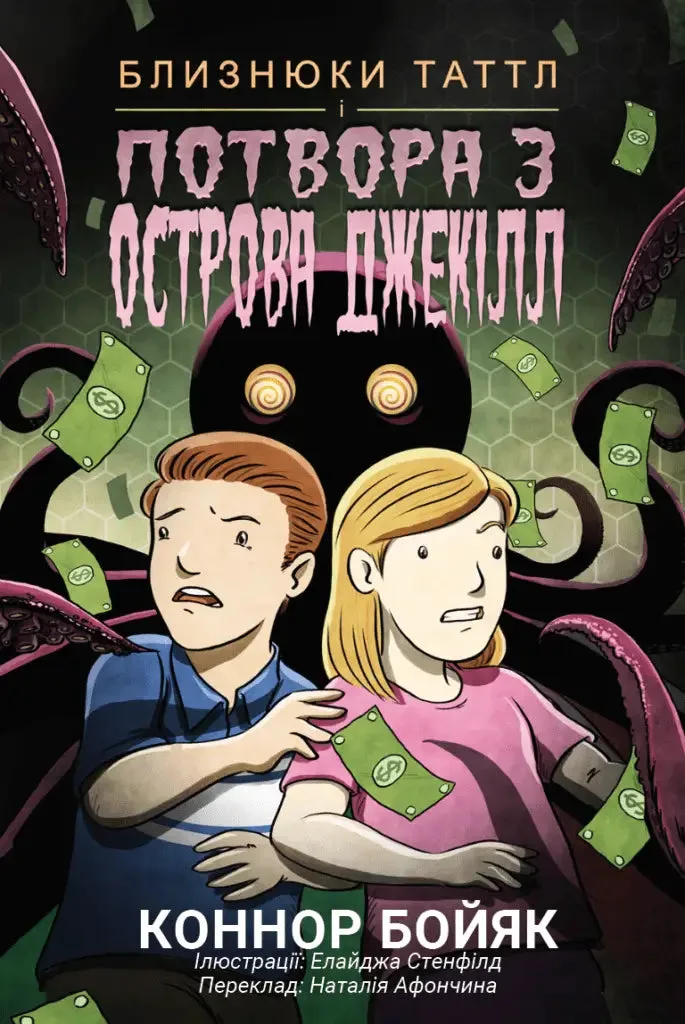
Близнюки Таттл і Потвора з острова Джекілл