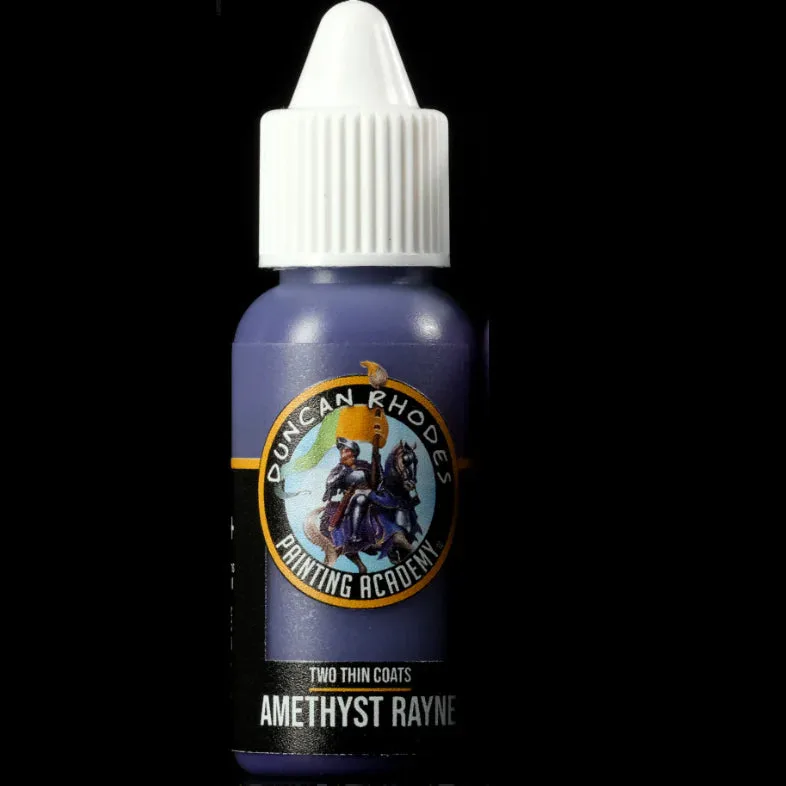
Three blues, three different jobs
The Three Two Thin Coats blues in this comparison are not three versions of the same colour. Each is labelled by its role in the range: Amethyst Rayne is a Shadow, Elysium Blue is a Midtone, and Celestial Blue is a Highlight. That labelling is the most useful fact for deciding which pot to buy first, because it tells you where each paint is designed to sit in a layered scheme rather than promising a specific finish.
If you are building a blue scheme from scratch, the midtone is usually the anchor. Elysium Blue gives you the base blue that the rest of the scheme is built around. Celestial Blue is the lighter step for edges and raised areas. Amethyst Rayne is the darker step for recesses and shadowed areas. Buying all three gives you a complete shadow-midtone-highlight set; buying one is a decision about which stage of the paint job you most need to solve.
What each pot is labelled as
-
Elysium Blue - Two Thin Coats: Elysium Blue is listed as a Midtone in the Two Thin Coats range and comes in a 15ml (0.5fl oz) pot. The midtone label makes it the natural first blue for a layered scheme, since it covers the main body colour before you add shadow or highlight.
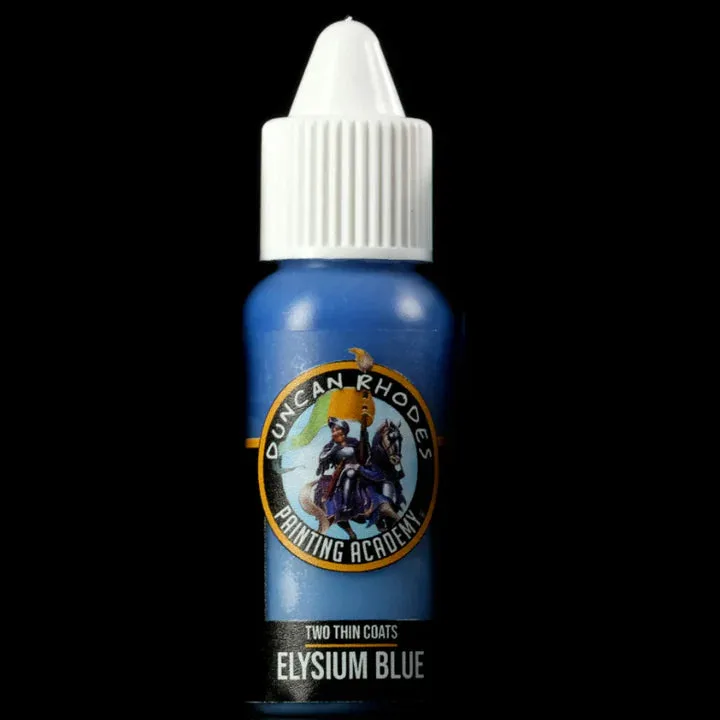
Elysium Blue - Two Thin Coats
-
Celestial Blue - Two Thin Coats: Celestial Blue is listed as a Highlight and comes in a 15ml (0.5fl oz) pot. The highlight label tells you this is the lighter step, intended for edges and raised surfaces rather than as a base coat.
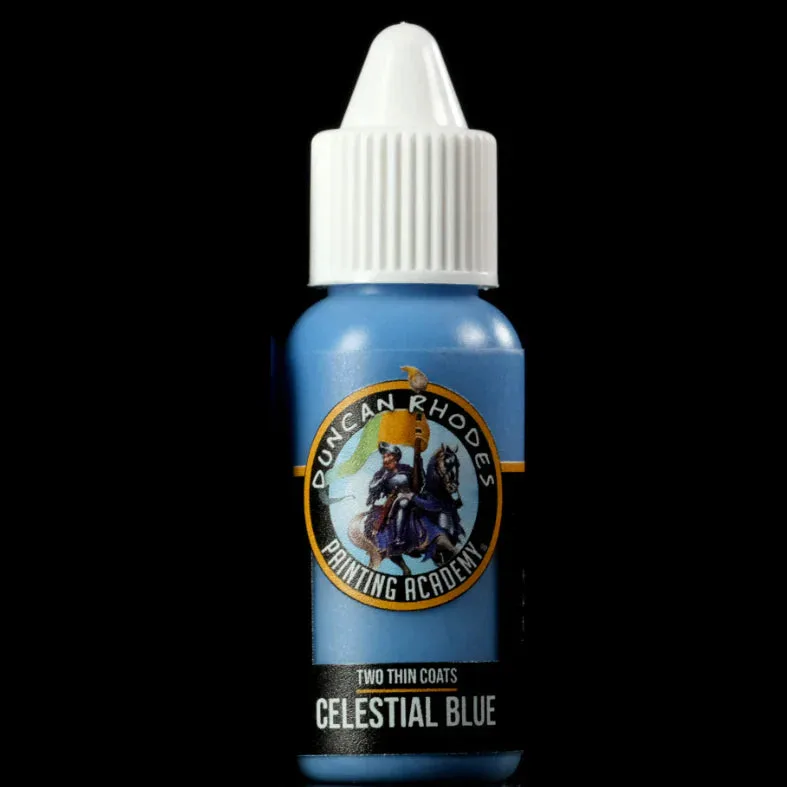
Celestial Blue - Two Thin Coats
-
Amethyst Rayne - Two Thin Coats: Amethyst Rayne is listed as a Shadow and comes in a 15ml (0.5fl oz) pot. The shadow label makes it the darker step for recesses and shaded areas, not a midtone substitute.
Why the labels matter more than the colour names
Colour names in any paint range are evocative rather than literal. Amethyst Rayne sounds purple, but the record places it in the Shadow category, so treat it as a dark blue-range shadow rather than assuming a violet hue. Celestial Blue and Elysium Blue are both blues, but the range separates them by function: one is a highlight, one is a midtone.
That functional labelling is the practical difference between these pots. It tells you the order to apply them in a layered scheme: shadow first or last depending on your approach, midtone over the bulk of the area, highlight on the edges. It does not tell you the exact hue, coverage or finish, because those details are not confirmed by the supplied records.
Elysium Blue vs Celestial Blue vs Amethyst Rayne at a glance
The table below compares only what the supplied records confirm. Where a detail is missing, it is marked as not confirmed rather than guessed.
- Role in the range: Amethyst Rayne: Shadow. Elysium Blue: Midtone. Celestial Blue: Highlight.
- Pot size: All three: 15ml (0.5fl oz).
- Catalog price: Amethyst Rayne USD 2.41; Elysium Blue USD 2.61; Celestial Blue USD 2.65. Catalog comparison price for each is USD 3.95.
- Age guidance: All three list For ages 14+.
- Exact hue, coverage and finish: Not confirmed by the supplied records. Do not assume a specific pigment, opacity or sheen.
- Preparation or thinning instructions: Not supplied beyond a link to more information about Two Thin Coats. Follow the manufacturer's guidance on the pot or official page.
Which blue should you buy first?
If you are painting a blue scheme and can only buy one pot, Elysium Blue is the most versatile starting point because it is the midtone. It gives you the main colour to build the rest of the scheme around. If you already have a midtone blue and want to push contrast, Celestial Blue adds the highlight step. If your models look flat and you need to deepen recesses, Amethyst Rayne adds the shadow step.
Buying all three is the cleanest way to get a complete layered set, but it is not the only sensible purchase. The prices are close enough that the decision should be driven by which stage of the paint job you are missing, not by saving a few cents on one pot.
Prices and pot details from the catalog
- Amethyst Rayne - Two Thin Coats: Amethyst Rayne is catalog-priced at USD 2.41, with a catalog comparison price of USD 3.95. The lowest catalog price of the three makes it an easy add-on if you are testing the shadow step.
- Elysium Blue - Two Thin Coats: Elysium Blue is catalog-priced at USD 2.61, with a catalog comparison price of USD 3.95. The midtone sits in the middle of the three on price, which suits its role as the core colour of a scheme.
- Celestial Blue - Two Thin Coats: Celestial Blue is catalog-priced at USD 2.65, with a catalog comparison price of USD 3.95. The highlight is the highest-priced of the three, but the difference is small enough that role should drive the choice.
What the records do not confirm
The supplied records do not include a colour comparison chart specific to these three blues, coverage notes, drying times, or thinning ratios. They also do not confirm whether these paints are designed for brush-only use or airbrush thinning. Treat any claim about exact hue, opacity or finish as unverified until you check the manufacturer's own guidance.
The records also note that a paint comparison chart from Duncan Rhodes Painting Academy is included for information, but the chart itself is not reproduced here. If you need to match these blues to another brand, use that chart rather than relying on the colour names.