What the U18s Offers
The 64 Audio U18s is a universal-fit in-ear monitor that builds on the heritage of the U18t, the world's first 18-driver earphone introduced in 2016. With the U18s, 64 Audio has refined the 18-driver platform by combining proprietary drivers, LID (Linear Impedance Design) technology, and a new electronic crossover network. The result is a listening experience that aims to be both technically detailed and musically engaging.
This guide focuses on the U18s's driver configuration and sound signature, helping you decide if this universal IEM matches your preferences and use case. We'll cover what the evidence confirms, what remains unconfirmed, and the honest trade-offs you should consider.
U18s Catalog Facts That Shape the Sound
-
U18s: U18s combines proprietary drivers, LID technology and a new electronic crossover network to deliver a uniquely exceptional listening experience. The electronic crossover allows precise frequency division, which can result in a more coherent and accurate sound across the spectrum compared to passive designs. LID technology helps maintain consistent frequency response regardless of earphone fit or ear canal depth.
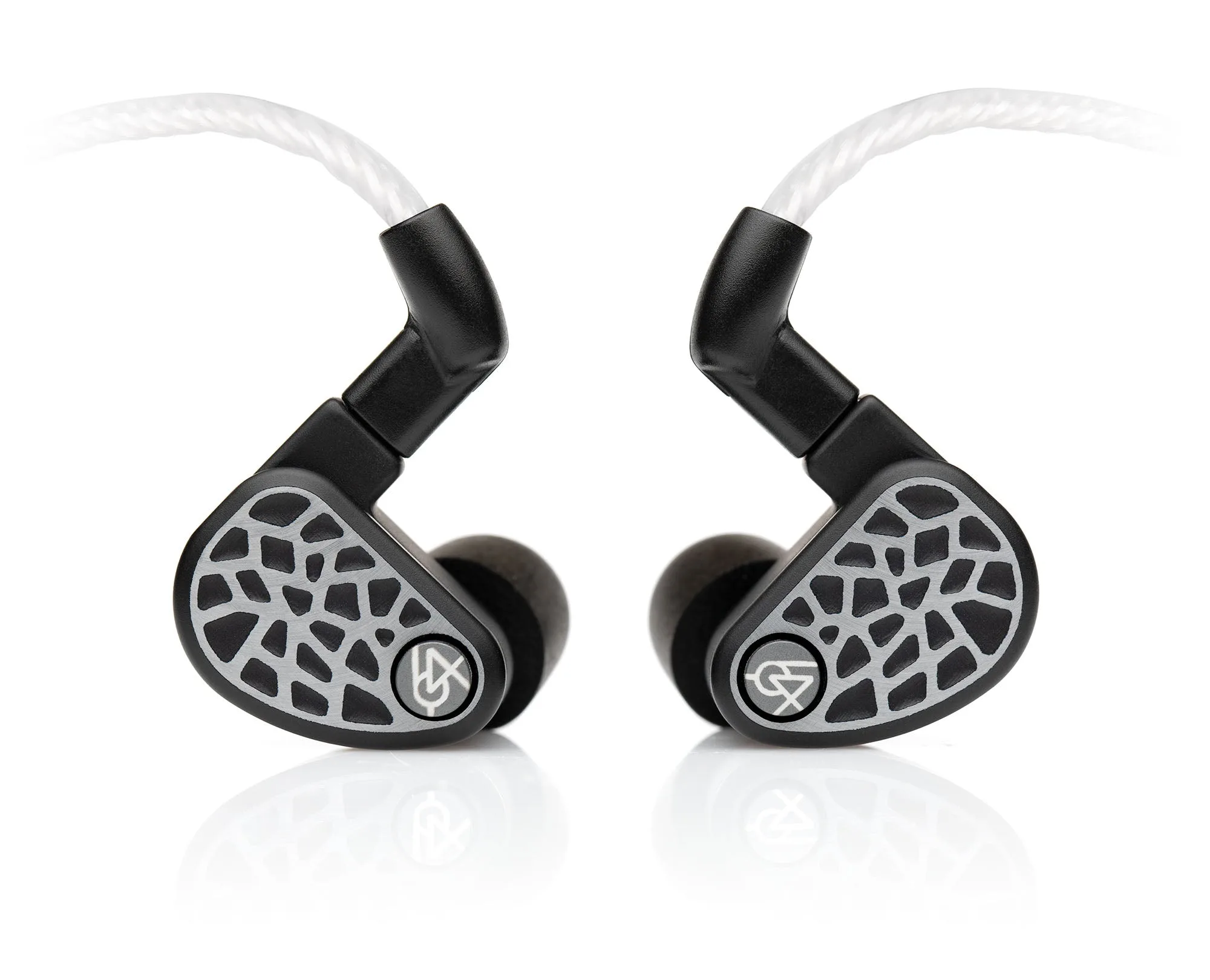
U18s
-
U18s: 64 Audio revolutionized the IEM industry in 2016 with its world class reference level U18t, the world's first 18-driver earphone. The U18s inherits the 18-driver architecture, meaning it uses multiple balanced armature drivers per side to cover bass, midrange, and treble. This driver count can offer exceptional detail and separation, but also increases complexity and cost.
-
U18s: U18s is handcrafted in the USA from aerospace-grade aluminum billet. CNC milled, sand blasted, fly cut, and twice anodized - the result is a striking fractal design. The aerospace aluminum shell is durable and lightweight, but it is not custom-molded. Universal fit means the nozzle and housing shape are fixed, so comfort will vary by ear anatomy. The fractal design is purely aesthetic but reflects the premium build quality.
Driver Configuration and Sound Signature
The U18s uses 18 balanced armature drivers per earpiece. While the catalog does not specify the exact driver arrangement (e.g., how many drivers handle lows, mids, or highs), the presence of an electronic crossover network suggests active frequency management rather than a purely passive filter. This can improve phase coherence and reduce distortion, but it also means the sound signature is more dependent on the crossover design than on driver count alone.
LID technology is a key feature that affects the sound signature. It essentially linearizes the impedance, making the frequency response less sensitive to the output impedance of the source device. In practice, this means the U18s should sound more consistent across different audio players, headphone amps, or smartphone dongles. For users who switch sources often, this is a practical advantage.
The catalog describes the sound as 'uniquely exceptional,' but does not specify whether the tuning is neutral, warm, bright, or V-shaped. Based on the reference-level heritage of the U18t, the U18s likely aims for a balanced, detailed presentation suitable for critical listening and monitoring. However, without frequency response measurements or user reviews in the supplied evidence, the exact tonal balance is not confirmed.
Honest Trade-Offs to Consider
The U18s is a premium universal IEM with a price of USD 1,979.34 (compared to a catalog reference price of USD 2,999.00). This places it in the high-end segment. The 18-driver configuration and electronic crossover are technically advanced, but they do not guarantee a specific sound signature that suits every listener. If you prefer a warm or colored sound, the U18s's likely neutral-reference tuning may feel too analytical.
Universal fit is convenient—no ear impressions or custom shell wait time—but it may not provide the same isolation or long-wearing comfort as a custom IEM. The aerospace aluminum shell is sturdy but heavier than some resin or acrylic alternatives. Additionally, the catalog does not confirm whether the U18s includes a carrying case, cable, or other accessories, so factor that into your total cost assessment.
Finally, the U18s lacks confirmation of specific specifications such as impedance, sensitivity, frequency response range, or driver allocation. If you need these numbers to match with your gear (e.g., low-impedance source or high-sensitivity pairing), you may need to contact 64 Audio directly or consult third-party measurements. The absence of this data is a limitation for informed decision-making.