Start with what the charger can and cannot tell you
The UGREEN Nexode Pro Charger 160W 4 Port is built for charging several devices from one brick, but splitting power well starts with knowing what the supplied information actually covers. The catalog confirms a four-port design, device compatibility as a listed specification, and security protection as a design feature. It also lists output modes from one-port through five-port output in the product details, which is a reminder that the charger is designed to distribute power differently depending on how many ports are in use.
What the supplied record does not include is a per-port wattage table, a list of specific supported charging standards, or step-by-step setup instructions. That absence is a decision limitation, not a reason to guess. Treat the 160W figure as the charger's overall rating and use the steps below to plan your own port split without inventing numbers the manufacturer has not supplied.
What the catalog confirms about this charger
-
UGREEN Nexode Pro Charger 160W 4 Port: 4-port output design The four ports are the starting point for any power-splitting plan; each device you add changes how the total is shared.
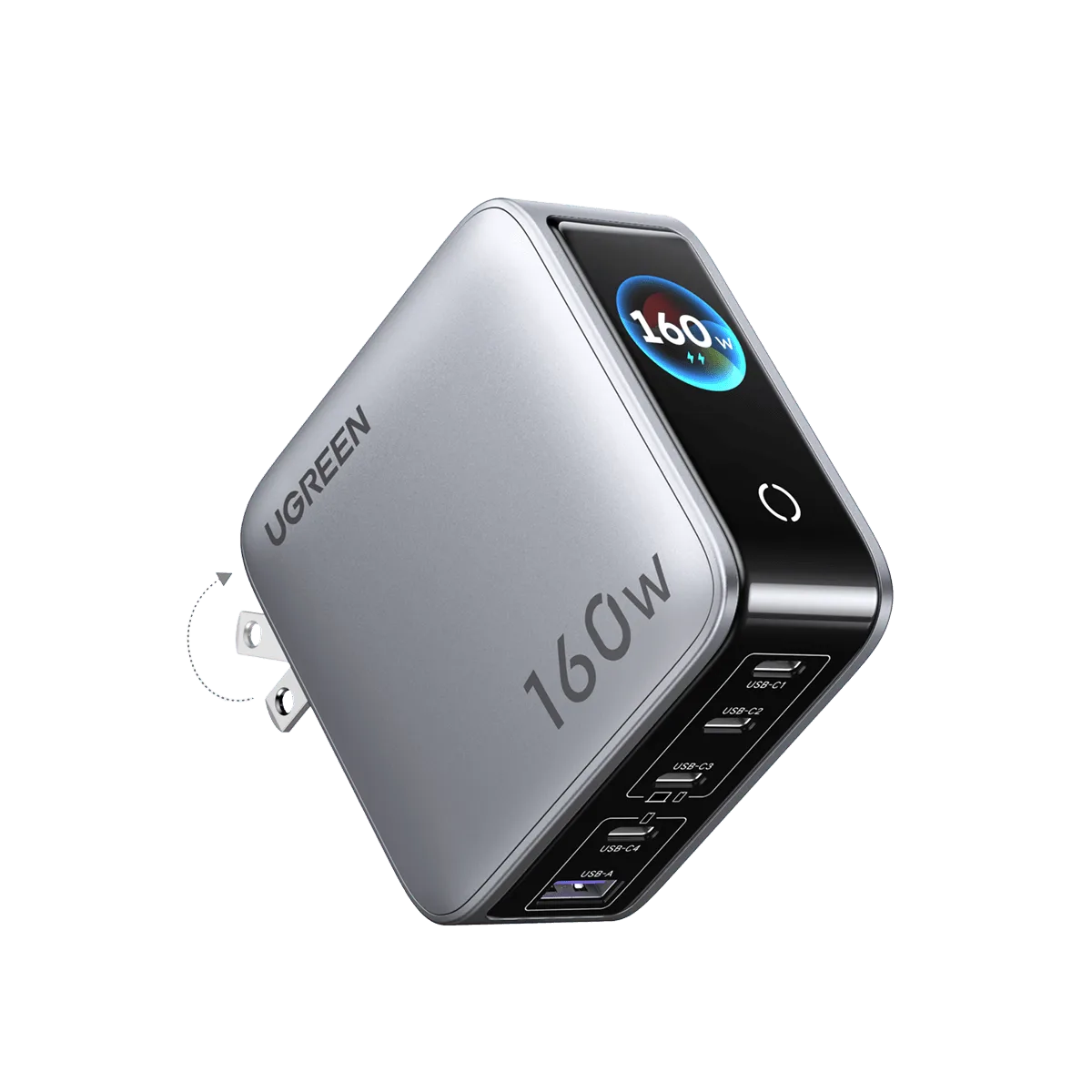
UGREEN Nexode Pro Charger 160W 4 Port
-
UGREEN Nexode Pro Charger 160W 4 Port: Device Compatibility listed as a specification Compatibility is a stated consideration, so check your own device and cable combination rather than assuming every USB-C device will charge the same way.
-
UGREEN Nexode Pro Charger 160W 4 Port: Security Protection listed as a design feature This is a design claim from the catalog, not a guarantee against every failure; still use certified cables and avoid damaged connectors.
How to plan a four-port split without guessing wattages
Because the supplied record does not publish per-port wattage, the practical approach is to prioritize devices and observe what the charger does with your own gear. These steps keep the process grounded in what you can verify.
- List your devices and their charging needs: Write down each device you want to charge, its connector type, and whether it needs a fast charge or just a top-up. The charger's device compatibility specification is the relevant catalog reference; check your device's own documentation for its accepted input.
- Connect the highest-priority device first: With multi-port chargers, the first device connected often receives the most favorable share. Start with the device that needs the most charge, then add the others one at a time.
- Add devices one by one and watch the result: The catalog lists one-port through five-port output modes, so the charger is designed to respond to port count. Plug in a second, third, and fourth device individually and note whether each continues charging at an acceptable rate. This is observation, not a manufacturer instruction.
- Use the right cable for each device: The charger record does not include cable specifications. Use a cable that matches your device's connector and is rated for the charging you expect; a cable that is not rated for the power can limit the result regardless of the charger.
- Recheck when you change the setup: If you unplug one device, the remaining devices may receive a different share. Recheck charging status after any change rather than assuming the previous split still applies.
Why the 160W rating is not a per-port promise
A 160W label describes the charger's overall capacity class, not a guarantee that every port delivers 160W at once. The supplied catalog does not break down wattage by port or by combination, so any specific split you read elsewhere is not supported by this record. The honest approach is to treat 160W as the ceiling for the whole charger and to expect that adding devices changes the distribution.
This is also why the catalog's one-port through five-port output listing matters: it signals that the charger has different output states depending on how many ports are active. The exact figures for each state are not in the supplied information, so use your devices' own charging indicators to judge whether a split works for you.
Practical multi-device setups that fit the four-port design
These are planning patterns, not manufacturer instructions. They use only the confirmed four-port design and device compatibility specification.
- Phone, tablet, and two accessories: Use the four ports for a mix of larger and smaller devices. Connect the phone or tablet first if it needs the most charge, then add accessories. Watch whether the accessories still charge at a useful rate.
- Laptop plus three smaller devices: A laptop is usually the most demanding device in a four-port group. Connect it first and confirm it is charging before adding phones or earbuds. The catalog does not confirm laptop wattage, so check your laptop's own charging indicator.
- Travel kit with shared charging: One charger for several family devices is a common reason to choose a four-port model. Label cables so each device gets a compatible connection, and expect the split to change as devices are added or removed.
What to check before you rely on a four-way split
Before you commit to charging four devices at once, confirm three things with your own equipment: that each device charges at all from the port you chose, that each cable is appropriate for the device, and that the charger stays within a temperature range you are comfortable with. The supplied record does not include operating temperature guidance, so use normal caution and stop using the charger if you notice damage or unusual heat.
Also keep the catalog's limits in mind. The record lists device compatibility and security protection but does not publish supported fast-charging standards, per-port wattage, or included accessories. If a device does not charge as expected, the most reliable next step is to test that device and cable with another known charger rather than assuming the Nexode Pro is at fault.
Product facts for reference
- UGREEN Nexode Pro Charger 160W 4 Port: UGREEN Nexode Pro Charger 160W 4 Port The exact model name to use when checking compatibility or comparing with other chargers.
- UGREEN Nexode Pro Charger 160W 4 Port: Output modes listed as 1-Port Output, 2-Port Output, 3-Port Output, 4-Port Output, and 5-Port Output Confirms the charger is designed for multiple simultaneous connections, even though the wattage for each mode is not supplied.
- UGREEN Nexode Pro Charger 160W 4 Port: Available variant: Standard No alternate plug or regional variant is listed in the supplied evidence, so check the connector type for your region before purchase.