Quick answer
An ultralight vest is worth it if you want low-bulk warmth that blocks wind and layers easily under a rain jacket. Choose it for cool, active days—not for deep cold or heavy rain.
Why packable warmth matters
A vest that packs small and adds warmth without bulk is a practical layer for shoulder-season hikes, early-morning starts, or any trip where you want to save space. The key is that it works best as part of a system: wear it over a base layer, under a shell, or alone when the temperature allows.
The trade-off is coverage. A vest leaves your arms free and your core warm, but it doesn't protect your extremities. If you run cold or expect biting wind, you'll still need a jacket or extra arm insulation.
Wind resistance vs. breathability
Wind can steal heat quickly, especially on exposed ridges or open water. An ultralight vest with a tight-weave shell blocks that wind and helps you retain warmth without adding a heavy layer.
But wind resistance can also trap heat when you're working hard. If you tend to overheat, look for a vest that balances wind blocking with some breathability, or plan to unzip or remove it during high-output efforts.
Decision rules for an ultralight vest
- Choose it if you need packable warmth: If you want a layer that stows easily in a pack or day bag and adds core warmth without weight, an ultralight vest is a smart pick. Check the packed size and weight before you buy—it should be small enough to forget until you need it.
- Choose it for wind protection: If you're heading into breezy conditions and want to cut wind chill without a full jacket, a tight-weave vest shell does the job. Pair it with a breathable base layer so you don't overheat when you start moving.
- Skip it for deep cold or heavy rain: A vest leaves your arms exposed and offers no rain protection. For freezing temperatures or wet weather, you'll need a full insulated jacket or a waterproof shell. Keep a rain jacket handy if there's any chance of precipitation.
Product spotlight
-
Ultralight Vest: The Filson Ultralight Vest uses a 1.5-oz. Cordura nylon shell with ripstop reinforcing for strength that belies its weight. You get a lightweight layer that resists tears and snags, so it holds up on rocky trails or in brush without adding bulk.
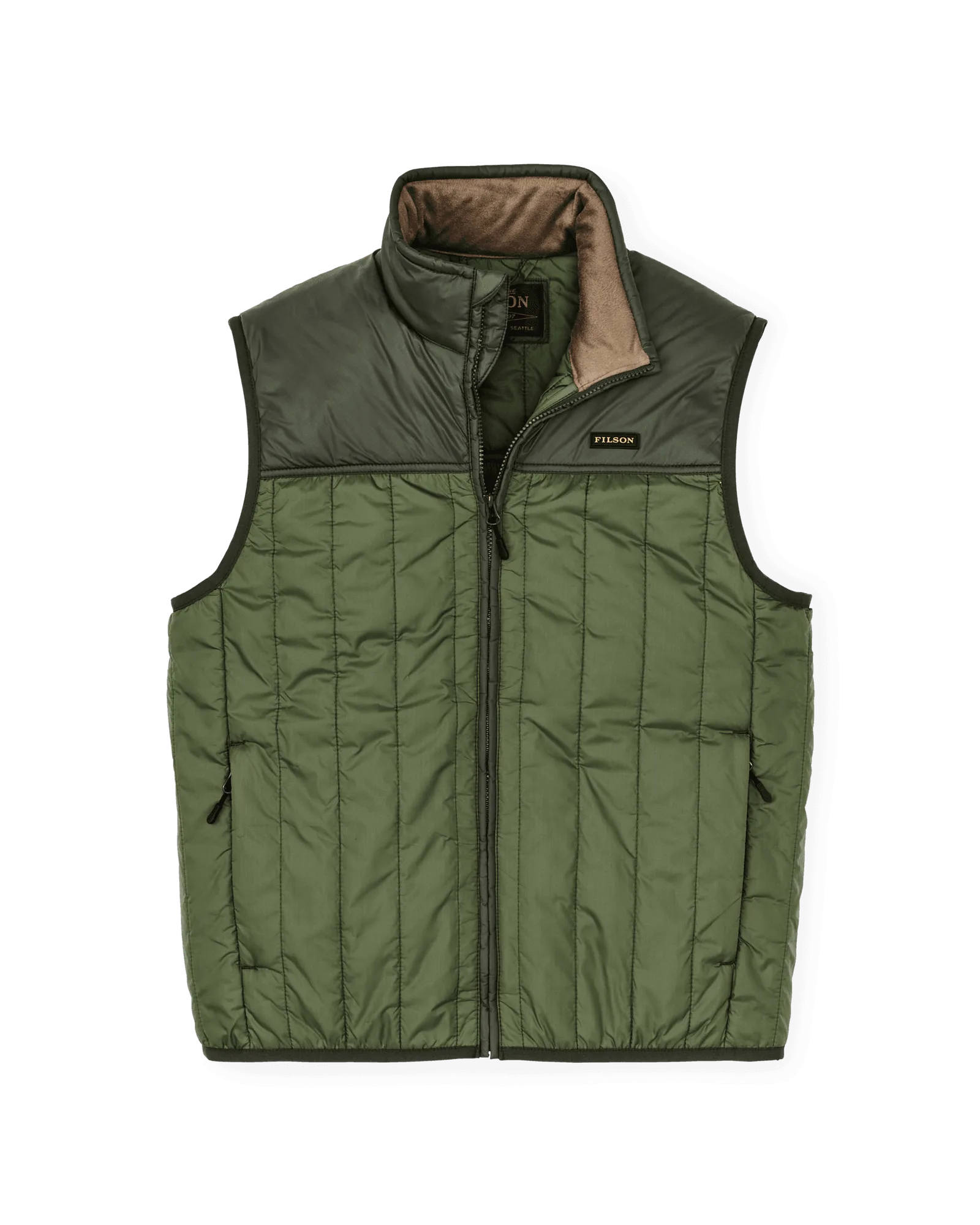
Ultralight Vest
Who it's for
Best for
- Hikers and backpackers who want a low-bulk layer for variable conditions
- Anyone who runs warm and prefers core insulation over a full jacket
Not for
- Cold-weather campers who need full-arm coverage
- Those who expect heavy rain and want a waterproof layer