What UltraSeal XT hydro is confirmed to be
UltraSeal XT hydro is a hydrophilic pit and fissure sealant from Ultradent, intended for use by dental professionals. The catalog describes it as a sealant that supports confident placement, and it is listed in the Prevent Hygiene category. The supplied record does not include detailed preparation steps, operating instructions, or safety and compatibility data, so this guide sticks to what the catalog confirms and to general principles of sealant technique that do not require product-specific claims.
Because the catalog does not provide a full manufacturer protocol, treat the sequence below as a decision framework rather than a verbatim instruction set. Always follow the instructions supplied with the product you receive and your own clinical judgment.
Catalog evidence for the placement decision
-
UltraSeal XT™ hydro™-Hydrophilic Pit and Fissure Sealant: UltraSeal XT hydro is described as a hydrophilic pit and fissure sealant for dental professionals. The hydrophilic designation is the key handling characteristic to keep in mind when planning moisture control during placement.
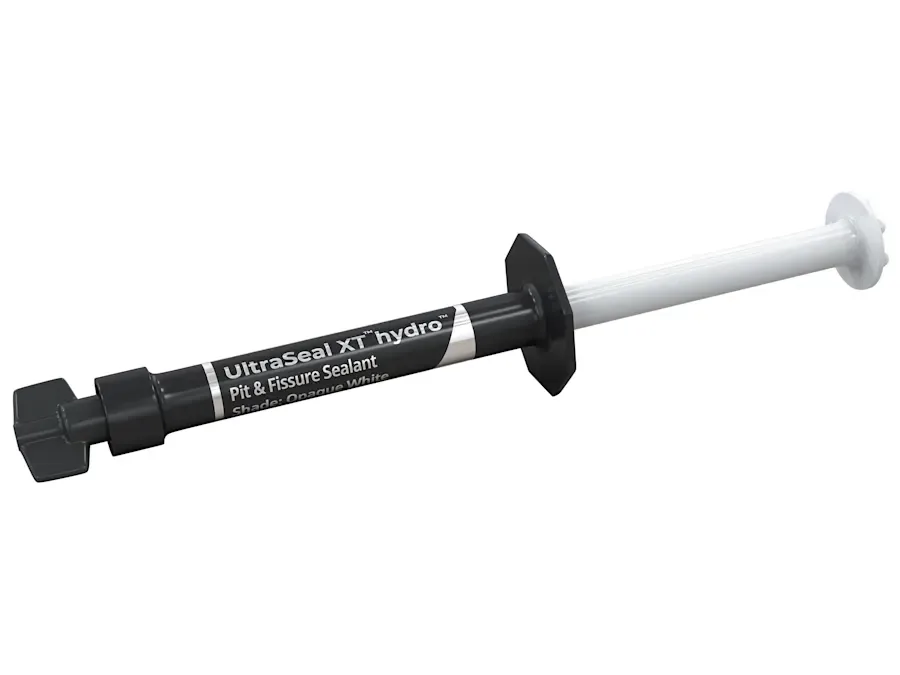
UltraSeal XT™ hydro™-Hydrophilic Pit and Fissure Sealant
-
UltraSeal XT™ hydro™-Hydrophilic Pit and Fissure Sealant: The catalog positions the sealant around confidence in sealant placement. That framing supports a technique that emphasizes predictable isolation and verification rather than speed alone.
A supported placement sequence for hydrophilic sealant
The following sequence reflects general sealant technique and the hydrophilic nature of the product. It does not replace the manufacturer’s instructions, which are not included in the supplied catalog record.
- Isolate the tooth and manage moisture: Hydrophilic sealants are designed to tolerate some moisture, but that does not mean saliva control can be skipped. Use your usual isolation method—cotton rolls, dry field, or suction—and keep the field as dry as your technique allows. Re-check isolation before every step.
- Clean and prepare the fissure: Remove plaque and debris from the pit and fissure system with a suitable cleaning method. The catalog does not specify a particular cleaning agent or etch protocol, so follow the instructions that come with the product and your standard practice.
- Apply the sealant according to the product instructions: The supplied record does not include application steps such as etching times or curing parameters. Use the manufacturer’s directions for the specific UltraSeal XT hydro product you have on hand.
- Check coverage and retention: After placement, inspect the sealed surface for complete coverage of the fissure system and for voids or thin spots. The catalog does not provide a retention checklist, so rely on visual and tactile inspection consistent with your training.
Moisture-control checkpoints that matter with a hydrophilic sealant
- Before cleaning: Confirm isolation is stable and the field is free of pooled saliva. A hydrophilic sealant can handle some moisture, but excess contamination can still compromise the interface.
- After cleaning and before sealant application: Reassess the field. If isolation has slipped, re-establish it before proceeding. The catalog does not specify a drying time or moisture tolerance, so use the product instructions as your reference.
- During application: Keep suction ready and watch for saliva creeping back into the fissure. The hydrophilic property is not a substitute for active moisture management.
- After placement: Verify the sealant has set as expected before removing isolation. The supplied record does not include curing details, so follow the manufacturer’s instructions for the specific product.
Pitfalls to avoid when placing UltraSeal XT hydro
- Assuming hydrophilic means moisture-proof: Hydrophilic sealants are formulated to perform in the presence of some moisture, but the catalog does not state a tolerance level. Treat moisture control as a priority, not an afterthought.
- Skipping the post-placement inspection: The catalog does not provide a retention checklist, but visual inspection for voids and incomplete coverage is a standard part of sealant technique. Do not rely on the hydrophilic label alone to guarantee a seal.
- Using a generic protocol instead of the product instructions: Because the supplied record lacks specific operating steps, any detailed times or ratios you see elsewhere may not apply to UltraSeal XT hydro. Always use the instructions included with the product.
- Overlooking the catalog’s scope: The catalog entry does not include safety or compatibility data. If you need that information, consult the manufacturer’s documentation rather than assuming.
What the supplied information does not cover
The catalog record for UltraSeal XT hydro does not include preparation steps, operating instructions, safety warnings, or compatibility details. It also does not provide retention statistics or clinical performance claims. This guide therefore avoids inventing specific times, temperatures, or techniques. For those details, rely on the product’s own instructions and your professional training.
If you are comparing sealants or need to confirm whether UltraSeal XT hydro fits a particular clinical situation, the catalog’s description as a hydrophilic pit and fissure sealant for dental professionals is the main confirmed point. Any further decision should be based on the manufacturer’s full documentation.