Start with the exposure, not the frame
Dental safety glasses are not a single-use purchase, so the right pair is the one you will actually keep on through a full schedule. Before comparing styles, map your real exposure: splatter and splash from handpieces and ultrasonic scalers, aerosol drift during hygiene appointments, and overhead operatory light. The frame that solves the most common exposure in your day is the better starting point.
UltraTect protective eyewear is positioned by Ultradent as high-quality protective eyewear for the modern dental environment. That framing tells you the intended audience is dental professionals, but it does not specify lens markings, side-shield coverage, or impact ratings. Treat those as questions to confirm with the manufacturer or your supplier before you standardize a team on any model.
Fit priorities that matter more than lens tint
Comfort and coverage usually decide whether eyewear stays on. Use these priorities to narrow your choice before you look at cosmetic details.
- Seal around the brow and cheek: Splash protection eyewear dental professionals rely on needs to sit close without pressing. Check that the top edge follows your brow line and that the lower rim does not rest on your cheeks when you look down at a patient.
- Stability during loupe use: If you wear loupes, comfortable dental loupe eyewear must stay aligned with the loupe optics. A frame that shifts when you lean forward will force you to re-adjust mid-procedure, which is a bigger daily cost than a slightly heavier frame.
- Temple and nose-bridge pressure: Protective eyewear for hygienists often gets worn for hours of scaling and polishing. Look for adjustable or soft contact points if you are prone to pressure marks, and test the fit with the mask or loupe you wear most.
- Compatibility with your existing PPE: Eyewear that conflicts with a face shield, surgical mask, or headlight is less likely to be worn correctly. Bring your usual mask and loupe to any in-person fitting.
What the UltraTect catalog entry confirms
-
UltraTect™-Protective Eyewear: UltraTect protective eyewear is described as high-quality protective eyewear conducive to the modern dental environment, intended for dental professionals. This confirms the intended user group and setting, so you can treat it as a dental-specific option rather than general-purpose safety glasses.
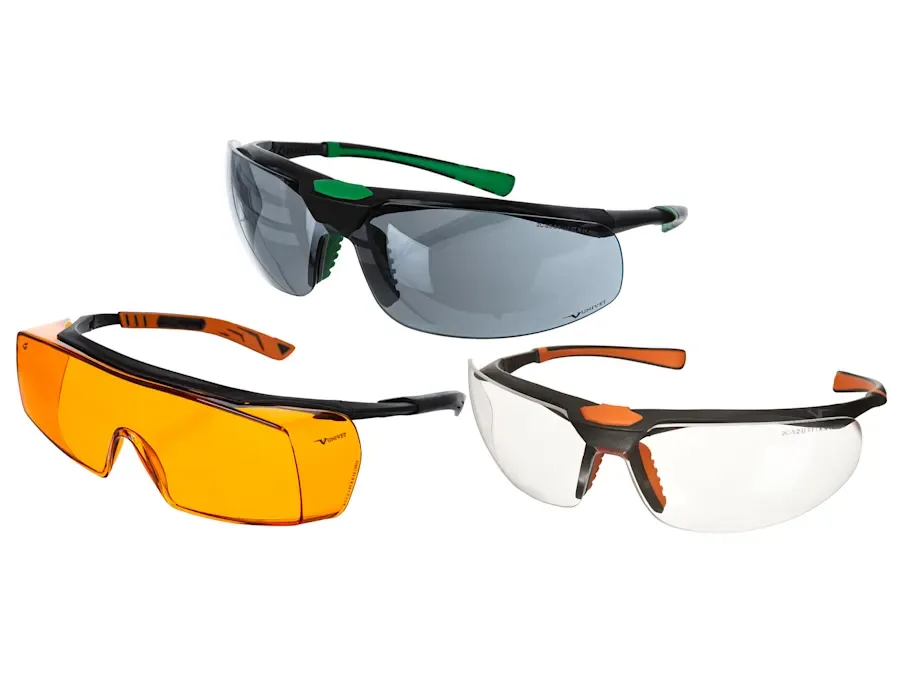
UltraTect™-Protective Eyewear
-
UltraTect™-Protective Eyewear: The catalog lists a Standard variant and a catalog price of USD 213.75, with a comparison price of USD 285.00. Knowing the variant and price helps you compare cost per clinician against other protective eyewear options, but price alone does not tell you whether the fit will suit your face or loupe setup.
What to confirm before you buy
The supplied product record does not include lens markings, impact ratings, side-shield specifications, or prescription compatibility. That is a limitation of the available information, not a statement that UltraTect lacks these features. Before ordering for a team, ask Ultradent or your authorized supplier to confirm the standards the eyewear meets, whether it can be worn over prescription glasses, and what cleaning or replacement guidance applies.
If you need documented splash protection for a specific procedure, get that in writing rather than inferring it from the product name. The same applies to loupe mounting: the catalog does not confirm whether UltraTect frames accept a loupe clip or flip-up mount, so verify compatibility with your loupe system before you commit.
Decision rules for a dental team purchase
Use these rules to turn the catalog information into a practical buying decision.
- Choose UltraTect first if: You want a dental-specific protective eyewear option from Ultradent and you can confirm fit in person or through a returnable trial. The Standard variant and listed price give you a clear starting point for a team quote.
- Look elsewhere first if: You need a documented impact rating, prescription lenses, or a confirmed loupe mount and the supplier cannot provide those details before purchase. In that case, a product with published specifications is the lower-risk choice.
- Pilot before standardizing: Order one pair for the clinician with the most demanding exposure—often a hygienist using an ultrasonic scaler—and test it through a full day before buying for the whole team.