Quick answer
Choose an undated weekly planner if you schedule by the day and want room for notes, lists, and check-ins; choose an undated monthly planner if you plan by the month and prefer a light, portable overview. The main difference is page count and page size: the weekly planner is A5 with 121 pages, while the monthly planner is 7x9 inches with 30 pages. Pick the layout that matches how often you actually open your planner.
Page count and page size: the real difference
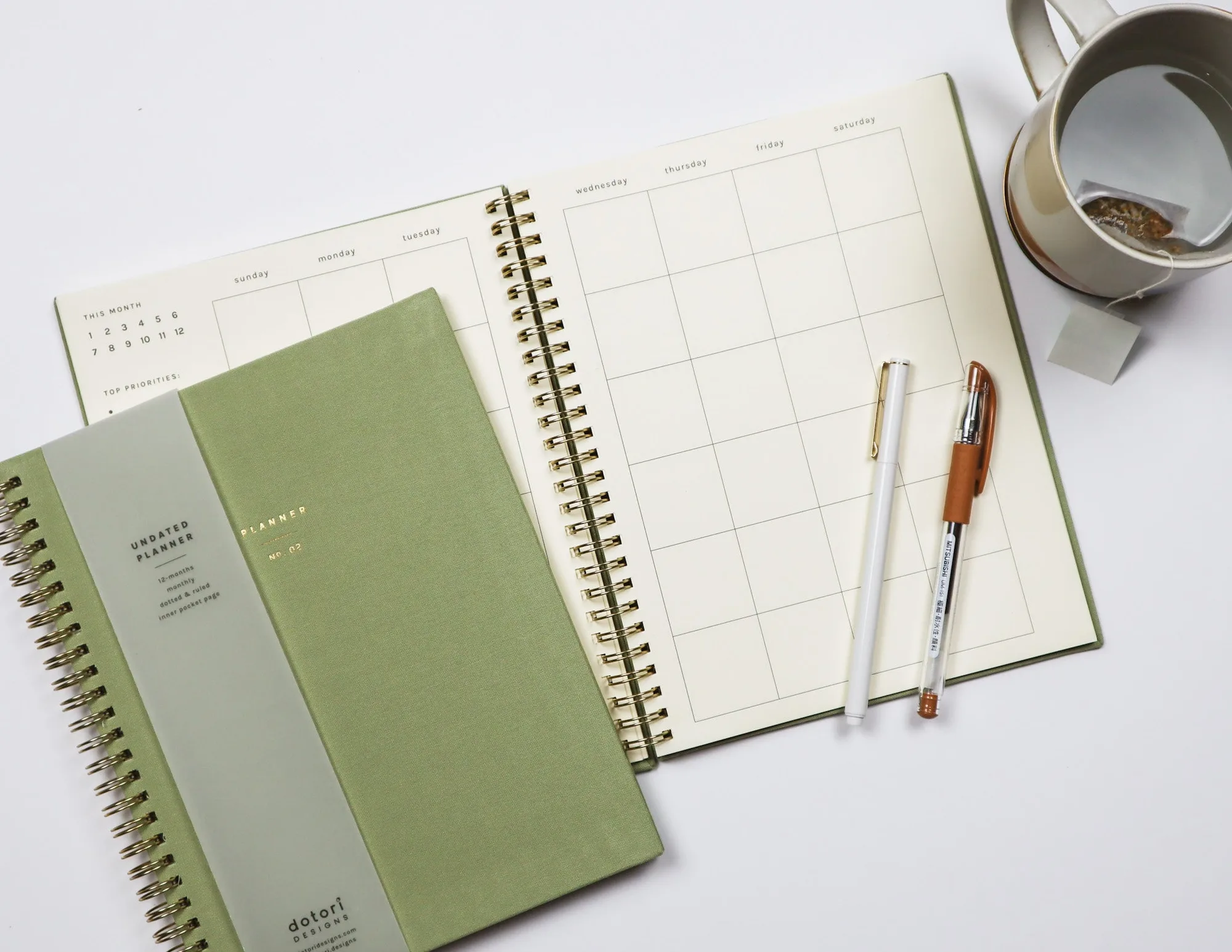
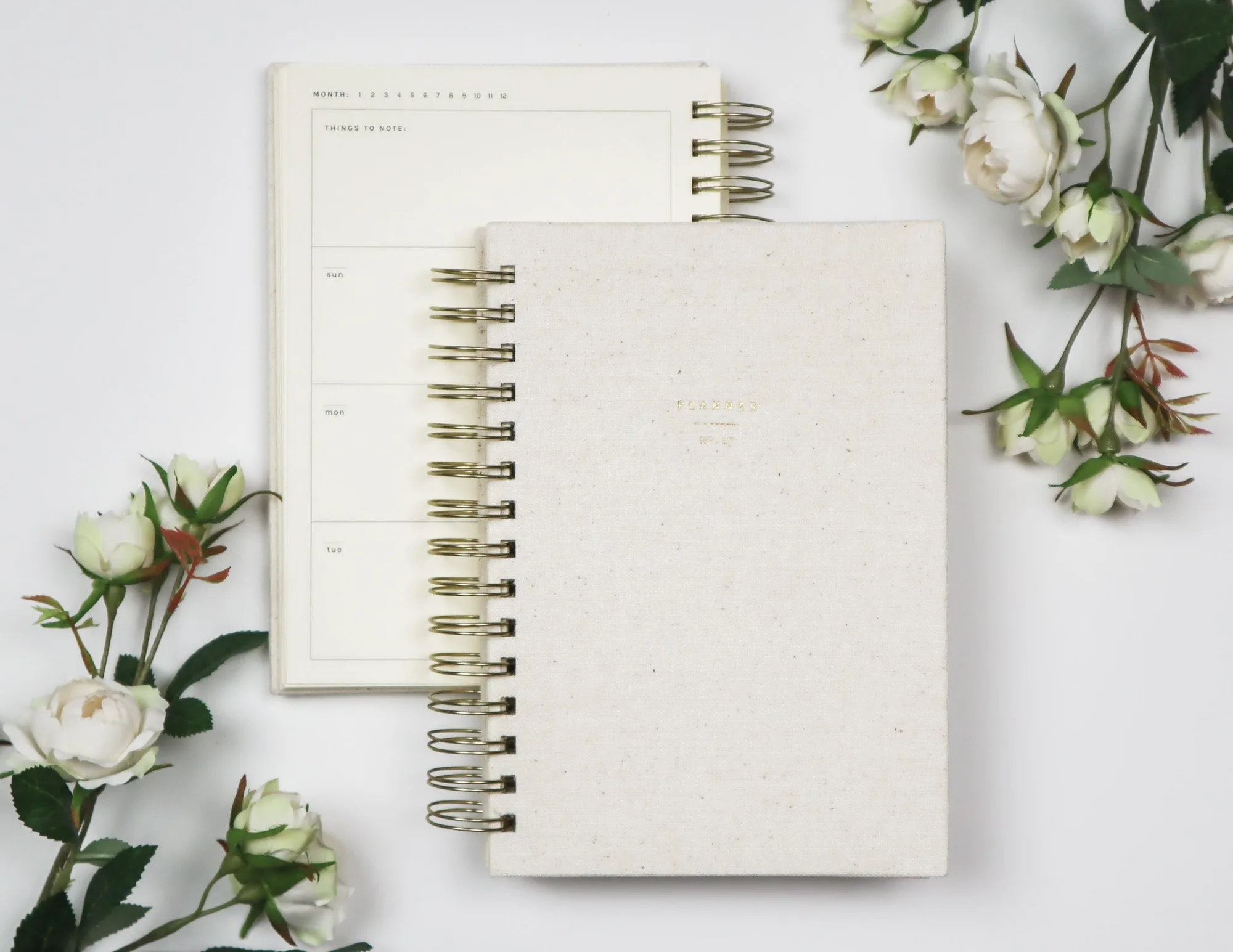
The Undated Weekly Planner in Cream is A5 (5-7/8 x 8-1/4 inches) and has 121 pages: a yearly view, 12 months, 5 weeks per month, a dotted page, and ruled pages. The Undated Monthly Planner in Sage and Undated Monthly Planner in Charcoal are 7x9 inches with 30 pages: a yearly view, 12 months, 2 dotted sheets per month, and 8 ruled sheets. The weekly planner gives you a page for each week plus extra notes pages; the monthly planner gives you a month spread plus a small number of dotted and ruled sheets. If you write something every day, the weekly page count supports that habit. If you only need a monthly overview with a few notes, the monthly planner stays thin and easy to carry.
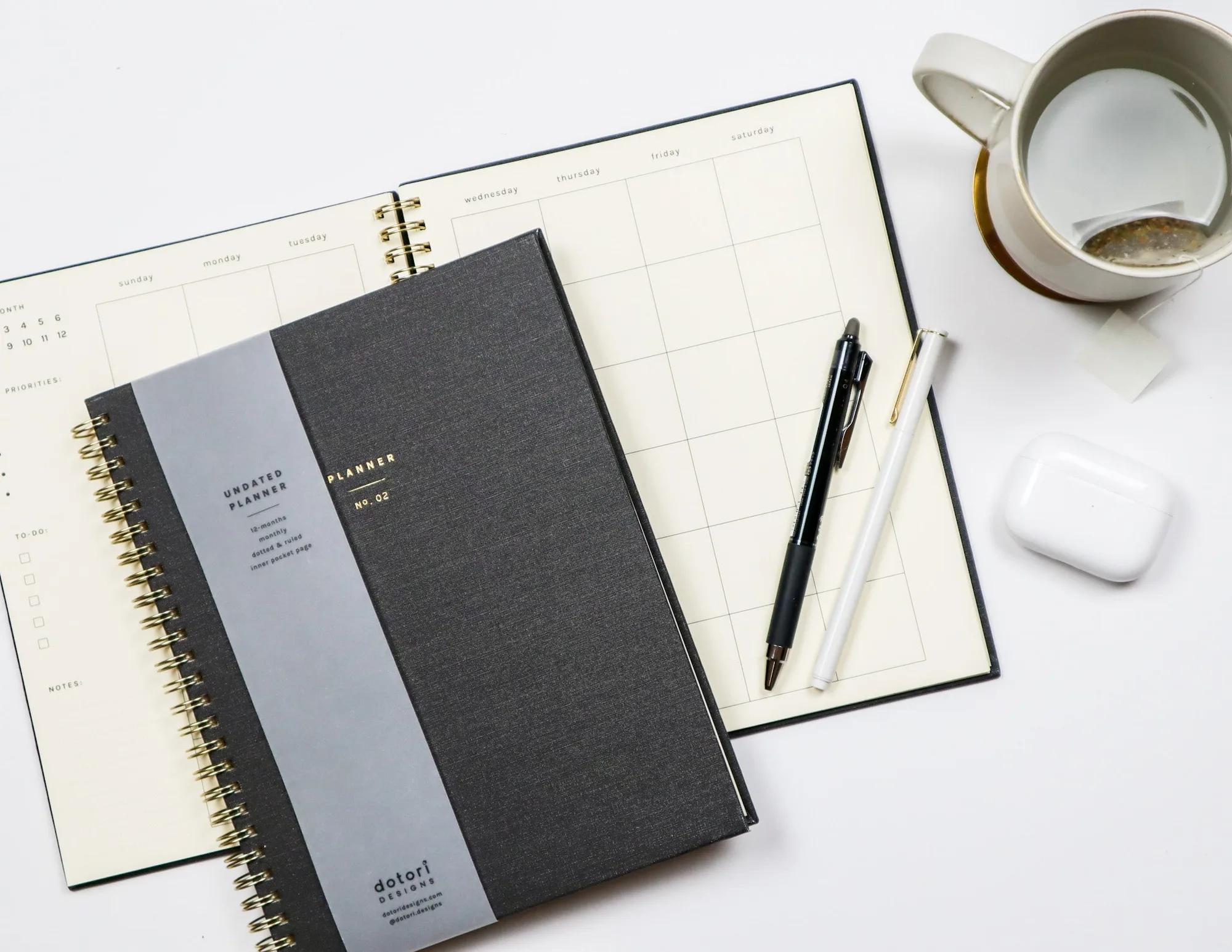
Undated Monthly Planner in Charcoal
How each layout handles daily planning
A weekly layout asks you to break the month into weeks, so you can see appointments, tasks, and deadlines side by side. That is useful when your days vary and you need to move items around. A monthly layout asks you to think in whole months, so you see the shape of the month at a glance. That is useful when your schedule is stable and you mainly track events, bills, or deadlines. Neither layout is more productive by itself; the one that matches your planning rhythm is the one you will keep using.
Paper, pocket, and sticker compatibility
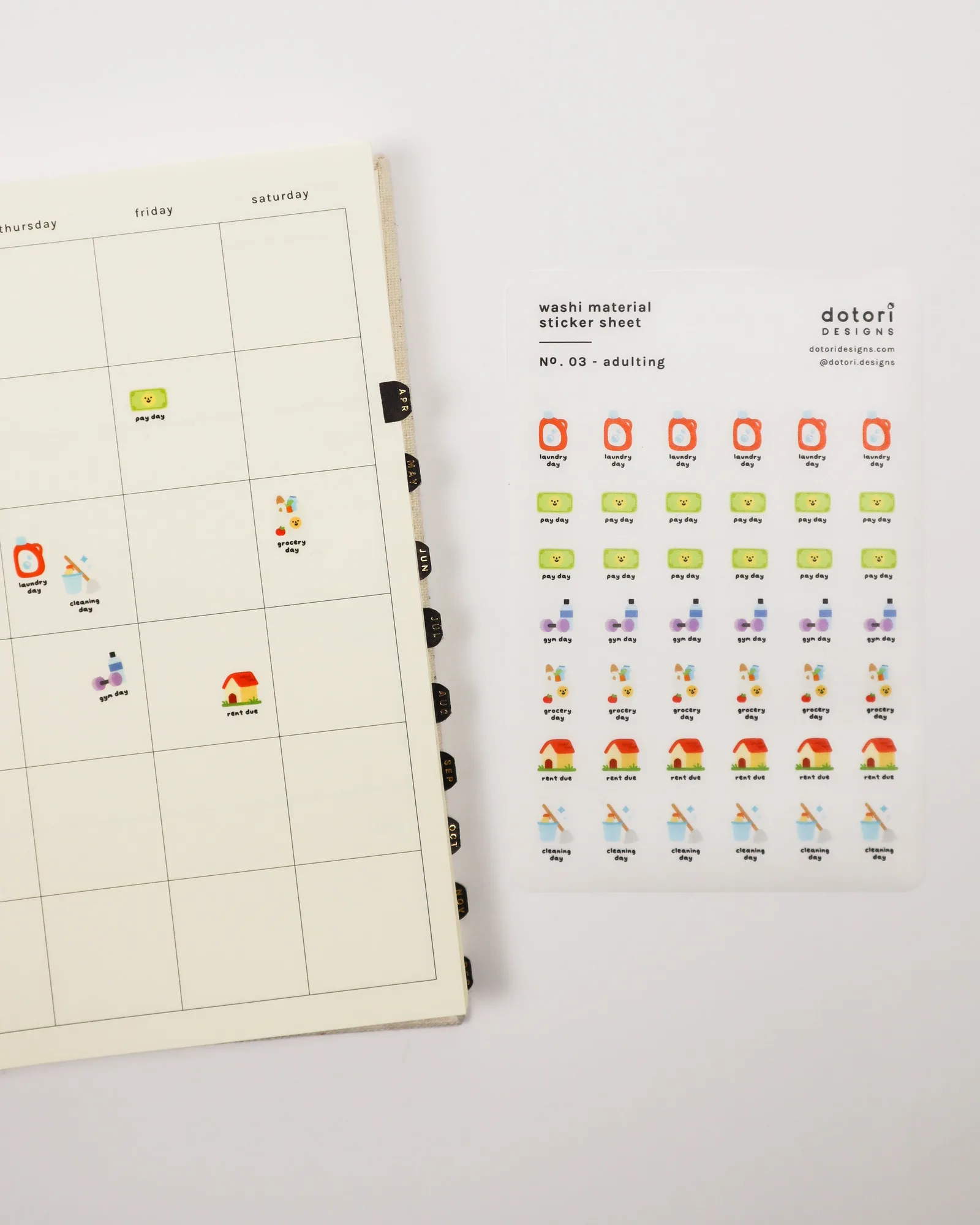
All three planners use 100 gsm paper to prevent bleeding, and each has a sturdy inner pocket for ticket stubs and stationery accessories. The Adulting Sticker Sheet is printed on washi paper, so you can write on top of the sticker and see what is written underneath; the stickers are easily moveable while retaining stickiness. That matters for both layouts: washi stickers let you reposition a label or date marker without tearing the page, and the 100 gsm paper gives you a stable surface for writing over them. The monthly planner's 2 dotted sheets per month and 8 ruled sheets give you a place for lists; the weekly planner's dotted and ruled pages serve the same purpose across a longer timeline.
Trade-offs to weigh before you choose
- Weekly detail vs. monthly overview: The weekly planner devotes 5 weeks per month to daily scheduling, while the monthly planner gives each month a single spread. If you plan by the day, weekly; if you plan by the month, monthly.
- Page count vs. portability: 121 pages in A5 gives more writing room; 30 pages in 7x9 keeps the monthly planner thin. Carry the monthly planner if you want less weight in your bag.
- Note space per month: The monthly planner includes 2 dotted sheets per month and 8 ruled sheets total; the weekly planner includes a dotted page and ruled pages across its 121 pages. Match note space to how many lists you actually keep.
Product facts
- Undated Weekly Planner in Cream: A5 (5-7/8 x 8-1/4 inches) with 121 pages: yearly view, 12 months, 5 weeks per month, dotted page, and ruled pages. The weekly spread plus extra notes pages support daily scheduling and longer to-do lists.
- Undated Monthly Planner in Sage: 7x9 inches with 30 pages: yearly view, 12 months, 2 dotted sheets per month, and 8 ruled sheets. A slim monthly overview with a few note pages keeps the planner light and portable.
- Adulting Sticker Sheet: Printed on washi paper so you can write on top of the sticker and see what is written underneath; stickers are easily moveable while retaining stickiness. You can reposition date markers or labels without damaging planner pages.
Which layout fits your routine?
Best for
- Daily schedulers who track tasks, appointments, and check-ins week by week
- Students and freelancers who need room for lists and notes alongside weekly plans
- Planner users who want a 100 gsm paper surface and a sturdy inner pocket for keepsakes
Not for
- People who only need a monthly overview and prefer a slim, light planner
- Travelers or commuters who want the smallest possible page count
- Anyone who plans by the month and rarely writes daily entries