Quick answer
Thread weight is a ratio: one unit of thread length divided by its weight. A higher number means a finer thread, so 50 wt is thinner than 40 wt, and 40 wt is thinner than 30 wt. For most piecing and everyday quilting, start with a 50 wt thread; step down to 40 wt or lower when you want the stitching to stand out or fill space faster.
Thread weight explained in one line: the number tells you how thin the thread is, not how strong it is. That single idea clears up most of the confusion quilters run into at the thread rack.
Once you know what the number means, choosing between a 50 wt cone for piecing and a 40 wt for decorative quilting becomes a practical decision instead of a guess. This guide walks through a simple process you can repeat for every new project.
What thread weight actually measures
Thread weight is a fixed-length ratio: the length of thread that weighs a set amount. Because it is a ratio, the numbers run opposite to what many people expect. A 50 wt thread is finer than a 40 wt thread, and a 30 wt thread is thicker still. The higher the number, the thinner the strand.
That is why a 50 wt thread disappears into patchwork seams while a 40 wt leaves a visible line of stitching. Neither is better. They simply occupy different amounts of visual space on the quilt surface. The weight is a design tool, not a quality ranking.
- Higher number = finer thread. Lower number = thicker thread.
- Weight says nothing about fiber content, ply, or how the thread was finished.
How 50 wt and 40 wt behave in real quilting
A 50 wt thread is the workhorse for piecing and for quilting where you want texture without a heavy outline. It feeds smoothly through a standard needle, takes up little space in a seam, and lets the fabric pattern stay the focus. It is also a common choice for bobbin thread because a fine thread keeps the bobbin area tidy.
A 40 wt thread is thicker, so it covers more ground per stitch. Quilters reach for it when the quilting itself is part of the design: walking-foot lines, ruler work, or motifs that need to read clearly from across the room. The tradeoff is that a thicker thread can show more of its own color and can build up faster in dense stitching.
- Use 50 wt for seams, stitch-in-the-ditch, and fine background texture.
- Use 40 wt when you want the thread line to be a visible design element.
Reading a thread weight chart without overthinking it
A thread weight chart is easiest to use when you read it as a spectrum rather than a set of rules. At the fine end, 60 wt and 50 wt are for piecing, applique, and subtle quilting. In the middle, 40 wt and 30 wt are for decorative quilting and bold topstitching. At the thick end, 12 wt and heavier are for hand embroidery, big-stitch quilting, and accent work.
The chart only covers the number. It does not tell you the fiber, the ply, or how the thread was finished, and those details change how the thread runs in your machine. Treat the chart as a starting point, then test the actual thread on a scrap of your project fabric before you commit to the whole quilt.
- Match the thread weight to the visual job, not to a brand loyalty.
- When two weights seem possible, test both on a scrap sandwich first.
Matching thread weight to needle and project
The needle has to match the thread, not the other way around. A finer 50 wt thread usually wants a smaller needle so the thread fills the eye without being pinched. A thicker 40 wt thread wants a slightly larger needle so it can pass through without fraying or skipping.
Project type matters too. Piecing rewards a fine, smooth thread that presses flat. Decorative quilting rewards a thicker thread that shows up. If you are switching between the two on the same quilt, change the needle when you change the thread, and recheck your tension on a scrap before you start stitching on the quilt itself.
- Change the needle when you change thread weight.
- Always test tension on a scrap sandwich made from the same fabrics and batting.
Step-by-step: choosing thread weight for your next quilt
- Decide the visual job first: Ask whether you want the thread to disappear into the seam or stand out as part of the design. Piecing and subtle texture point to a finer thread; visible quilting lines point to a thicker one. Checkpoint: if you cannot describe the thread's job in one sentence, you are not ready to pick a weight.
- Start with 50 wt for piecing: A 50 wt thread is the default for seams because it presses flat and does not add bulk. A lint-free, smooth 50 wt polyester like So Fine! #507 Galileo is built for this kind of everyday work. Common mistake: using a thick decorative thread for piecing, which creates bulky seams that will not press flat.
- Step down to 40 wt for visible quilting: When the quilting is meant to be seen, a 40 wt thread covers more area per stitch and reads clearly from a distance. Expect to adjust needle size and tension when you make the switch. Checkpoint: stitch a test motif on a scrap sandwich before you commit the design to the quilt.
- Match the needle to the thread: A finer thread wants a smaller needle; a thicker thread wants a larger one. The goal is a needle eye that lets the thread pass without pinching or fraying. Common mistake: keeping the same needle when you change thread weight, which causes skipped stitches and thread breaks.
- Test on a scrap sandwich: Use the same fabric, batting, and thread you plan to use on the quilt. Stitch a short line, then check the top and bottom tension. Adjust before you touch the real project. Checkpoint: if the thread shreds or the stitches look uneven, change the needle before you change the tension.
- Buy a small spool before a full cone: A 550-yard spool lets you test a color and weight on a real project without committing to a 3,280-yard cone. Once the weight works, buy the cone for the full quilt. Common mistake: buying a large cone of an untested weight and color, then discovering it does not suit the project.
- Label and store what you keep: Write the weight, fiber, and brand on the spool or its storage box. Thread weight is easy to forget once the label is gone, and mixing weights by accident is a common source of tension problems. Next step: keep a small test scrap with each stored thread so you can compare weights at a glance.
Thread facts worth knowing before you buy
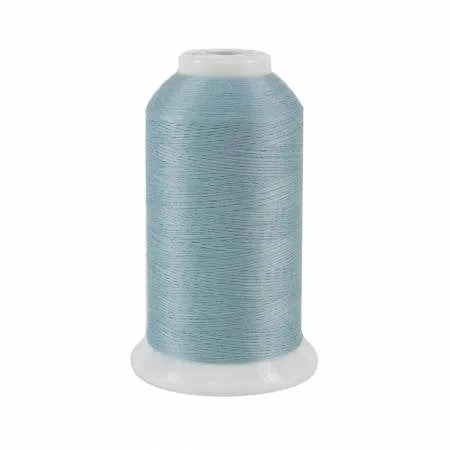
- So Fine! Thread #507 Galileo: So Fine! #50 is a #50/3 lint-free and extra smooth all purpose polyester thread. Each cone has 3,280 yards. Excellent for sewing, serger, bobbin thread and quilting. This is a concrete example of a 50 wt thread, the weight most quilters use for piecing and fine quilting. The 3-ply construction and lint-free description explain why it feeds smoothly and keeps the bobbin area cleaner.
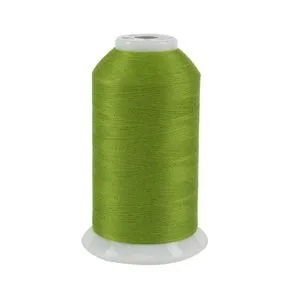
- So Fine! Thread #450 Spring Green: So Fine! #50 is a #50/3 lint-free and extra smooth all purpose polyester thread. Each cone has 3,280 yards. Excellent for sewing, serger, bobbin thread and quilting. A green in the same 50 wt line lets you match a project's color while keeping the fine, blendable stitch quality that 50 wt is chosen for.
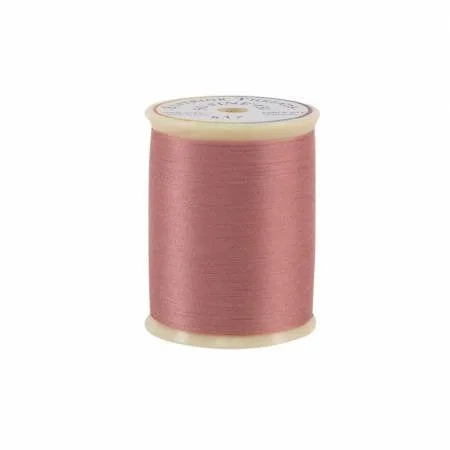
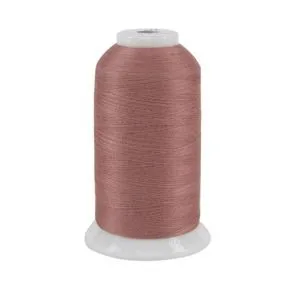
- https://piecenquiltcr.com/products/so-fine-thread-417-antique-rose-spool-09474ea43bdb8596b41bd7f2-1385374So Fine! Thread #417 Antique Rose - Spool: So Fine! #50 is a #50/3 lint-free and extra smooth all purpose polyester thread. Each spool has 550 yards. Excellent for sewing, serger, bobbin thread and quilting. The smaller 550-yard spool is a practical way to try a 50 wt color without committing to a full cone, which is useful when you are still deciding on a palette.
Thread weight is a simple ratio with a big effect on how your quilting looks and behaves. Start with 50 wt for piecing, move to 40 wt when you want the stitching to show, and always test the actual thread on a scrap before you commit it to the quilt.