Quick answer
Most riding-up problems come from a mismatch between panty cut, fabric stretch, and your body's shape. Start by checking the leg openings and waistband: if they're loose or dig in, size or style is the culprit. Switching to a seamless, elastic-free design like the Comfort Intended Thong or Hipster often solves it, but if the issue persists, your body may simply need a different rise or coverage level.
Why do panties ride up? The three common causes
Riding up—whether it's a full wedgie or a subtle shift—usually traces back to one of three things: insufficient coverage in the back, leg openings that don't grip, or fabric that stretches out of shape. When the back panel is too narrow, it naturally slides into the gluteal crease. When leg openings are too loose, they ride up with movement; when they're too tight, they roll and pull. And stretch fabrics that lose recovery (often after many washes) stop holding their shape, so the panty migrates.
Your body's shape also matters: a rounder bottom or higher hip curve can make a standard cut feel like it's always creeping. That's not a flaw—it's a fit signal. The fix is to match the cut and fabric to your shape, not to keep tugging.
Fix 1: Check the leg openings and waistband
A quick test: put the panty on and run a finger under the leg opening. It should lie flat without gaping or digging. If it gaps, the panty is too big or the leg elastic has stretched. If it digs, the size is too small or the elastic is too tight. Either way, the panty will ride up as you move.
Elastic-free waistbands and leg finishes can reduce digging and rolling, but they still need to fit snugly. Look for a smooth, flat finish that stays in contact with your skin without pressure.
Fix 2: Match the style to your shape
Thongs and G-strings have minimal back coverage by design, so they're more prone to riding up if the size is off. If you love the no-panty-line look but hate the creep, try a thong with a slightly wider back panel or a seamless construction that grips gently. Hipsters offer more coverage and tend to stay put better on curvier shapes, but they can still ride up if the leg openings are too loose.
Cheeky panties sit between the two: they cover part of the bottom but leave the lower curve exposed. If you're experiencing cheeky panties riding up, it's often because the back panel is too narrow for your shape—sizing up or switching to a hipster can help.
Fix 3: Adjust the rise and fabric
Low-rise panties sit on the hips and can slide down or up depending on your hip-to-waist ratio. Mid-rise or high-rise styles stay in place better for many people because they anchor at the natural waist. If you're constantly pulling up a low-rise pair, try a higher rise.
Fabric matters too: cotton and cotton-blend panties have less stretch and hold their shape, while highly stretchy synthetics can feel great but may lose recovery over time. A seamless stretch fabric with good recovery (like the b.tempt'd Comfort Intended line) balances comfort and hold—but check the care label to keep it that way.
When to stop adjusting and switch styles
If you've tried sizing up or down, checked the leg openings, and still find yourself tugging every few minutes, the style is probably wrong for your body. That's not a failure—it's information. A thong that constantly rides up may never feel right if your shape needs more back coverage; a hipster that won't stay put may be too loose in the legs.
Give a new style a fair trial: wear it for a full day of normal activity, not just a quick try-on. If it still migrates, return to the size chart and consider a different cut. The goal is underwear you forget you're wearing.
Diagnose your riding-up problem
- Symptom: Back panel disappears between cheeks: Likely cause: The back coverage is too narrow for your shape, or the size is too small. Try a hipster or a thong with a wider back panel; size up if the waistband digs.
- Symptom: Leg openings roll or bunch: Likely cause: Elastic is too tight or the leg finish is bulky. Switch to a seamless, elastic-free leg finish like the Comfort Intended styles.
- Symptom: Panty slides down or shifts throughout the day: Likely cause: The rise is too low for your hip-to-waist ratio, or the fabric has lost stretch. Choose a higher rise and check fabric recovery; replace stretched-out pairs.
Products that address common riding-up causes
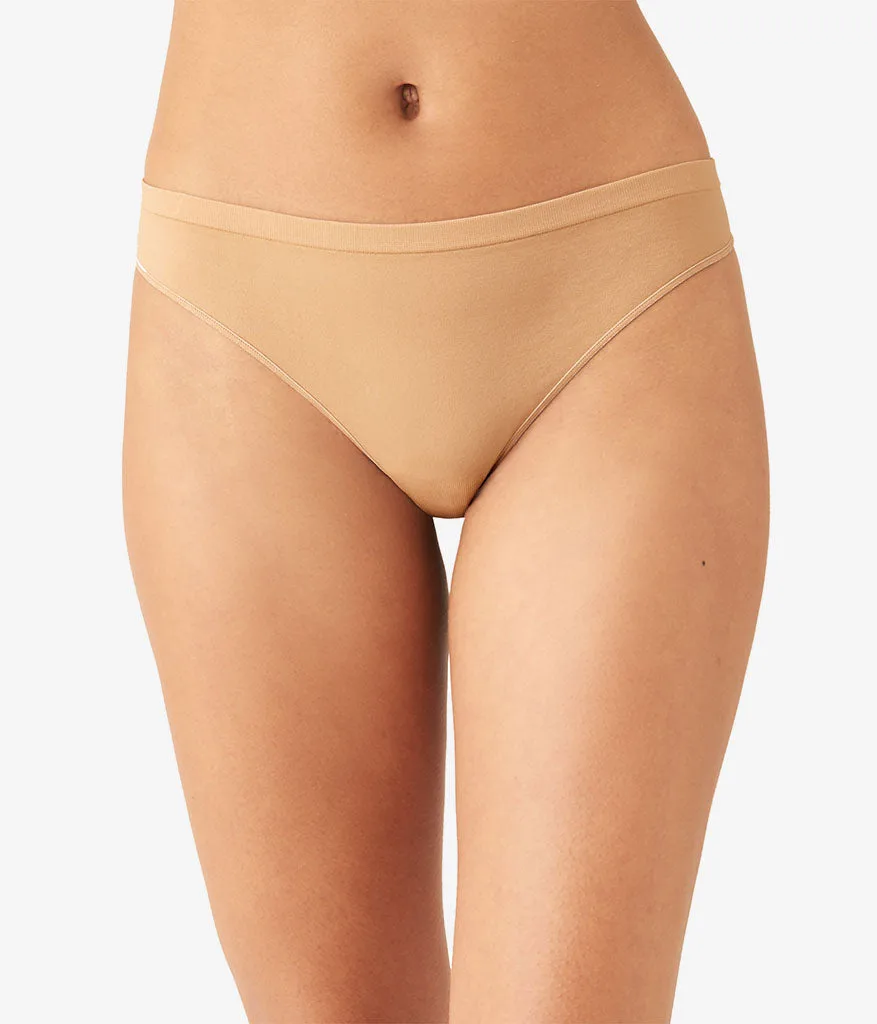
- Comfort Intended Thong: Stretchy, seamless panty with an elastic-free waistband and an invisible leg finish. The elastic-free waistband and smooth leg finish reduce digging and rolling, two common triggers for riding up.
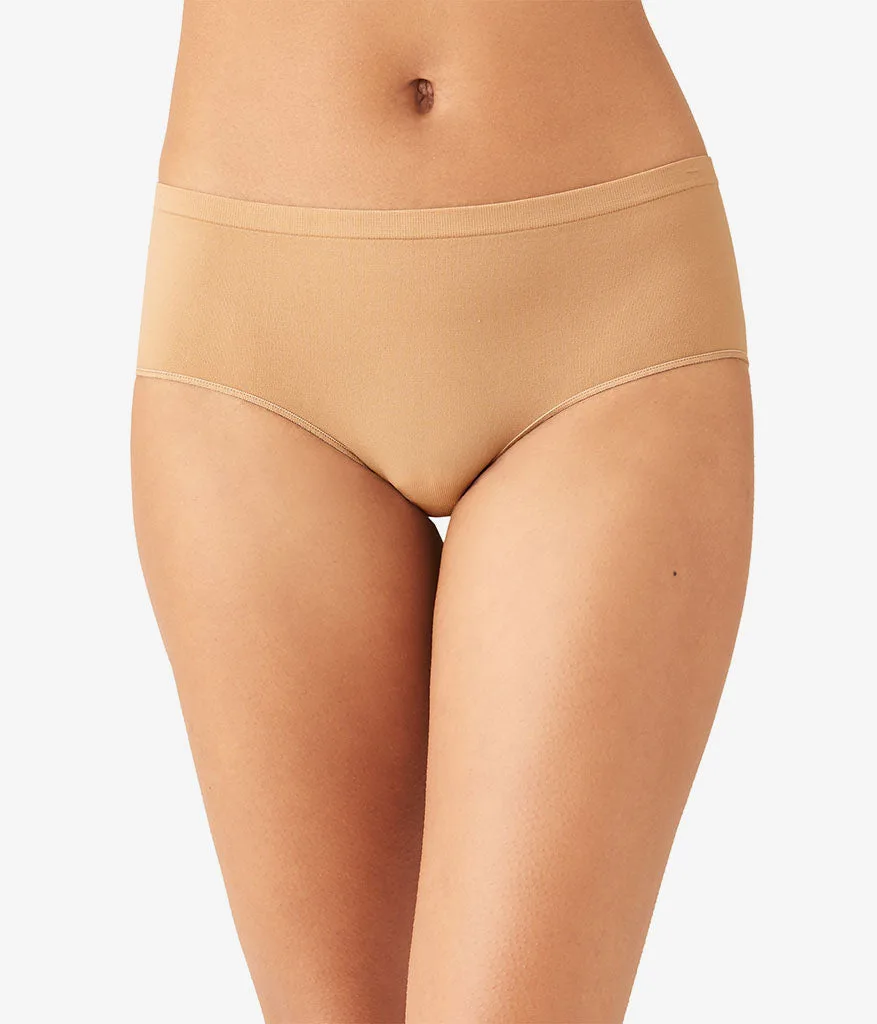
- Comfort Intended Hipster: Soft, stretchy hipster with an elastic-free waistband and an invisible leg finish. More back coverage than a thong helps prevent wedgies, while the flat finishes keep the edges from grabbing.
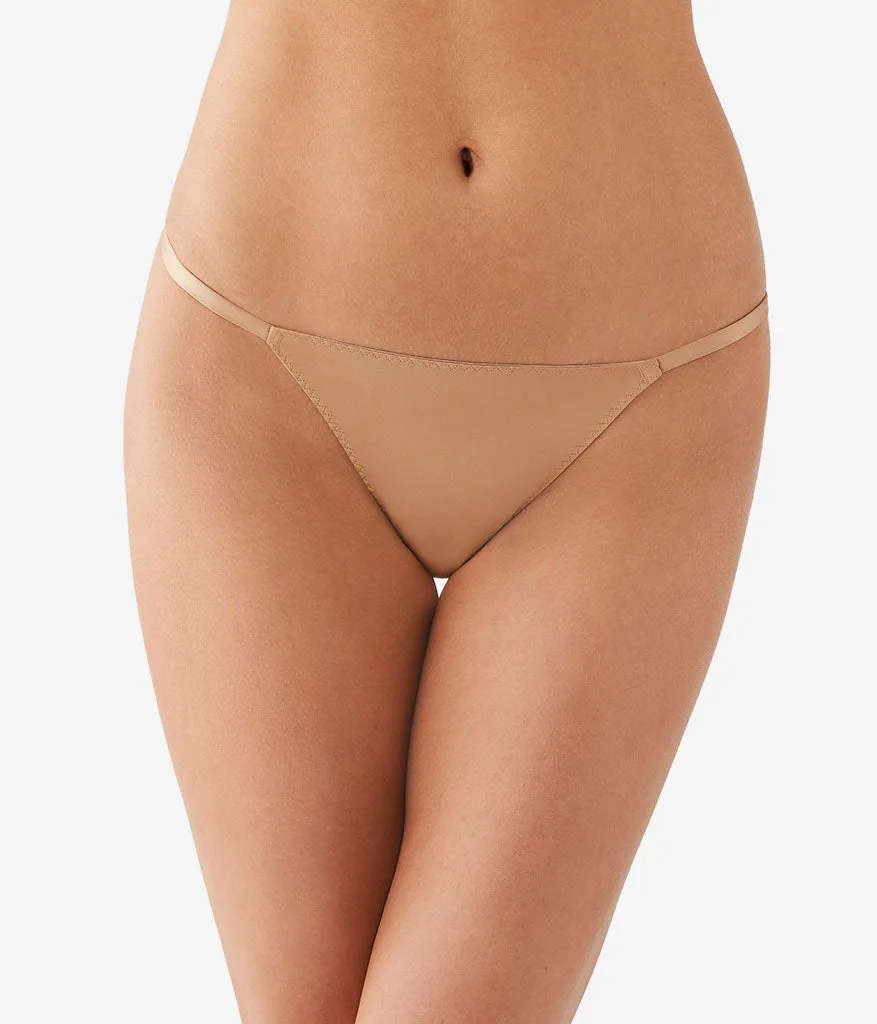
- Spotlight G-String: Soft and sleek G-string with a subtle sheen and leg-elongating silhouette. A barely-there option for those who want minimal coverage; the smooth finish can help it sit flush, but the minimal back means fit is critical.