Quick Answer
For reliable support in an underwired halter bikini top, focus on three things: a snug underbust band, correct cup coverage, and balanced halter straps. Adjust these three points in that order, and you'll get a secure, comfortable fit for D-GG cups.
Why the Underbust Band Matters Most
In any underwired top, the band does about 80% of the support work. If the band is too loose, the halter straps have to compensate, which pulls on your neck and reduces the lift you actually get from the underwire. A well-fitted band should sit horizontally across your ribcage and feel snug but not painful—you should be able to slide one finger underneath it comfortably.
Because halter styles tie at the neck, the band also keeps the cups in place while you swim or move. If your band rides up at the back, that's a sign it's too big. For fuller busts (D-GG), a secure band is non-negotiable for both comfort and long-term support.
Trade-Off: Halter Neck Support vs. Neck Strain
Halter tops are great for creating a lifted, flattering shape, but they place extra weight on your neck. If your cups are too small or your band is too loose, the halter straps will dig in. The solution isn't to loosen the straps—it's to fix the band and cup fit first.
Some halter tops include adjustable straps that let you redistribute pressure. If you find the neck strain persistent even after a correct fit, consider a top with wider straps or a different style, like a balcony top, for comparison.
Step-by-Step Fit Guide
- Check the underbust band: Put on the top and fasten it on the loosest hook. The band should lie flat and horizontal around your ribcage, not ride up at the back. If you can pull the band more than two inches away from your body, size down. A snug band is the foundation of support; never skip this step.
- Assess cup coverage: Bend forward slightly and scoop your breast tissue into the cups, making sure the underwire sits flat against your ribcage and doesn't dig into breast tissue. The center gore (if present) should lie flat between your breasts. If the cups wrinkle or spill over, adjust the size or cup fit. The underwire should encircle your breast, not rest on it.
- Adjust the halter straps: Tie or adjust the halter straps so they lift the cups without pulling your shoulders forward. The straps should feel secure but not leave deep marks. If you feel pressure on your neck, loosen the straps slightly and re-check the band fit. If neck strain persists, the band or cup size is likely the issue, not the straps.
- Test movement and range: Move your arms overhead, twist side to side, and do a gentle bounce. The top should stay in place without shifting or gaping. If the cups move, tighten the band or adjust the straps. A supportive top should stay put during activity.
- Check for pinching or red marks: After wearing the top for 10-15 minutes, check for red marks or discomfort. Light marks are normal, but deep indentations or pain indicate a fit problem. Adjust the band or straps accordingly, or consider a different style. Comfort is key—don't ignore persistent discomfort.
Product Spotlight
-
Fuller Bust Boudoir Beach Olivine Underwired Halter Bikini Top, D-GG Cup Sizes: The Fuller Bust Boudoir Beach Olivine Underwired Halter Bikini Top is a plunge halter with underwires, available in sizes D-H, and features heat-resistant, nickel-free gold buckles. The underwire and halter design provide targeted lift for fuller busts, while the heat-resistant buckles add durability for poolside wear.
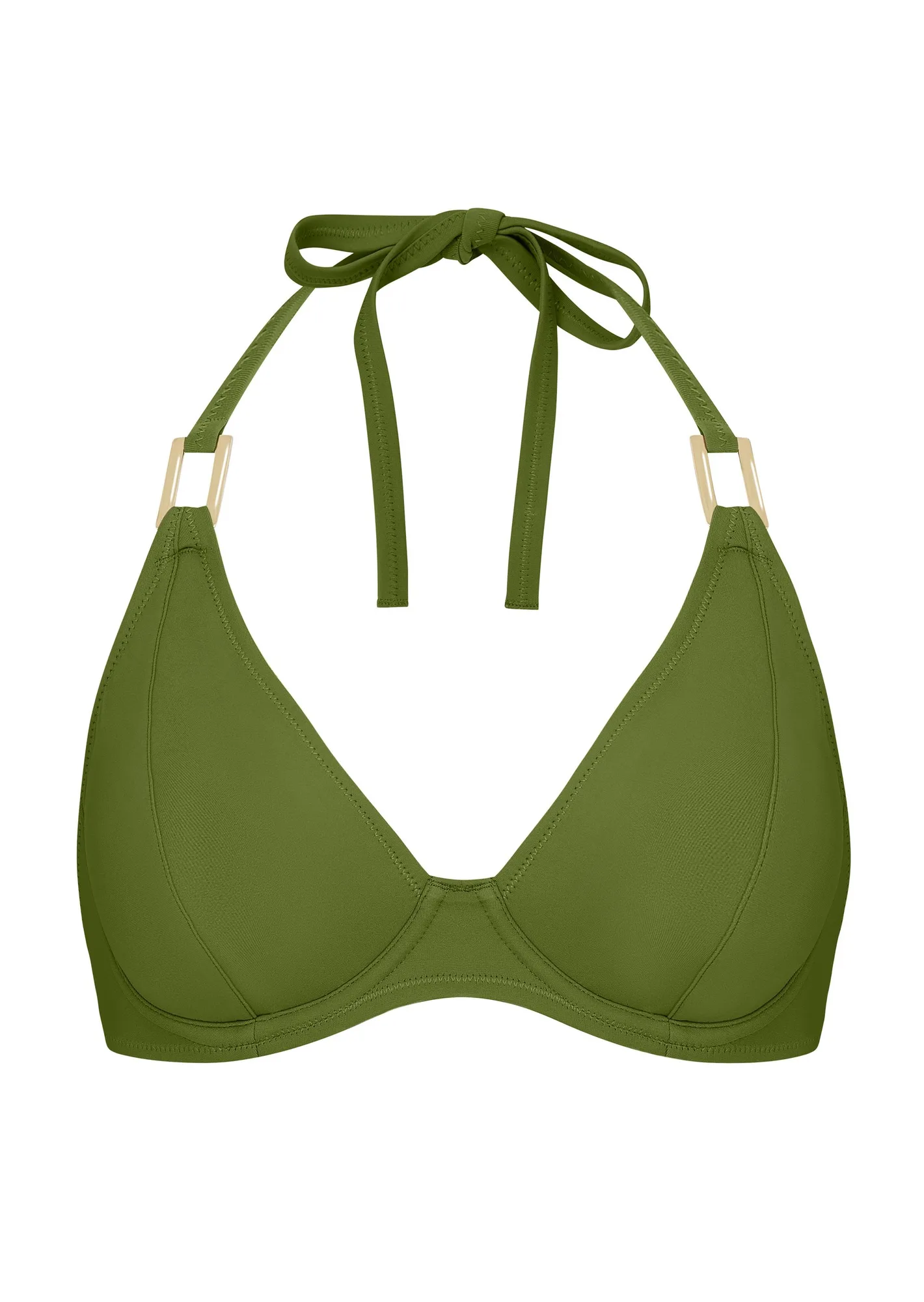
Fuller Bust Boudoir Beach Olivine Underwired Halter Bikini Top, D-GG Cup Sizes