Start with Lisa's $20 journey
Use Une journée dans la vie d'un billet de banque as a short, concrete story that shows how money moves through a community. The book follows Lisa, who earns money, makes a purchase, and then watches her $20 bill circulate to meet various needs and wants of community members. That simple chain gives you a ready-made structure for a French reading activity about money and trade.
Because the collection Bons comptes, bons amis is written for youth ages 9 to 12, you can plan a lesson that fits upper-elementary and early middle school learners. The story does not need extra fictional details to work in class; the confirmed events are enough to anchor a discussion about earning, spending, and how one bill can serve many people.
What the book gives you to work with
-
Une journée dans la vie d'un billet de banque: Lisa earns money, decides to spend it, and has a project in mind. She goes to the store and makes a purchase. These steps give you a clear sequence for teaching money and trade to children: earning, planning, and spending.
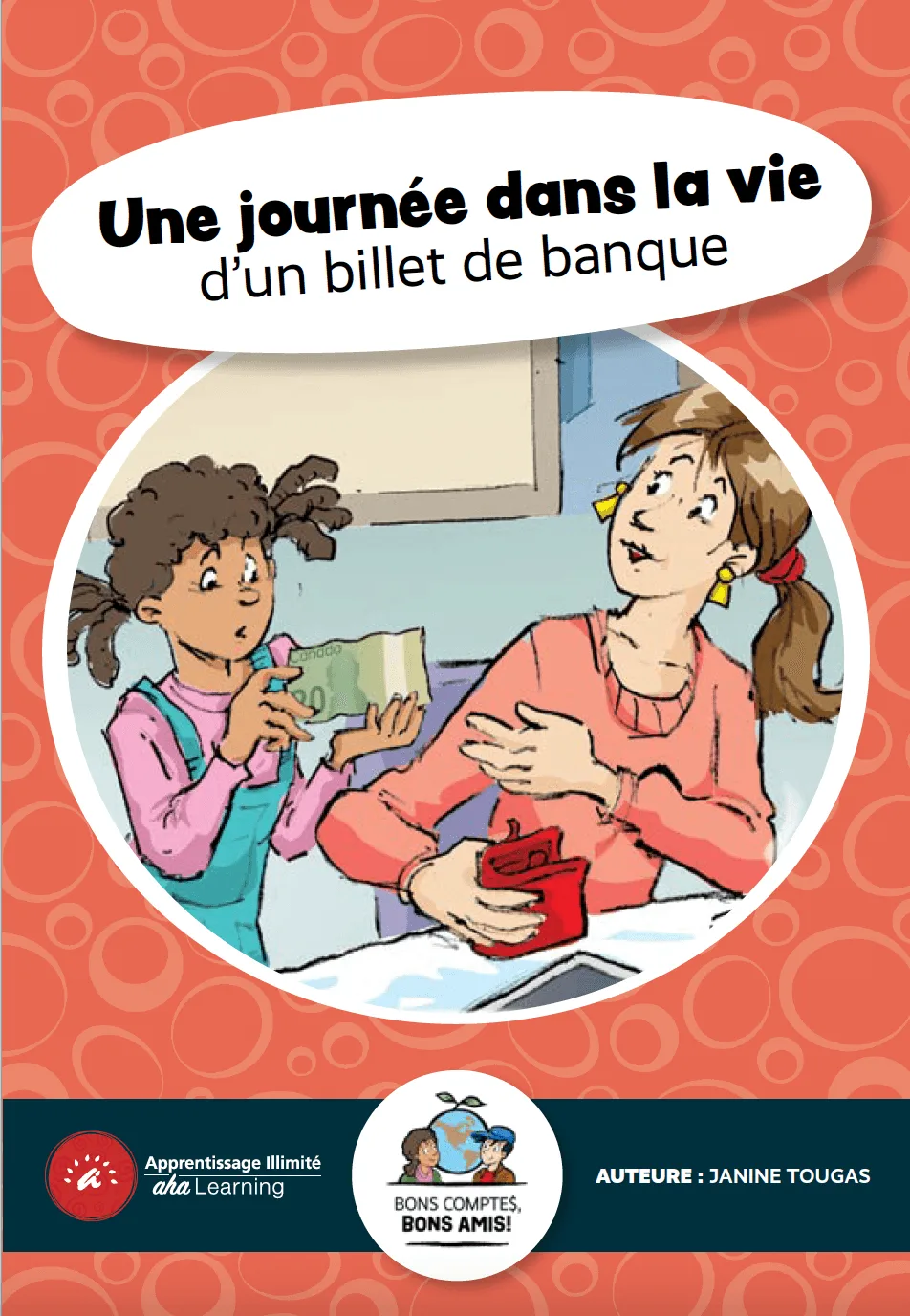
Une journée dans la vie d'un billet de banque
-
Une journée dans la vie d'un billet de banque: Lisa's $20 goes into circulation and is used to meet various needs and wants of community members. This is the heart of the book and the natural starting point for classroom discussion questions money topics like needs versus wants and how money circulates.
-
Une journée dans la vie d'un billet de banque: Finally, Lisa wins an award for her volunteer work. She is surprised by the prize she receives. The ending lets you connect financial literacy to citizenship education and talk about rewards, volunteering, and community.
A three-part classroom routine
- Before reading: set up the money journey: Ask students to name ways people earn money and ways they spend it. Write their ideas on the board. Then tell them they will follow one $20 bill as it moves from person to person.
- During reading: track the bill: Read the story aloud in French. Pause after Lisa makes her purchase and ask students to predict where the $20 might go next. After reading, list the different needs and wants the bill helps meet.
- After reading: discuss and connect: Use the questions below to help students think about earning, spending, and community. Then invite them to draw or write a short sequel showing another stop for the same $20 bill.
Classroom discussion questions about money
- Why does Lisa decide to spend her money?: Have students explain Lisa's project and how her choice connects to her goals.
- What needs and wants does the $20 bill help meet?: Ask students to distinguish between needs and wants using examples from the story.
- How many people does one bill touch?: Trace the bill's circulation and discuss how spending by one person becomes income for another.
- Why is Lisa surprised by her prize?: Talk about volunteering, recognition, and how communities value contributions.
- What would you do with $20?: Let students share a short plan that includes a need, a want, and a way to help someone else.
Connect the story to financial literacy and citizenship
The collection Bons comptes, bons amis is designed to address financial literacy and citizenship education to promote personal and community success. Une journée dans la vie d'un billet de banque fits that goal because it shows money as a tool that moves through a community, not just a private possession.
After reading, you can extend the lesson with a simple classroom economy or a community project. Keep the focus on the confirmed story elements: earning, spending, circulation, and recognition for volunteer work. Avoid adding details about banking systems or interest rates that the book does not cover.
What to check before you plan
The supplied information confirms the age range (9 to 12) and the basic plot, but it does not list page count, vocabulary level, or specific teaching supports. Preview the book yourself to judge whether the French is accessible for your group. If you need a read-aloud for younger children, plan to scaffold vocabulary and pause often.
The catalog price is USD 7.19, with a comparison price of USD 11.99. That makes it an affordable single title for a classroom trial before you commit to more books from the collection.