Two Japanese Face Masks, Two Different Fits
Unicharm offers two popular face mask lines that serve different preferences: the Cho-rittai (Ultra 3D) Standard Type and the Cho-kaiteki Super Comfortable Pleat Type. Both are designed for everyday use and share a 99% cut filter claim against virus droplets and pollen, but their structure, size, and comfort features set them apart. This comparison focuses on what the supplied information tells us—and what it doesn't—so you can decide which mask fits your daily routine.
Fit and Structure: 3D vs Pleat
The Cho-rittai mask uses a three-dimensional structure that follows the shape of the face. The supplied information describes it as a "full-fitting structure mask" with high protection against particles. This design aims to reduce gaps around the nose and chin, which is useful if you want a snug seal without adjusting the mask constantly.
The Cho-kaiteki mask is a pleated type, available in a small size. The pleats allow the mask to expand and conform to different face shapes, but the fit may be less rigid than the 3D version. The supplied facts also note that the Cho-kaiteki has an "omnidirectional fit structure" and is safe for PM2.5, suggesting it still aims for a secure seal despite the pleated design.
Key Product Features at a Glance
-
Unicharm Cho-rittai (Ultra 3D) Mask Standard Type / Regular Size 30 Pieces: Features 99% cut filter and three-dimensional structure which helps block virus droplets and pollen. The 3D shape is designed for a close, gap-free fit, which is important for filtration effectiveness.
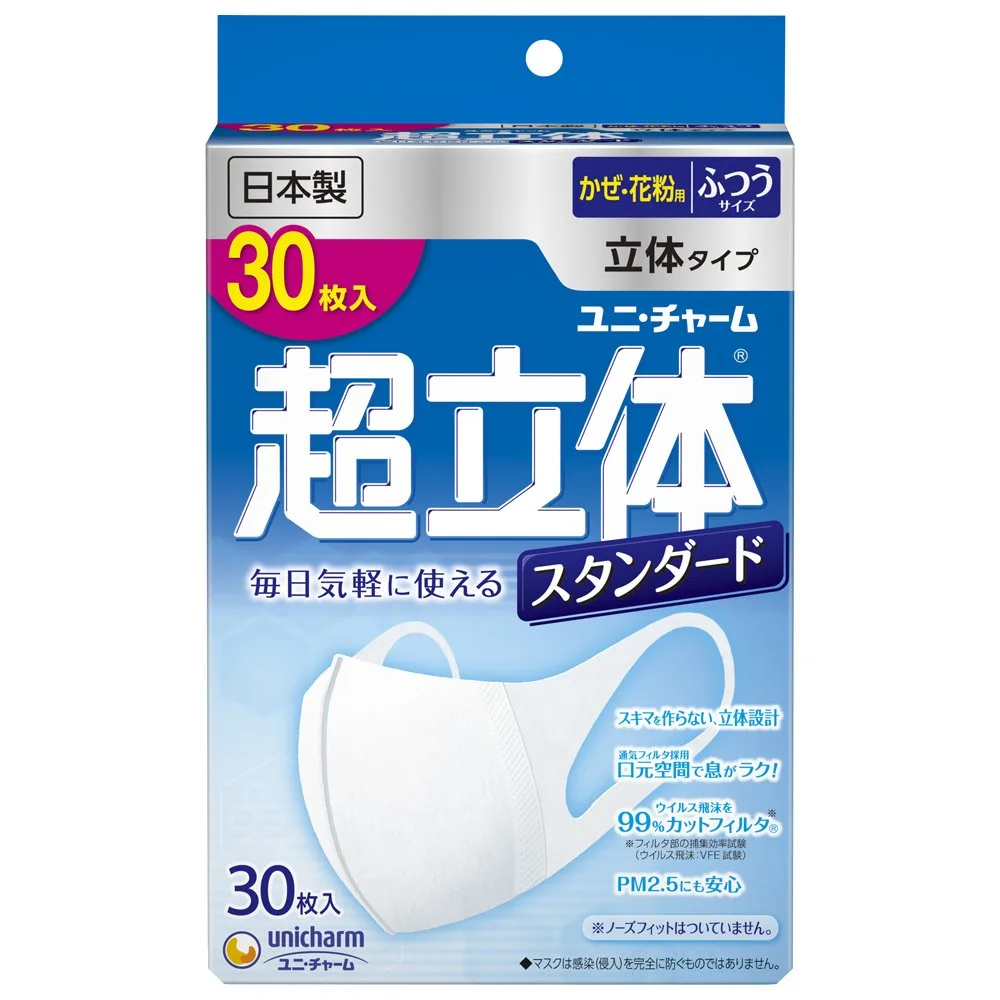
Unicharm Cho-rittai (Ultra 3D) Mask Standard Type / Regular Size 30 Pieces
-
Unicharm Cho-kaiteki Super Comfortable Masks Pleat Type Small Size Box of 30: Comfortable to wear with 'Silk Touch Filter' which is soft to the touch with silk and 'Soft Stretch Ear Hook' which does not hurt your ears. If you wear a mask for long periods, the ear hooks and fabric softness can reduce irritation.
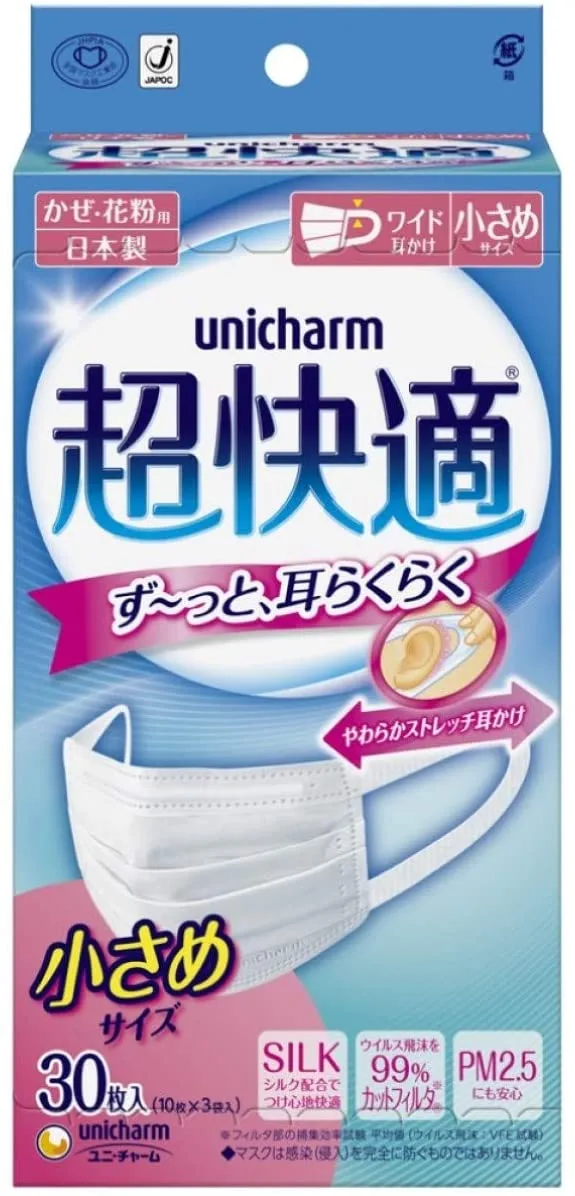
Unicharm Cho-kaiteki Super Comfortable Masks Pleat Type Small Size Box of 30
Comfort and Ear Strain
The Cho-kaiteki explicitly addresses ear comfort with its "Soft Stretch Ear Hook" design and a "Silk Touch Filter" that feels soft against the skin. These features are not mentioned for the Cho-rittai in the supplied information. If you find standard ear loops uncomfortable after a few hours, the Cho-kaiteki may be the better choice.
The Cho-rittai's supplied details focus on the 3D fit and particle protection, but do not mention ear hook comfort. This doesn't mean it's uncomfortable—just that the available facts don't confirm a specific comfort feature. Your personal tolerance for ear pressure will matter here.
Size Options and What the Information Tells You
The Cho-rittai is listed as "Regular Size" and comes in a box of 30 pieces. The Cho-kaiteki is explicitly "Small Size" in a box of 30. If you have a smaller face or prefer a more compact fit, the Cho-kaiteki small size is a clear option. The regular size of Cho-rittai may suit average adult faces, but the supplied information does not specify dimensions or a size range.
Neither product's supplied data includes detailed measurements, so you may need to try one box to assess fit. The Cho-kaiteki's pleated design can also accommodate some variation in face size despite being labeled small.
Cho-rittai vs Cho-kaiteki: Key Differences
- Structure: Cho-rittai: 3D pre-shaped cup that follows the face. Cho-kaiteki: pleated flat mask that expands when worn.
- Size: Cho-rittai: Regular size. Cho-kaiteki: Small size.
- Comfort features: Cho-kaiteki: Silk Touch Filter and Soft Stretch Ear Hook. Cho-rittai: no specific comfort features confirmed in supplied data.
- Filtration claim: Both: 99% cut filter against virus droplets and pollen. Cho-kaiteki also mentions PM2.5 protection.
- Intended use: Both: everyday use. Cho-rittai emphasizes high protection and full fit; Cho-kaiteki emphasizes comfort.
What the Supplied Information Does Not Cover
The available facts do not include breathability ratings, exact filtration efficiency percentages (only the 99% cut claim), or material composition beyond the filter and ear hook descriptions. There are no instructions for proper wear duration, disposal, or washing. The Cho-rittai's regular size may not fit very small or very large faces, but no size chart is provided. For medical or high-risk situations, consult a professional—these are general-purpose masks, not medical-grade respirators.