A 50-piece puzzle designed for young builders
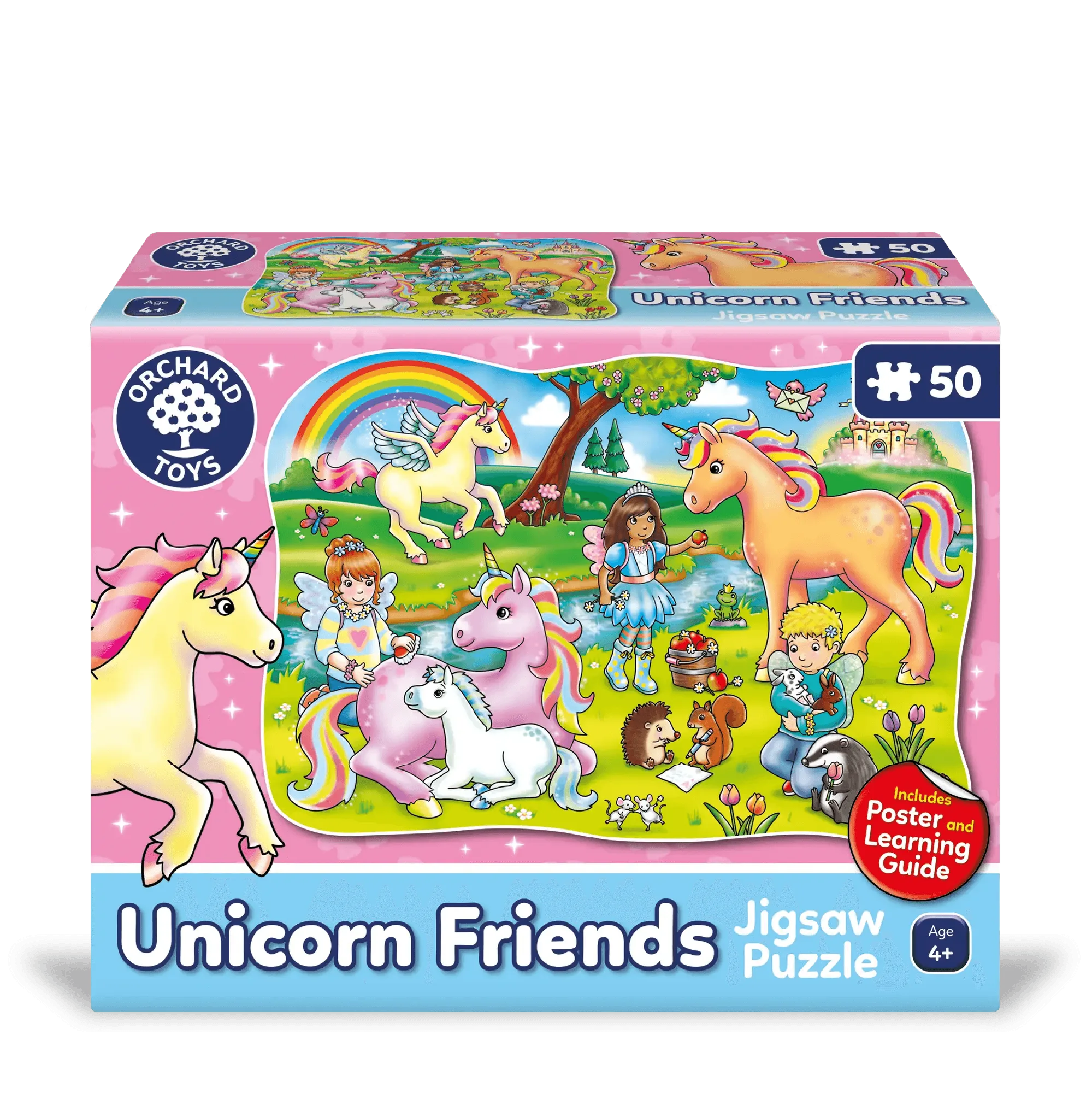
The Orchard Toys Unicorn Friends Jigsaw Puzzle is a 50-piece floor puzzle featuring an enchanted scene with unicorns, fairies, and woodland animals. It includes a poster and a learning guide with discussion questions to encourage observation, counting, and imaginative play after the puzzle is complete.
This guide explains what to expect from the puzzle and how to help a preschooler build it with confidence.
What is in the box
-
Unicorn Friends Jigsaw Puzzle: 50 jigsaw puzzle pieces and 1 poster. Knowing the piece count and that a poster is included helps you plan the first build and decide if the puzzle is the right challenge for your child.
Unicorn Friends Jigsaw Puzzle
-
Unicorn Friends Jigsaw Puzzle: Includes a fun learning guide with discussion points such as 'how many fairies can you see?' and 'where is the frog prince sitting?'. The learning guide turns the puzzle into a conversation starter, helping you extend play beyond just fitting pieces together.
Age guidance and safety
The puzzle is not suitable for children under 3 years due to small parts and a choking hazard. For a toddler aged 2, this puzzle is not recommended. For a preschooler aged 3 or 4 who has some puzzle experience, 50 pieces can be a good next step after simpler puzzles.
Always supervise young children during play and store the puzzle out of reach of younger siblings.
How to help a preschooler build this puzzle
The following steps are based on the puzzle's design and the supplied learning guide. Adjust the pace to match your child's attention span.
- Start with the poster: Lay the poster on the table or floor beside the puzzle. Let your child look at the picture and point out characters they recognise, such as the unicorn or frog prince.
- Sort the pieces: Help your child separate the edge pieces from the middle pieces. This teaches a basic puzzle strategy and makes the task less overwhelming.
- Build the border first: Work together to find the straight-edge pieces and assemble the frame. This gives a clear boundary and a sense of progress.
- Fill in the middle: Use the poster as a reference. Encourage your child to match colours and shapes to find where each piece goes. Celebrate small successes.
- Use the learning guide: Once the puzzle is complete, ask the discussion questions from the guide, such as 'how many fairies can you see?' to reinforce counting and observation.
When to move on
If your child builds the puzzle easily and wants more challenge, they may be ready for a puzzle with more pieces or a more detailed scene. If they struggle, try building together and gradually let them take the lead. The puzzle is designed to be pieced together time and time again, so repetition is part of the fun.