Why debloating patches invite so many myths
Debloating is one of those wellness topics where everyone has a theory. Patches make it more confusing because they look clinical, yet the category is loosely regulated and often described in vague language. That gap between how a patch looks and what its label actually says is where myths grow.
The useful move is not to decide whether patches are good or bad in general. It is to take one product, read what it actually claims, and mark the line between confirmed details and assumptions. Unpuff Patches are a good example because the supplied product information is short and specific enough to test several common claims against it.
Five common claims, checked against the Unpuff Patches record
Each claim below is something shoppers reasonably wonder about. The verdict reflects only the supplied product information, not the entire category.
- Myth: a patch is basically a pill in sticker form: Partly true, partly misleading. The record says Unpuff Patches are convenient and easy to use with no pills, no powders, and no mixing. That describes the format, not the delivery mechanism. The supplied information does not confirm how ingredients move from the patch into or onto the body, so treat any absorption claim you see elsewhere as unverified.
- Myth: debloating patches have a long list of active ingredients: Not supported here. The record describes a blend of plant-based ingredients traditionally used in everyday wellness rituals. It does not list individual botanicals, amounts, or a full ingredient panel. That is a real limitation for anyone who wants to compare formulas or check for a specific plant.
- Myth: one patch fixes bloating after any meal: Overstated. The product copy frames Unpuff Patches around days when your stomach does not feel quite right, whether after a meal, during a busy stretch, or while traveling. It does not promise a cure, a fixed result time, or effectiveness for every cause of bloating.
- Myth: patches are only for people at home: Contradicted by the record. The product is explicitly positioned for home or on the move, and the no-mixing format supports that. Portability is one of the few claims the supplied information clearly backs.
- Myth: the label tells you exactly how and when to apply it: Not in the supplied information. No preparation or operating instructions were provided, so this article cannot give you an application schedule, wear time, or placement guidance. Check the packaging that arrives with your order for the manufacturer's directions.
What the Unpuff Patches record actually supports
Strip away the marketing language and the confirmed facts are modest: a 30-patch supply, a plant-based blend described as traditional rather than clinically proven, and a format built around convenience. The record does not include clinical trials, ingredient quantities, or a timeline for results.
That does not make the product useless. It means the honest case for buying is fit and format, not guaranteed outcomes. If you want a no-pill, no-mixing option to keep in a bag or desk drawer for unsettled stomach days, the product description matches that use. If you need a predictable, dose-specific solution, the supplied information does not give you enough to judge that.
Product details behind these checks
-
Unpuff Patches: Unpuff Patches come as 30 patches and are described as convenient and easy to use, with no pills, no powders, and no mixing. The format claim is the clearest verified benefit in the record. It supports the portability myth check and sets a realistic baseline for what the product is designed to do.
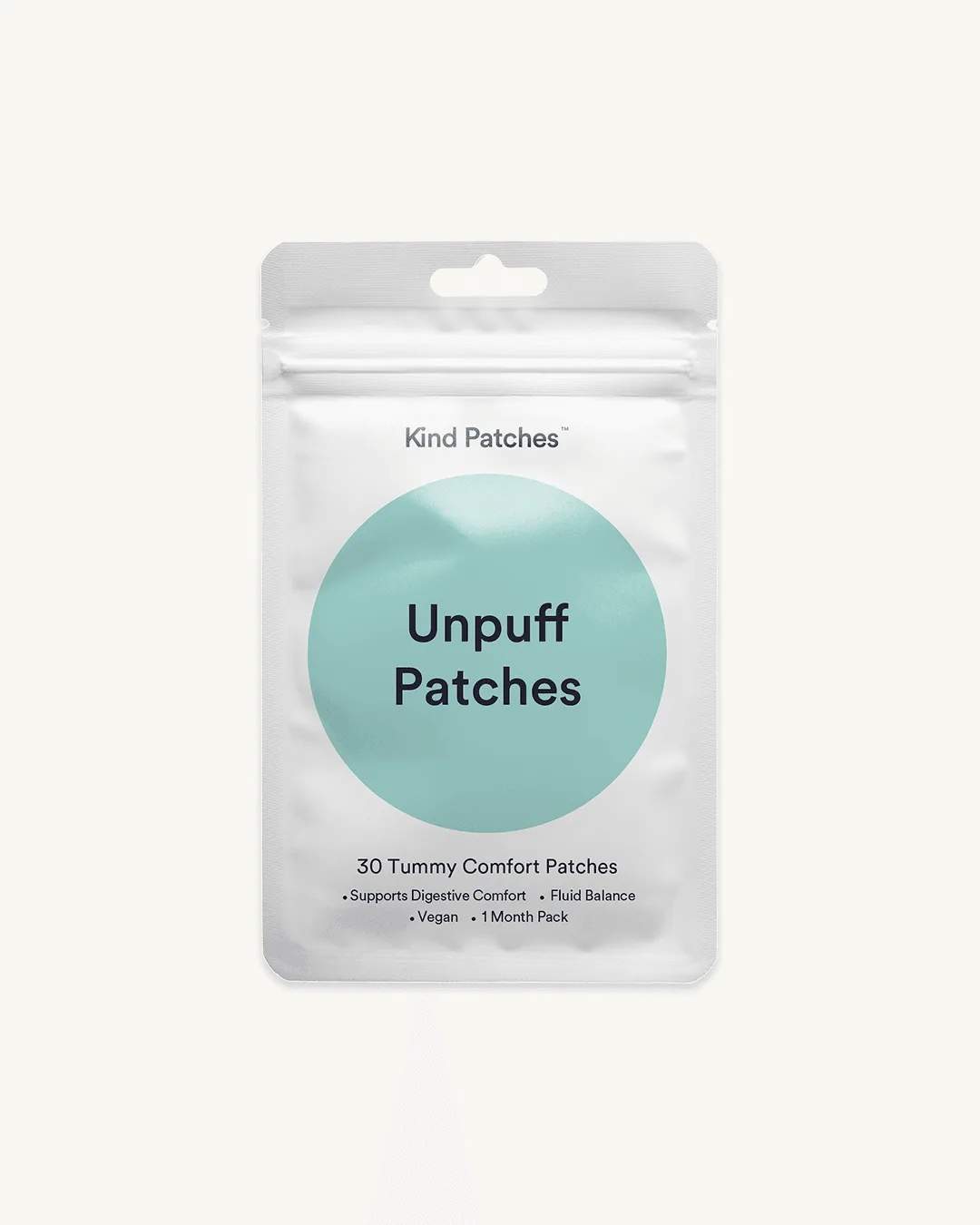
Unpuff Patches
-
Unpuff Patches: The patches are made with a blend of plant-based ingredients traditionally used in everyday wellness rituals. This is the full extent of the ingredient description supplied. It explains why specific botanical or dosage claims cannot be confirmed from the available information.
-
Unpuff Patches: The product is positioned for days when your stomach does not feel quite right, including after a meal, during busy periods, or while traveling. These are the situations the product is intended for. They are broader than a single trigger and narrower than a medical treatment.
The ingredient question: what traditional means, and what it does not
The phrase traditionally used is doing a lot of work in the Unpuff Patches description. In wellness marketing, traditional use usually means a plant has a history in folk or cultural practice. It is not the same as a clinical endorsement, and it does not tell you whether the amount in a patch is meaningful.
Because the supplied record does not name the plants or their quantities, you cannot compare this formula to another debloating patch on ingredient strength. That is a genuine gap, not a hidden red flag. The practical response is to treat any specific ingredient claim you encounter, positive or negative, as unconfirmed until you can read the full panel on the package.
Setting expectations you can actually use
A realistic expectation for Unpuff Patches looks like this: you get a low-effort option to try on unsettled stomach days, in situations where pills or powders are inconvenient. You do not get a guaranteed debloating timeline, a replacement for medical advice, or a product whose full ingredient list is available in the supplied information.
If bloating is frequent, painful, or accompanied by other symptoms, a patch is not the right first stop. The supplied record makes no medical claims, and nothing here should be read as diagnosis or treatment guidance. Use the product as a convenience item within your normal routine, and get professional advice for persistent concerns.
The most honest way to evaluate any debloating patch, including this one, is to separate what the label confirms from what you hope it does. Unpuff Patches confirm a 30-patch supply, a plant-based blend described as traditional, and a no-mixing format. Everything beyond that is expectation, not evidence.