Quick answer
For a first unroasted coffee purchase, choose a green bean that matches your preferred roast level and flavor profile, such as the sweet, blend-friendly Costa Rican Tarrazu or the bright, wine-like Tanzanian Peaberry.
Why origin and roast level matter
Unroasted coffee beans (green coffee) retain the full potential of their origin. A bean from Costa Rica will taste different from one grown in Tanzania, and the roast level you choose unlocks or mutes those flavors. Lighter roasts preserve bright acidity and floral notes, while darker roasts develop sweetness and body.
If you are new to home roasting, start with a single origin you know you enjoy as a brewed coffee. That familiarity helps you learn how your roasting equipment and technique affect the final cup.
Storage and handling realities
Green coffee is shelf-stable for months if stored in a cool, dry place away from direct sunlight. Once you roast a batch, the clock starts: use roasted beans within 2–4 weeks for peak flavor.
Never consume green coffee as-is. Unroasted beans are hard and intended exclusively for roasting. Always roast your green coffee before grinding and brewing.
Your green coffee decision rules
- Choose by desired roast level: If you plan to roast light or medium, pick a bean known for bright acidity (like Tanzanian Peaberry). If you prefer medium-dark or dark roasts, pick a bean with inherent sweetness (like Costa Rican Tarrazu).
- Match origin to flavor preference: For a clean, sweet, blend-friendly cup, go with Costa Rican Tarrazu. For a rare, wine-like, bright cup, go with Tanzanian Peaberry.
- Buy enough for at least two practice batches: Your first roast may not be perfect. Order enough green coffee to roast at least two or three small batches so you can adjust time and temperature without running out. Plan for a learning curve: budget for 2–3 trial roasts before expecting your ideal cup.
Green coffee options to consider
-
Costa Rican Tarrazu - Unroasted Coffee: Costa Rica Tarrazu green coffee is an amazing offering due to its delicious flavor as a stand alone single origin and for its easy blend-ability. We suggest roasting this green coffee to a medium to dark level to enhance the bean's inherent sweetness and clean body. If you want a forgiving first roast that works well on its own or mixed into a blend, this bean rewards medium to dark roasting with a smooth, sweet cup.
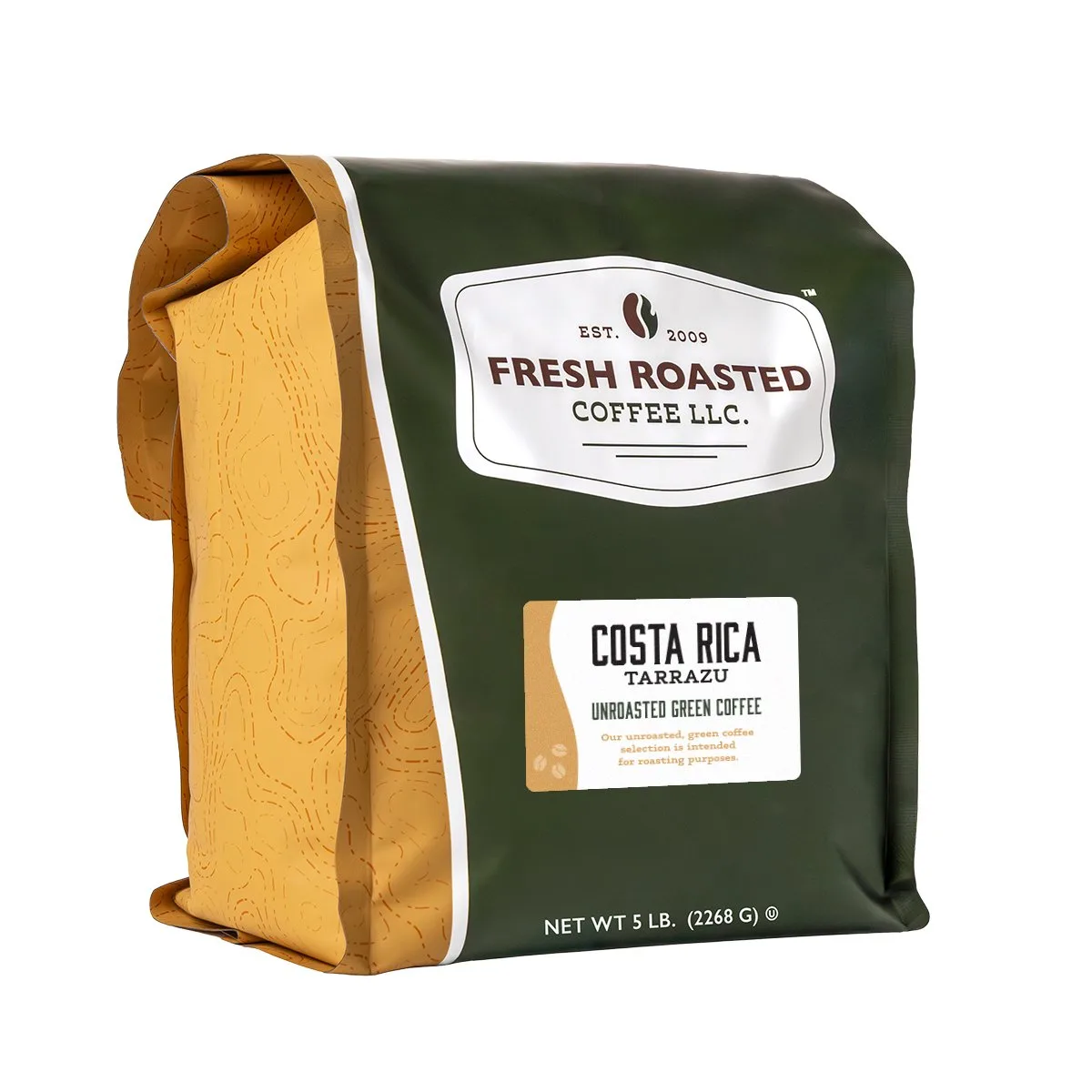
Costa Rican Tarrazu - Unroasted Coffee
-
Tanzanian Peaberry - Unroasted Coffee: Our Tanzanian Peaberry green coffee is a rare and stunning single origin offering that is most favorable when roasted to a light or medium level. Bright acidity and wine-like flavors are dulled and lost when taken to a dark roast. Choose this if you enjoy vibrant, complex flavors and are willing to monitor your roast carefully to preserve its wine-like character.
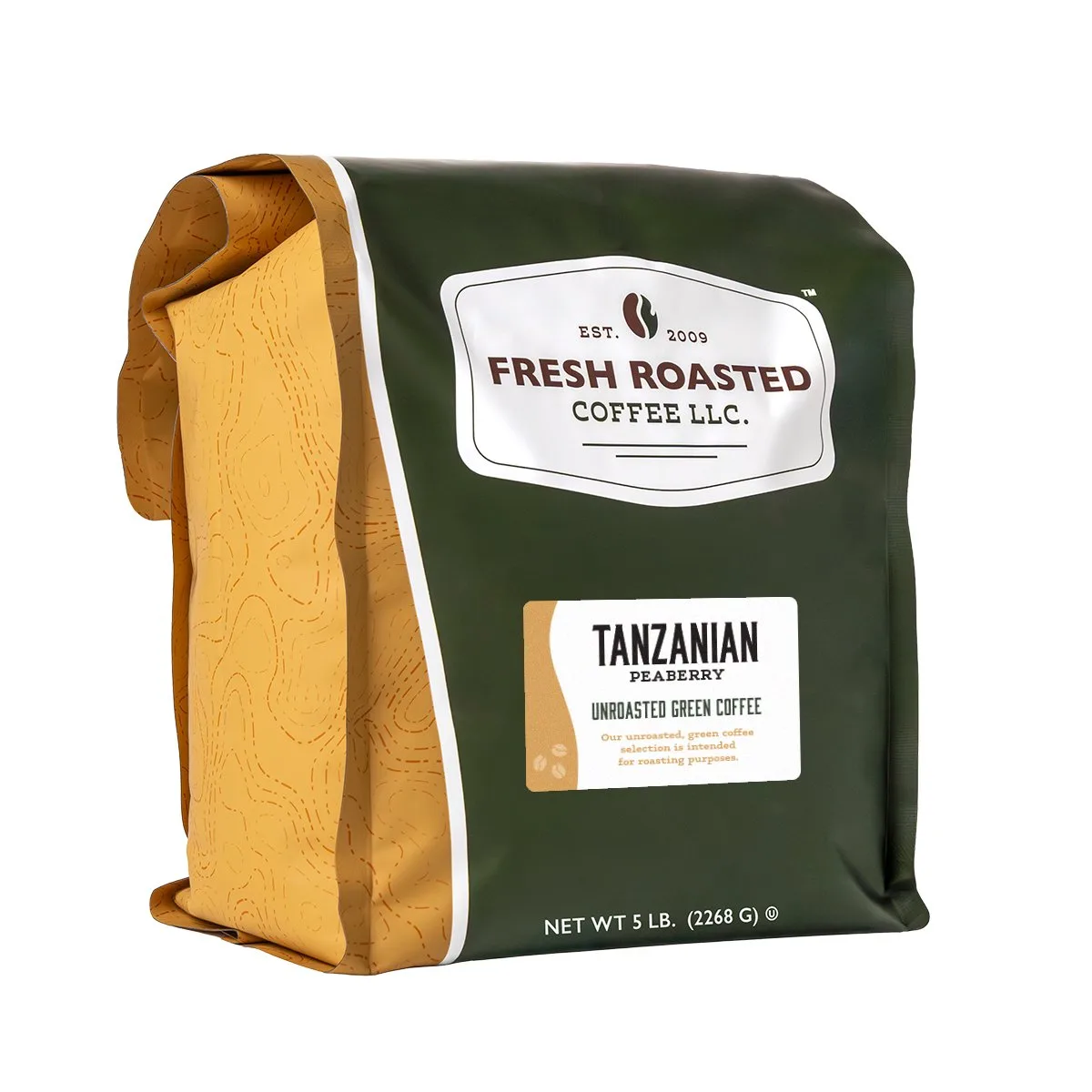
Tanzanian Peaberry - Unroasted Coffee
Which green coffee fits you?
Best for
- Costa Rican Tarrazu: beginners who want a forgiving bean that tastes great at medium to dark roasts
- Tanzanian Peaberry: adventurous roasters who love bright, wine-like flavors and are willing to monitor the roast closely
Not for
- Those who want a pre-ground, ready-to-brew coffee (choose roasted beans instead)
- Anyone who plans to drink the beans without roasting (green coffee must be roasted first)