Two Everyday Collars, Two Different Fits
DOG Copenhagen offers two popular collar lines for daily walks: the Urban Explorer and the Urban Style. Both are made with OEKO-TEX® STANDARD 100 certified materials and feature 3M™ reflective trim for visibility, but they differ in construction, padding, and hardware. Choosing between them depends on how your dog moves and what kind of comfort you prioritize.
Urban Explorer vs Urban Style: Key Differences
The table below highlights the main differences between the two collars based on the supplied product information.
- Padding: Urban Explorer: Full-length soft and breathable padding for comfortable daily use. Urban Style: No padding; soft polyester webbing.
- Hardware: Urban Explorer: Dual aluminum D-rings. Urban Style: Strong, lightweight aluminum hardware with a separate ID attachment point and updated Duraflex™ buckle in POM material.
- Shell Material: Urban Explorer: New Oxford polyester shell fabric and polyester webbing, stain and water-resistant. Urban Style: Polyester webbing with an updated pattern to resist fading.
- Reflectivity: Both: Efficient 3M™ reflective trim.
- Certification: Both: OEKO-TEX® STANDARD 100 certified.
- Price: Urban Explorer: USD 19.77 (compare at USD 29.95). Urban Style: USD 15.81 (compare at USD 23.95).
Why Padding Matters for Fit and Comfort
The Urban Explorer collar includes full-length soft and breathable padding, which can distribute pressure more evenly around the neck. This is especially helpful for dogs that pull on leash or have sensitive skin. The Urban Style collar lacks padding but uses soft polyester webbing that is still comfortable for most dogs, especially those that walk calmly. If your dog tends to strain against the leash, the padded Urban Explorer may offer a more comfortable fit.
What the Supplied Information Tells Us
-
Urban Explorer™ Collar: The Urban Explorer collar is a strong lightweight collar made of durable stain and water-resistant materials. The unique design provides full-length soft and breathable padding for comfortable daily use. The padding is the key differentiator for comfort during daily walks, especially for dogs that pull.
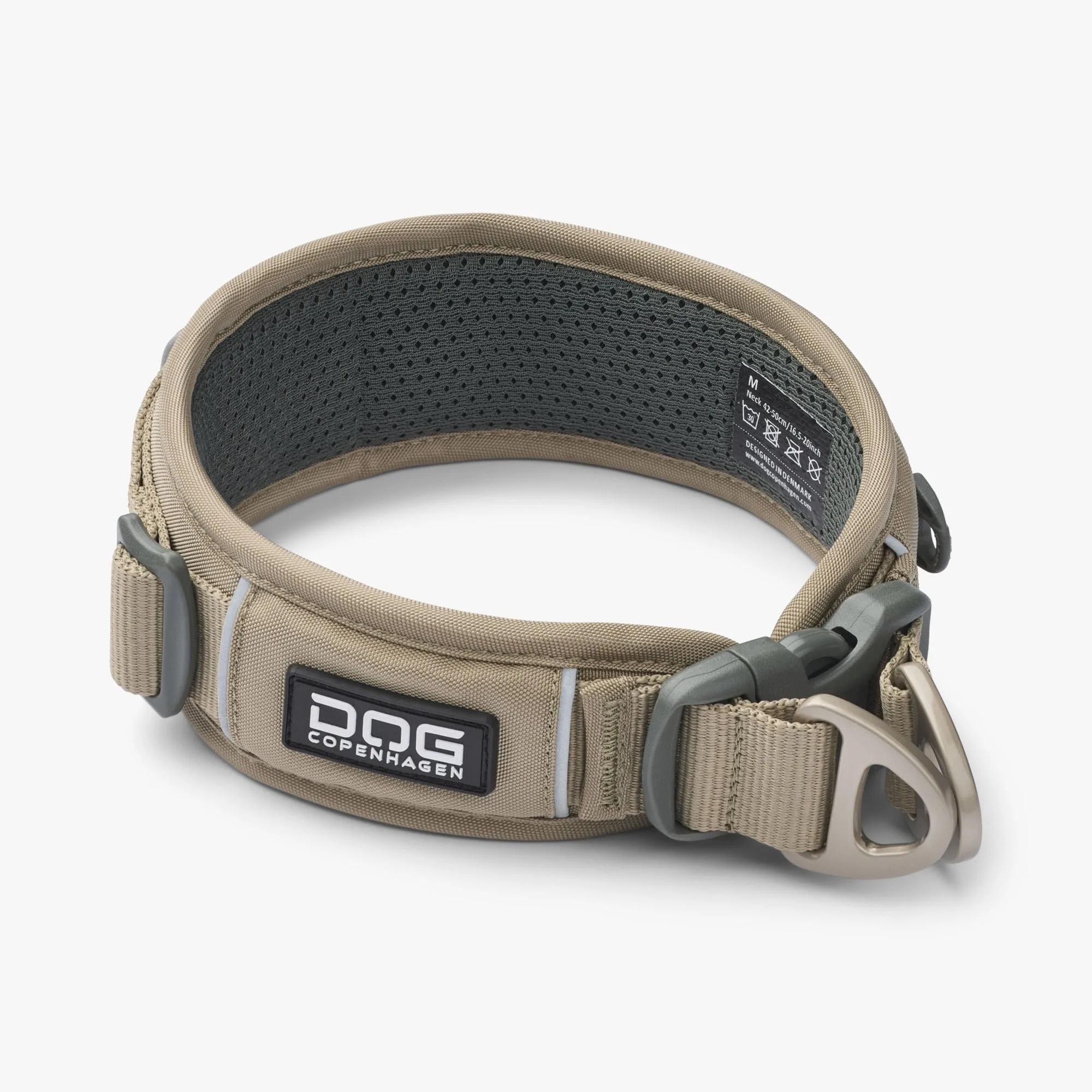
Urban Explorer™ Collar
-
Urban Style™ Collar: The Urban Style collar is an easy to use everyday collar made of soft and durable polyester webbing with efficient 3M reflective trim and equipped with strong and lightweight aluminum hardware and separate ID attachment point. The separate ID attachment point is a practical feature for owners who want to keep tags separate from the D-ring, reducing wear on the hardware.
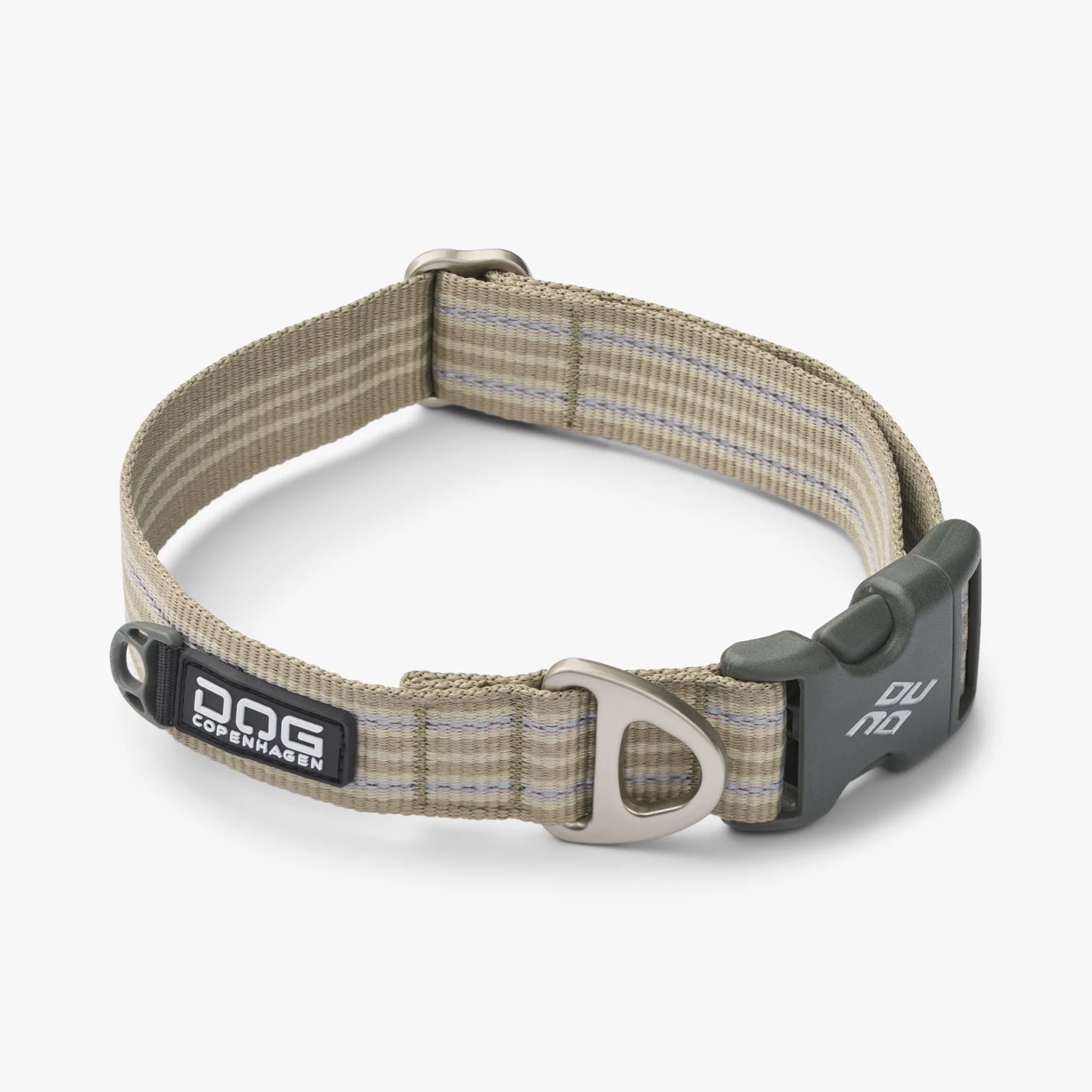
Urban Style™ Collar
Hardware and Attachment Points
The Urban Explorer features dual aluminum D-rings, which allow you to attach a leash in two positions if needed—useful for training or for dogs that walk on both sides. The Urban Style has a single D-ring plus a separate ID attachment point, a thoughtful detail that keeps tags from scratching the buckle or sliding onto the leash attachment. Both use lightweight aluminum hardware, but the Urban Style‘s updated Duraflex™ buckle in POM material adds durability to the closure.
Which Collar Suits Your Dog?
Choose the Urban Explorer if your dog needs extra padding for comfort, especially if they pull or have a sensitive neck. The stain and water-resistant Oxford shell also makes it a good choice for dogs that get dirty on walks. Choose the Urban Style if you prefer a simpler, lighter collar with a separate ID ring and a lower price point. Both collars are available in standard sizing and can be paired with matching leashes and harnesses from the same range.
What the Supplied Information Does Not Settle
The product records do not include specific sizing charts, so you will need to measure your dog‘s neck and refer to DOG Copenhagen’s size guide for the correct fit. Neither collar is described as chew-proof or suitable for heavy-duty training. For dogs that spend a lot of time in water, the water-resistant Urban Explorer may be more practical, but the supplied information does not confirm submersion limits.