Why US GREEN earns a place on the military figure bench
US GREEN is a matte acrylic paint from the Warfront range, supplied in a 17ml dropper-style bottle. The catalog describes it as creamy with opacity that supports glazing, and the tone is intended for modeling and military figures. That combination makes it a practical choice for olive and drab uniforms where you want a solid base that can also be thinned for subtle shading.
This guide covers how to use US GREEN from basecoat through layering and glazing, with checkpoints you can actually see on the figure. It also notes where the supplied product record stops short, so you can plan your own tests rather than rely on assumptions.
What the US GREEN record confirms
-
US GREEN: Matte finish acrylic paint 17ml Matte acrylics are the standard for military figures because they avoid shiny highlights on cloth and equipment. The 17ml size is workable for multiple figures.
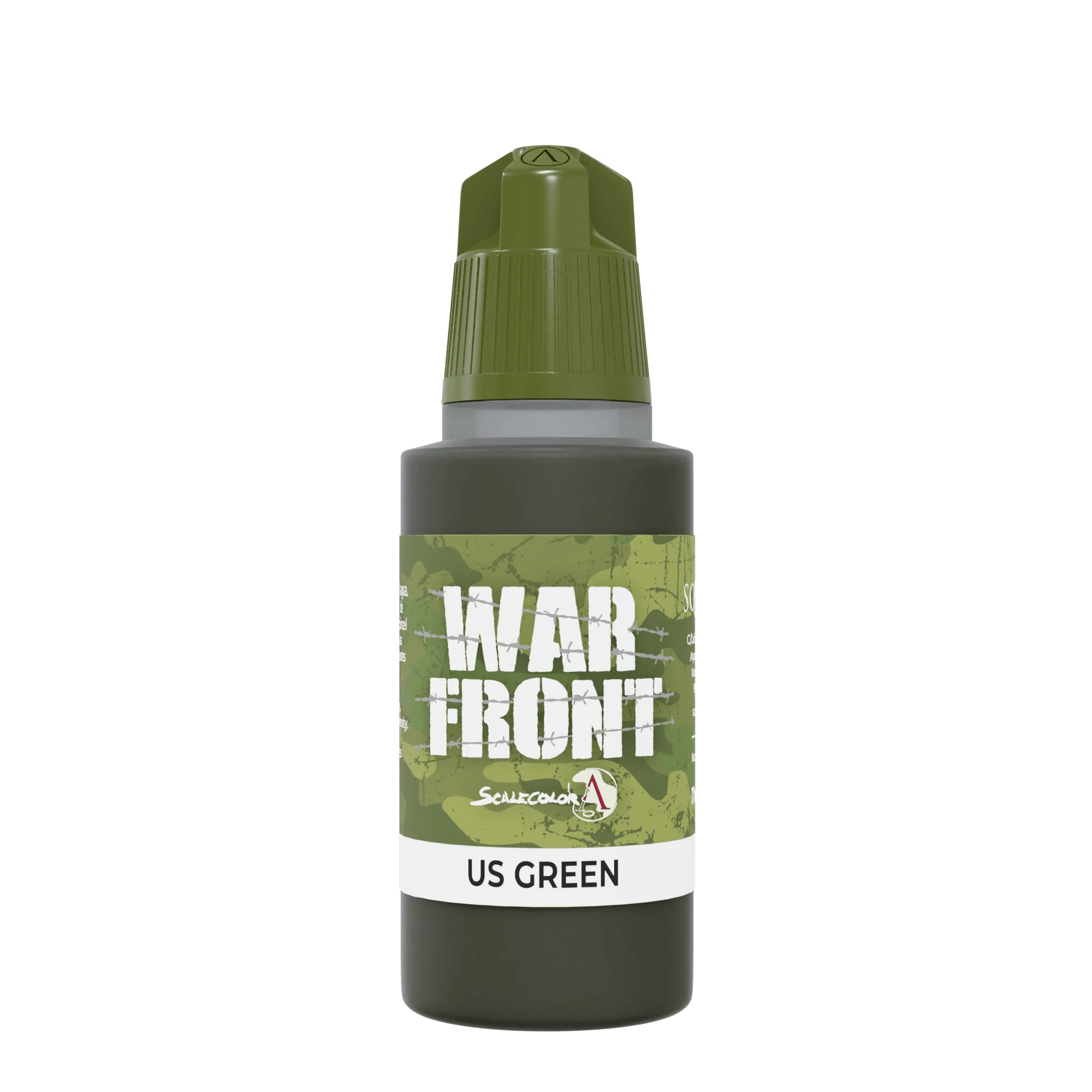
US GREEN
-
US GREEN: Warfront acrylic paints are creamy and their opacity allows us to create glazes with ease, achieving excellent results. Creamy consistency helps the paint flow off the brush without excessive streaking, and the opacity means you can thin it for glazes without losing control.
-
US GREEN: With tones suitable for modeling and military figures. The color is designed for military subjects, so it fits olive and drab uniform palettes without extra mixing.
-
US GREEN: Valid for brush and airbrush. You can use the same bottle for detail brushwork and for broader airbrush work, provided you thin appropriately for your airbrush setup.
Basecoating a military figure with US GREEN
Work on a clean, primed surface. The product record does not specify a primer, so use the primer you normally trust for acrylics and let it cure fully before painting.
These steps assume brush application. For airbrush, thin the paint to a consistency that sprays without spitting; the record does not give a ratio, so start thin and add paint gradually.
- Load the brush lightly: Dip the brush and wipe off excess on a palette or paper towel. Creamy paint can flood detail if overloaded.
- Apply a thin, even coat: Brush in one direction, then crosshatch gently to cover without scrubbing. Let it dry before judging coverage.
- Build a second coat if needed: The opacity supports coverage, but thin coats dry faster and preserve detail. Add a second coat only after the first is touch-dry.
- Check for pooling: Look at recesses and folds. If paint pools, wick it away with a dry brush before it dries.
Layering and glazing with US GREEN
US GREEN's opacity makes it useful for both solid layers and translucent glazes. For layering, use it straight or thinned slightly to build color on raised areas. For glazing, thin it more heavily and apply a thin film over a dried basecoat to unify transitions or shift the tone.
A practical checkpoint: after a glaze dries, you should still see the underlying detail. If the glaze looks like a solid coat, it was too thick. The record says glazes are easy to create, but it does not specify a thinning ratio, so test on a spare surface first.
US GREEN layering tips for olive uniforms
These tips focus on keeping control and building depth without obscuring detail. They assume you are working over a cured US GREEN basecoat.
- Keep layers thin: Thin paint with water or your usual acrylic thinner. Multiple thin layers give more control than one thick coat.
- Work from shadow to light: Apply US GREEN to midtones, then use a darker mix in recesses and a lighter mix on raised folds. The record does not supply mix ratios, so adjust by eye.
- Use a glaze to blend: A thin glaze of US GREEN over transitions can soften hard edges. Apply sparingly and let it dry before assessing.
- Test on a spare figure: Because the record does not give drying times or thinning ratios, test your mix on a primed spare part before committing to the main figure.
What the record does not answer
The supplied information confirms that US GREEN is a matte acrylic, creamy, opaque enough for glazes, suitable for military figures, and valid for brush and airbrush. It does not list a drying time, a recommended thinner ratio, a primer compatibility list, or a safety data sheet. It also does not state a color index or a specific historical uniform match.
Treat those gaps as planning points, not flaws. Test your own thinning and drying on a spare surface, and use the paint within your normal acrylic workflow. If you need exact color matches for a specific unit, compare a test patch against your reference before painting the whole figure.
Brush vs airbrush: choosing your application
The record says US GREEN is valid for both brush and airbrush. The choice depends on the area you need to cover and the control you want.
- Brush: Best for detail, small areas, and controlled layering. Creamy consistency helps avoid streaks, but load lightly to prevent pooling.
- Airbrush: Useful for broad basecoats on larger figures or multiple models. Thin the paint to a spraying consistency; the record does not give a ratio, so start with a small test batch.
When US GREEN is the right green for your project
Reach for US GREEN when you need a matte, olive-leaning green for military figures and want a paint that can serve as both a basecoat and a glazing color. It suits brush work on details and airbrush work on larger areas, provided you test thinning.
If you need a specific historical shade or a paint with documented drying times and thinning ratios, the supplied record does not provide those details. In that case, use US GREEN as a starting point and adjust with your own tests, or combine it with other colors in your collection to reach the target tone.