Quick answer
Apply Citadel Base first for an opaque foundation, then Citadel Layer to build brighter tones, and save Technical paints like Nihilakh Oxide for selective effects after the layers are fully dry. Treat each paint type as a separate stage rather than mixing them on the palette.
Why the order matters more than the individual paints
Base, Layer and Technical paints are formulated for different jobs. Base paints are designed for strong coverage, Layer paints for smoother, more transparent highlighting, and Technical paints for specific effects such as oxide deposits. Using a Layer paint directly over bare plastic or a dark undercoat often takes more coats and can look chalky, while putting a Technical paint down before the base and layers makes it hard to correct.
The sequence below assumes you are painting a miniature in subassemblies or on a base that is already primed. If your model is not primed, add that step first; none of these paints is a substitute for primer.
Where each paint earns its place
Corax White is an off-white Base paint, so it works as a clean undercoat for light schemes or as a bright base for areas that will receive blue layers. Hoeth Blue is a Layer paint, meaning it is best used to build brighter tones on top of a base rather than to cover large areas in one pass. Nihilakh Oxide is a Technical paint intended for effects, not for general coverage, so it belongs at the end of the process on select details.
A common mistake is treating the Technical paint as a wash over the whole model. That can flatten the layers you just built. Keep it targeted to recesses, vents or weathered edges.
Step-by-step: combining Base, Layer and Technical paints
- Start with a primed model and an opaque Base coat: Apply Citadel Base Corax White in thin, even coats over the primed surface. Let each coat dry before adding the next. Build up until the primer color no longer shows through. Checkpoint: if white pigment is pooling in recesses, you are loading the brush too heavily; wick excess off before touching the model.
- Build color with a Layer paint: Once the base is fully dry, apply Citadel Layer Hoeth Blue in thin layers over the areas that should read blue. Use a smaller brush and pull the paint in one direction to keep the finish smooth. Checkpoint: stop if the layer starts to tear or dry with visible brush marks; thin it slightly and reload less.
- Add Technical effects last: After the layers are dry, apply Citadel Technical Nihilakh Oxide only to the details that should look oxidized, such as recesses, vents or metal fittings. Use a fine brush and avoid flooding adjacent areas. Checkpoint: test the Technical paint on a spare surface first to confirm the effect strength before committing to the model.
- Seal and inspect under neutral light: Let all stages dry completely, then varnish if you normally do so. Look at the model under a neutral lamp rather than a warm desk light to confirm the layers and oxide accents read as intended. Checkpoint: if the oxide looks too strong, a thin glaze of the base color can soften it, but do this only after the Technical layer is fully cured.
Paints used in this process
-
Citadel: Base Corax White 12Ml: Citadel Base Corax White is a 12ml off-white base paint formulated for strong coverage. Use it as the opaque foundation so later blue layers have a consistent tone to build on.
Citadel: Base Corax White 12Ml
Citadel: Base Corax White 12Ml
-
Citadel: Layer Hoeth Blue 12Ml: Citadel Layer Hoeth Blue is a 12ml layer-grade acrylic designed for highlights and detail. Apply it in thin coats over the base rather than expecting it to cover in one pass.
Citadel: Layer Hoeth Blue 12Ml
Citadel: Layer Hoeth Blue 12Ml
-
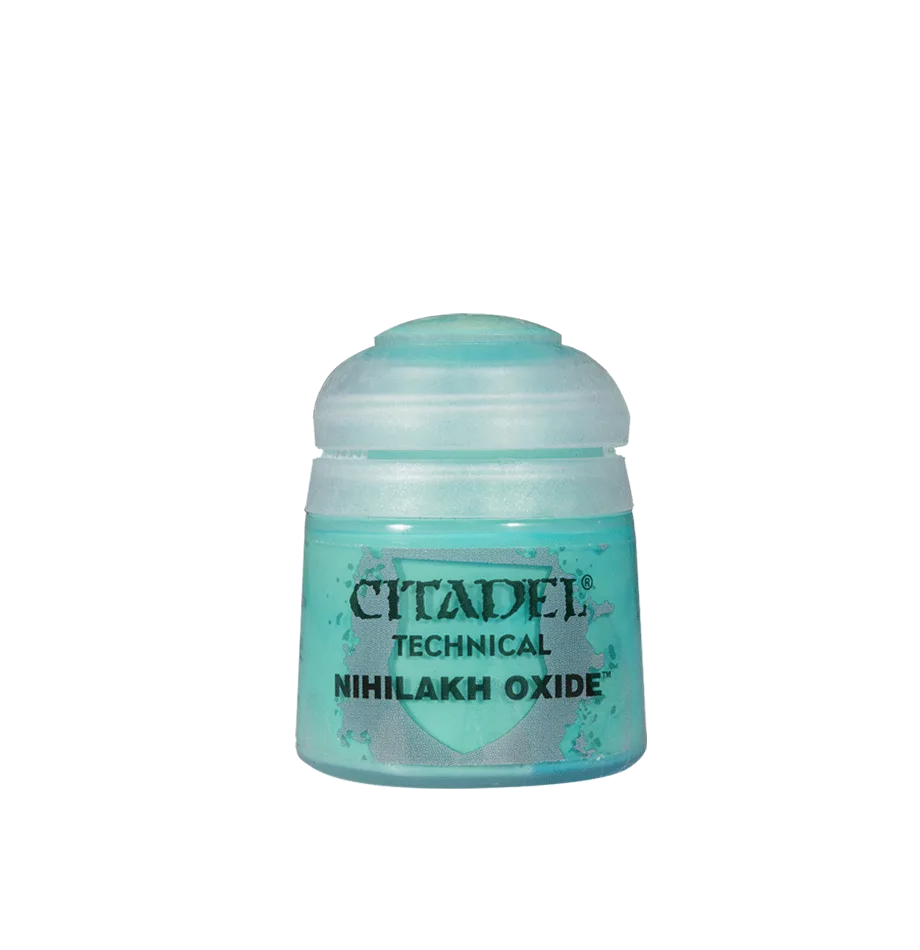
Citadel: Technical Nihilakh Oxide 12Ml: Citadel Technical Nihilakh Oxide is a 12ml Technical paint for miniature effects. Reserve it for selective oxide accents after the base and layer stages are dry.