Quick Answer
Use your D-handle round-point shovel by positioning your feet, driving the blade with your body weight, and levering the load with the steel shaft. This guide walks you through each step.
Why the D-Handle and Steel Shaft Matter
A D-handle shovel gives you two-handed control, which is especially helpful for heavy digging or when you need to twist and lift. The steel shaft delivers maximum bending strength, so you can lean into tough soil without worrying about the handle snapping. Combined with a round-point blade, this design lets you penetrate compacted ground and scoop efficiently.
Common Mistake: Using Arm Strength Instead of Body Weight
Many new users try to force the shovel into the ground with arm muscles alone. That leads to fatigue and poor results. Instead, place your foot on the step and let gravity and leg power do the work. The large forward-turned step on the D-Handle Round-Point Shovel with a Steel Shaft gives you a stable platform for this technique.
Step-by-Step Guide to Digging with a D-Handle Round-Point Shovel
- Position Your Feet and Grip: Stand with your feet shoulder-width apart, facing the spot you want to dig. Hold the D-handle with both hands, one on the top curve and one near the base. Keep your back straight and knees slightly bent. Common mistake: gripping too low on the shaft reduces leverage. Keep your hands on the D-handle for maximum control.
- Place the Blade and Drive It In: Set the round-point blade at a 45-degree angle where you want to dig. Place your dominant foot on the forward-turned step and push straight down using your leg weight, not your arms. Let the steel shaft transfer the force into the ground. Checkpoint: if the blade doesn't sink easily, shift your foot position or wet the soil slightly. Don't force it with arm strength.
- Lever and Lift the Soil: Push the handle forward (away from you) to lever the soil loose. Then pull the handle back toward you while lifting with your legs, not your back. Use the D-handle to twist if needed to break roots or compacted clumps. Common mistake: lifting with your lower back instead of your legs. Keep the load close to your body and bend your knees.
- Clear the Blade and Repeat: Shake or tap the shovel to release the soil onto your pile or into a wheelbarrow. Step back, reposition, and repeat the process along your digging line. Checkpoint: if soil sticks to the blade, wipe it with a gloved hand or spray with water. Buildup reduces efficiency.
Product Facts
-
D-Handle Round-Point Shovel with a Steel Shaft: Steel shaft delivers maximum bending strength for heavy-duty tasks. You can apply more force without worrying about the shaft bending, making it suitable for tough, rocky soil.
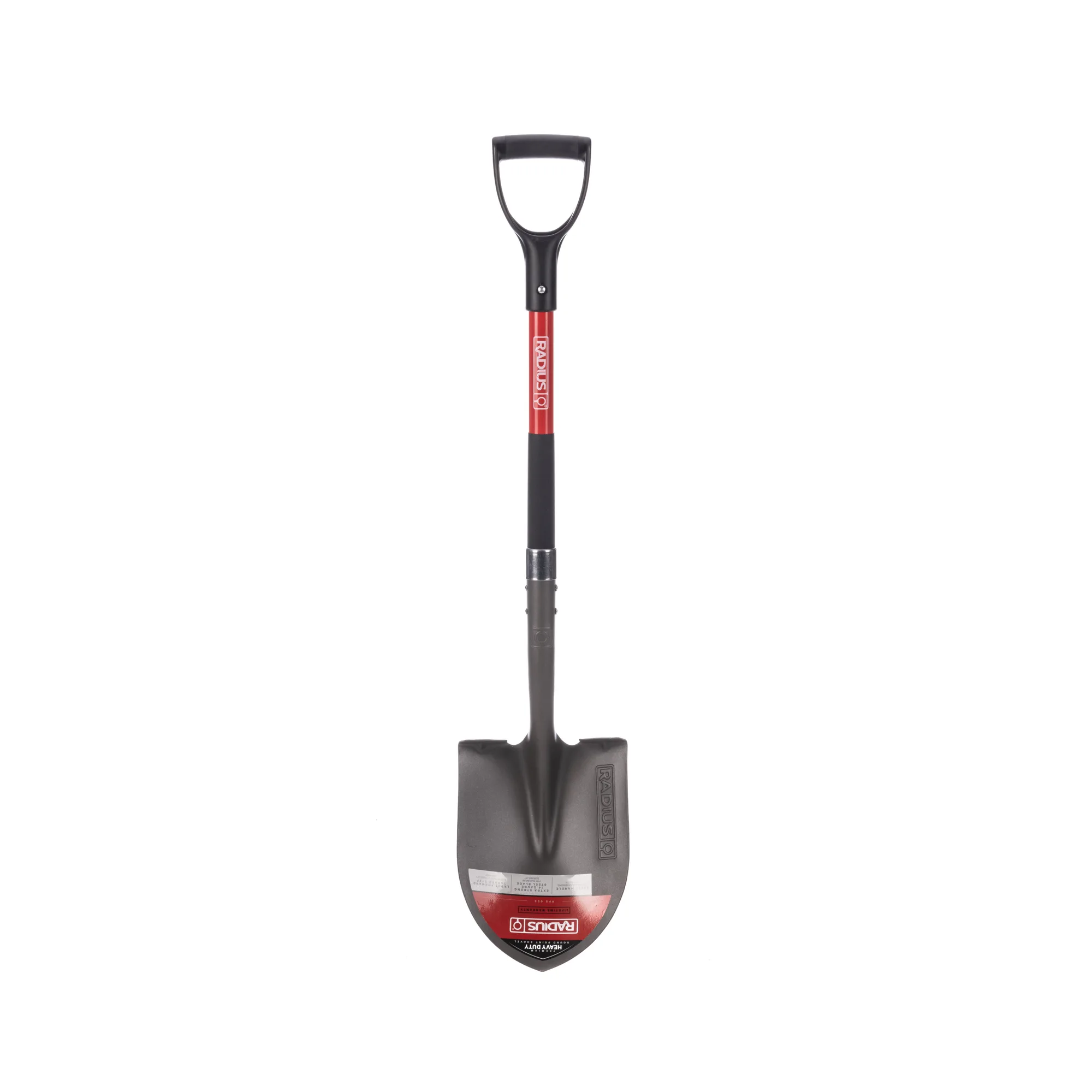
D-Handle Round-Point Shovel with a Steel Shaft
-
D-Handle Round-Point Shovel with a Steel Shaft: 14-gauge steel blade is extra durable for tough digging and long-term use. The thick blade resists chipping and dulling, so it stays effective season after season.
-
D-Handle Round-Point Shovel with a Steel Shaft: Large forward-turned step provides improved stability and secure foot placement. You can push down confidently without your foot slipping, which improves digging efficiency and safety.