Why the Teacher's Guide Works for Character Analysis
The Sara in Raven's Clothes Teacher's Guide is designed to help students explore characters and plot from multiple angles. Its activities develop oral expression, writing, and visual representation, making it a practical tool for a character analysis unit.
Because the guide addresses conflict resolution, belonging, and identity, it naturally supports deep character study. You can use individual activities on their own or combine several for a more comprehensive lesson.
What the Guide Provides
-
Sara in Raven's Clothes - Teacher's Guide: The Teacher's Guide provides suggestions for exploring the novel Sara in Raven's Clothes. Each activity can be used on its own or combined with one or several others. This flexibility lets you tailor the guide to your class schedule and focus specifically on character analysis without being locked into a rigid sequence.
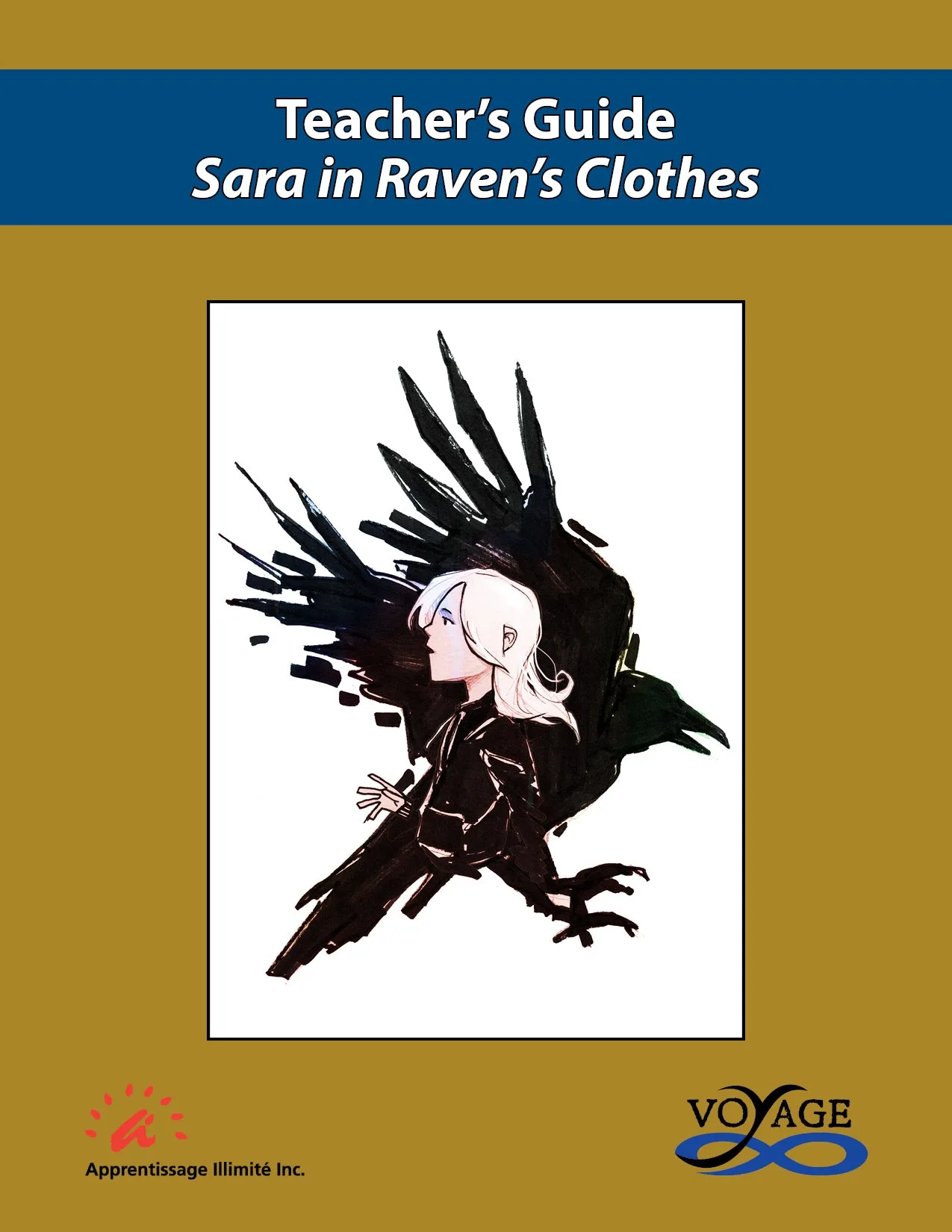
Sara in Raven's Clothes - Teacher's Guide
-
Sara in Raven's Clothes - Teacher's Guide: The study of the characters and the novel’s plot line is examined from several angles. Multiple perspectives on characters help students move beyond surface-level traits and understand motivations, conflicts, and growth.
-
Sara in Raven's Clothes - Teacher's Guide: The guide’s activities are aimed at developing students' ability to express themselves orally, in writing or through pictures. Character analysis can be demonstrated in varied formats, accommodating different learning styles and allowing you to assess understanding in multiple ways.
-
Sara in Raven's Clothes - Teacher's Guide: Conflict resolution, a sense of belonging as well as individual and collective identities are addressed as well as learning to appreciate First Nations and Métis cultures. These themes are central to character development in the novel, giving students a richer context for analyzing why characters act the way they do.
Step-by-Step Character Analysis Using the Guide
The following process shows how to use the guide's activities to focus on character analysis. Adjust the number of sessions based on your schedule.
- 1. Select one or two character-focused activities: From the guide, choose activities that examine character motivations, conflicts, or relationships. Because each activity can stand alone, you can start with a single session.
- 2. Introduce the character lens: Explain to students that they will look at a character's actions, words, and feelings. Use the guide's discussion prompts to frame questions about identity and belonging.
- 3. Use oral expression activities: Have students discuss character decisions in pairs or small groups. The guide's oral activities encourage them to articulate their observations and listen to others' interpretations.
- 4. Follow up with a writing or drawing task: Ask students to write a short character diary entry or draw a scene that reveals a character's internal conflict. The guide's writing and picture-based activities support this step.
- 5. Combine activities for deeper analysis: If time allows, combine two or more activities to explore a character's arc across the novel. The guide explicitly supports this flexible approach.
Classroom Discussion Prompts You Can Use
The guide addresses conflict resolution, belonging, and identity. Use these themes to create discussion prompts that drive character analysis:
• How does the character's sense of belonging change during the story?
• What conflict does the character face, and how does it reveal their personality?
• How does the character's identity relate to their community or culture?
These prompts work well with the guide's existing activities and help students connect character traits to larger themes.
Where the Guide Stops and Your Judgment Starts
The guide does not provide a prescribed timeline or assessment rubrics. You will need to decide how many sessions to dedicate and how to evaluate student work. The activities are suggestions, not scripts, so adapt them to your students' reading level and classroom context.
Also, the guide is an English-language resource. If you are teaching a French literacy lesson, you may need to translate or adapt prompts. The novel itself is in English, so plan accordingly for language objectives.