Why Stepping Stools for Balance?
Stepping stools are a simple, effective tool for helping young children develop balance and coordination. Designed for children ages 2 to 5 years, these sturdy platforms encourage stepping, weight shifting, and controlled movement. The Stepping Stools - Butterfly Design, for example, weighs 31 lbs. for stable use and adds a playful visual element that engages young learners.
Because each stool is sold individually, you can start with one or build a set to create stepping paths, obstacle courses, or turn-taking games. The activities below are designed to be safe, fun, and supportive of gross motor development.
Step-by-Step Activity Ideas
Use these simple activities to incorporate stepping stools into your classroom or play area. Always supervise children and ensure the stool is placed on a flat, non-slip surface.
- Single-Step Balance Practice: Place one stool on the floor. Have the child step up, pause for a few seconds, then step down. Encourage them to keep their arms out for balance. Repeat several times, alternating which foot leads.
- Stepping Path: Arrange two or more stools in a straight line or gentle curve, spaced apart. Children step from one stool to the next, focusing on controlled, deliberate steps. Adjust spacing based on the child's ability.
- Animal Walk Stepping: Ask children to imitate animal movements as they step onto and off the stool. For example, "step like a butterfly" (light, quick steps) or "step like a bear" (slow, heavy steps). This adds a creative element and encourages varied movement patterns.
- Turn-Taking Game: Have two or more children form a line. Each child steps onto the stool, does a simple action (like clapping or spinning), then steps off. The next child goes. This builds waiting skills and sequential movement.
Stepping Stools - Butterfly Design at a Glance
-
Stepping Stools - Butterfly Design: Designed to support balance and coordination, suitable for children ages 2 to 5 years. Weighs 31 lbs. for sturdy, stable use. The weight and age range confirm this stool is built for active stepping without tipping, making it a reliable choice for preschool settings.
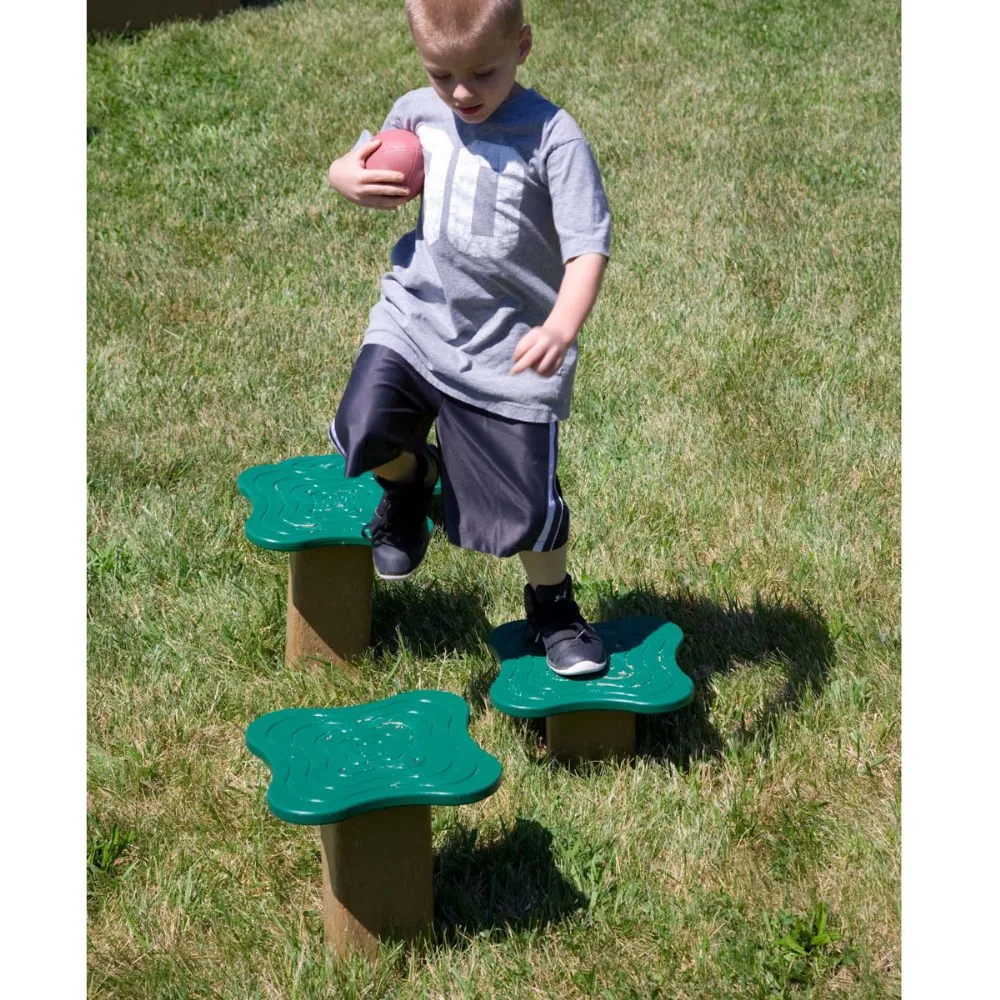
Stepping Stools - Butterfly Design
-
Stepping Stools - Butterfly Design: Each stool is sold individually. Butterfly design adds a playful, engaging visual element for young learners. Buying one stool at a time lets you expand gradually, and the fun design helps capture children's attention during balance activities.
Setting Up for Success
Before starting any activity, check that the stool is on a level, non-slip surface. Remove any tripping hazards nearby. Demonstrate the movement first, then let children try with your guidance. Keep sessions short to maintain focus and prevent fatigue, following the product instructions for appropriate duration.
For children who are new to stepping, begin with the single-step balance practice. As confidence grows, introduce the stepping path or animal walk. The key is to keep the experience positive and pressure-free.
Incorporating into a Gross Motor Routine
Stepping stools can be part of a larger gross motor circuit alongside mats, tunnels, or soft blocks. For example, set up a path where children crawl through a tunnel, step onto the stool, then jump onto a mat. This variety keeps children engaged and challenges different motor skills.
Because the stool is sturdy and weighs 31 lbs., it stays in place during active use. This stability is especially important when children are still developing their balance.