Quick answer
The Folkmanis Wolf Puppet is a versatile tool for play therapy, helping children express emotions and build narratives through a safe, engaging animal character.
Why the Wolf Puppet Works in Therapy
Children often find it easier to project feelings onto an animal puppet than to talk directly about themselves. The Wolf Puppet's realistic design and movable mouth make it ideal for role-playing scenarios where the child can explore emotions like fear, anger, or curiosity through the wolf's character.
Because the puppet is durable and sized for small hands (22 inches from tail to nose), it fits comfortably in a child's grip, allowing them to focus on the interaction rather than struggling with the puppet.
Trade-offs to Consider
The wolf's realistic appearance may be intimidating for very young or highly anxious children. In such cases, introduce the puppet slowly and let the child observe from a distance before handling it. The feathery plush texture can be a sensory comfort for some children but may be overwhelming for others with tactile sensitivities.
How to Use the Wolf Puppet in a Therapy Session
- Introduce the puppet as a neutral character: Let the child see the wolf puppet on your hand first. Use a calm voice to say, 'This is Wolf. He doesn't know much about people yet. Would you like to meet him?' This gives the child control over the interaction. Common mistake: forcing the puppet on the child. Always let the child initiate contact.
- Invite the child to speak through the wolf: Ask open-ended questions like, 'What do you think Wolf is feeling today?' or 'Can Wolf tell me a story about his day?' Let the child manipulate the puppet's mouth while answering. Checkpoint: If the child is silent, model a simple emotion by moving the wolf's mouth and making a soft growl or sigh.
- Use the wolf to explore a specific emotion or event: Prompt the child to have the wolf act out a scenario, such as 'Wolf is lost in the forest. What does he do?' This allows the child to project their own experiences onto the puppet safely. Common mistake: asking direct questions about the child's life. Keep the focus on the puppet's story.
- Debrief the session using the wolf as a bridge: After the role-play, ask the child, 'What did Wolf learn today?' or 'How did Wolf feel at the end?' This helps the child reflect on the emotions expressed without feeling exposed. Checkpoint: If the child struggles to answer, offer two simple choices, e.g., 'Was Wolf brave or scared?'
Product Details
-
Wolf Puppet: Featuring feathery plush and movable mouth. This realistic Timber Wolf puppet is 22 inches tail to nose. A Folkmanis puppet, and quite durable. The movable mouth and realistic design help children express nuanced emotions during role-play, while the durable build withstands repeated therapy use.
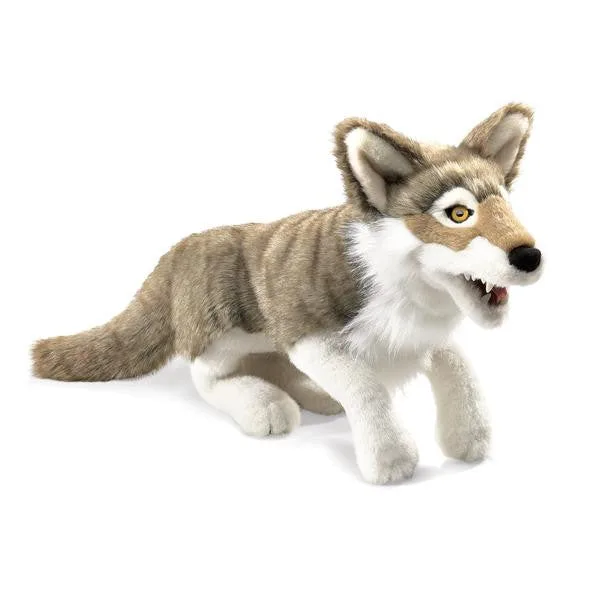
Wolf Puppet