Quick answer
Use a training Motorola radio as a stand-in for your duty radio during scenario drills. Assign one role per radio, run a short pre-brief on channel and call signs, then run the drill at full speed. The goal is to practice clear, calm transmissions under stress, not to operate the radio's real functions.
Why a training radio changes the drill
A training radio gives you the weight, shape, and controls of a real portable without the transmit capability. That matters because most radio mistakes in the field are not technical; they are procedural. People key up at the wrong time, talk over each other, forget to identify, or drop the radio when their hands are full. A prop lets you rehearse those habits safely and repeatedly.
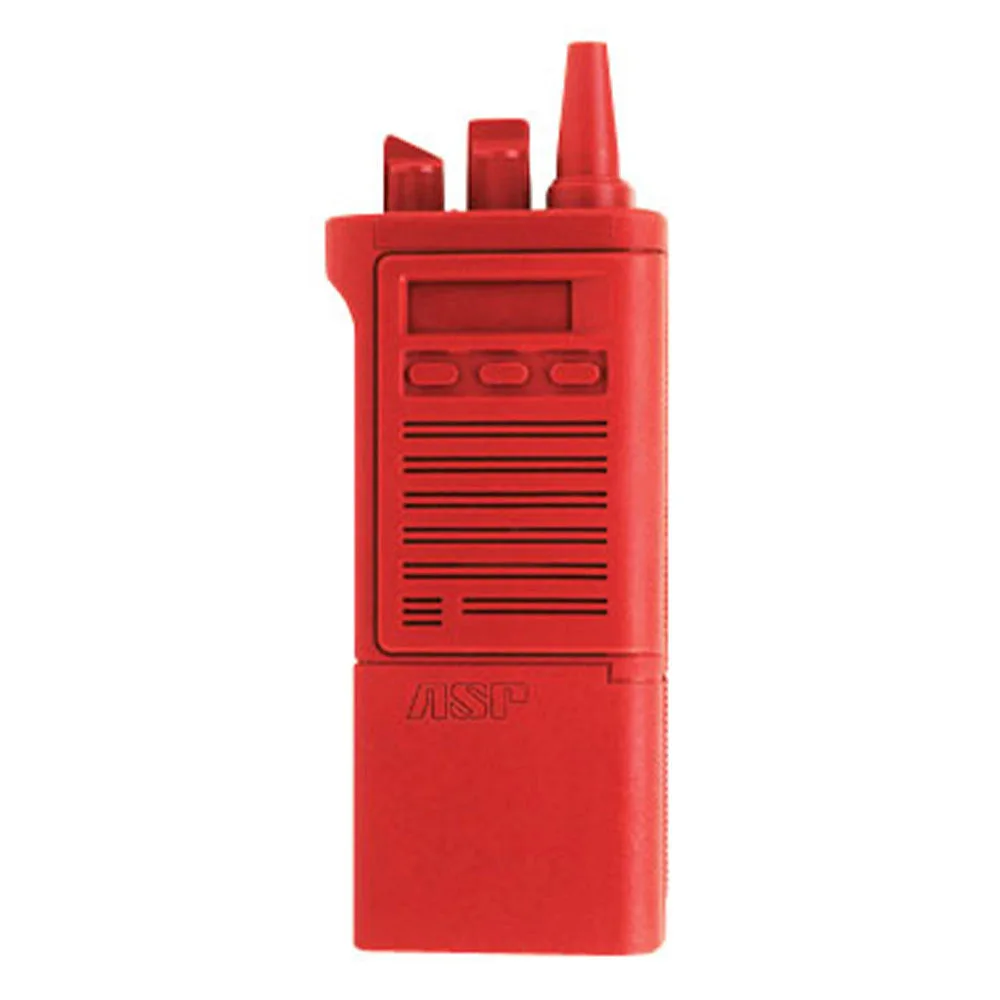
The ASP Red Gun series is built as a realistic replica of actual law enforcement equipment. Because these are reinforced, they hold up to continuous training use, and they are lightweight and forgiving in the training environment. That combination is what you want in a radio prop: realistic enough to build muscle memory, durable enough to survive a full day of repetitions.
Set up the drill before anyone keys up
Decide the communication architecture before the scenario starts. In a simple two-person drill, one radio is the field unit and one is dispatch. In a larger drill, you may need a third radio for a supervisor or a second unit. Write the call signs and the channel on a whiteboard or index card where participants can see them.
Give each participant a specific radio and a specific role. If you are running a training Motorola radio prop, confirm which model you are using so the size and weight match what participants carry on duty. The ASP Red Gun line includes two Motorola radio replicas with different weights, so you can choose the one that feels closest to your issued radio.
Run the scenario at full speed
Start the drill with a clear signal, such as a radio check or a code word. From that point, treat every transmission as if it were real. Participants should key up, pause, speak, and release. If someone misses a transmission or steps on another caller, let the scenario continue and note it for the debrief.
The most common mistake is slowing down to explain or correct mid-drill. That breaks the stress inoculation you are trying to build. Save corrections for the debrief, where you can replay the sequence and ask the participant what they heard and what they said.
Debrief with specific radio communication checkpoints
After the drill, walk through the radio traffic in order. Ask each participant to repeat what they transmitted and what they understood. Look for three things: clarity of the first transmission, timing of the key-up, and whether the participant identified themselves and the recipient.
Use a simple checklist during the debrief. Did the caller wait for a clear channel? Did they speak at a normal pace? Did they confirm receipt of critical information? These are the habits that transfer to real incidents, and they are the reason to run scenario based training radio drills rather than just talking about radio procedure.
Step-by-step: running a radio drill with a training Motorola radio
- Assign roles and radios: Give each participant a training radio and a role (field unit, dispatch, supervisor). Write call signs and channel on a visible board. Confirm the radio weight matches their duty radio if possible. Checkpoint: every participant can state their call sign and who they are calling before the drill starts.
- Brief the communication rules: State the rules: key up, pause one second, speak clearly, release. No talking over others. Use the same brevity and phrasing expected on duty. Keep the brief under two minutes. Common mistake: letting the brief turn into a lecture. Keep it short so participants stay focused on the scenario.
- Start with a radio check: Have each position transmit a short radio check in sequence. This confirms everyone is ready and sets the tone for realistic traffic. Do not skip this step; it surfaces audio or positioning problems early. Checkpoint: all positions hear and are heard clearly before the scenario begins.
- Run the scenario at full speed: Begin the scenario with a clear start signal. Let participants transmit as they would in the field. Do not stop the drill to correct mistakes; note them for the debrief. Common mistake: pausing to coach mid-drill. That reduces stress and breaks the realism you are trying to build.
- Debrief in sequence: Walk through the radio traffic in order. Ask each participant what they transmitted and what they heard. Identify one thing that worked and one thing to improve per person. Checkpoint: every participant leaves with one specific radio habit to practice next time.
- Reset and repeat: Run the same scenario again with the same roles, or rotate roles so everyone experiences dispatch and field positions. Repetition with variation is what builds durable radio habits. Next step: increase complexity by adding a third radio or a simulated emergency traffic priority.
Training gear that supports this drill
- Training Motorola Radio: The ASP Red Gun series provides realistic training replicas of actual law enforcement equipment. Red Guns are lightweight and forgiving in the training environment, and because they are reinforced, they have the durability necessary for continuous training use. The Motorola Radio replica is available in two weights: 12.48 oz and 15.68 oz. Choose the weight that matches your duty radio so participants build accurate muscle memory. The reinforced construction means the prop can handle repeated draws, holstering, and drops during high-repetition drills.