Quick Answer
Secure a UTV with four straps pulling outward and slightly forward or backward from the machine's own frame or designated tie-down points, never from the roof, mirrors, or suspension arms. Anchor the trailer end first, keep each strap's angle under about 45 degrees, and stop after the first few miles to recheck tension before continuing.
Match Straps and Anchors to the Machine's Weight
A typical side by side weighs far more than an ATV, so the working load limit of every strap and anchor matters more than the strap's length or color. Use four straps rated individually for at least a quarter of the machine's wet weight, and prefer ratchet straps over cam-lock buckles for a load this heavy because they hold tension better over a long drive.
On the trailer side, E-track or recessed D-rings rated for the load give you a fixed, predictable anchor. If your trailer only has thin lip edges or open stake pockets, add bolt-on D-rings rather than hooking straps to sheet metal that can tear under load.
Choose Frame Contact Points, Not Accessories
The strongest tie-down points are the UTV's frame rails, the factory tie-down loops, or the lower A-arm mounts where the manufacturer provides them. Straps hooked to a roof panel, cargo bed rail, bumper cover, or accessory mirror can bend or tear those parts before the strap ever reaches its rated load.
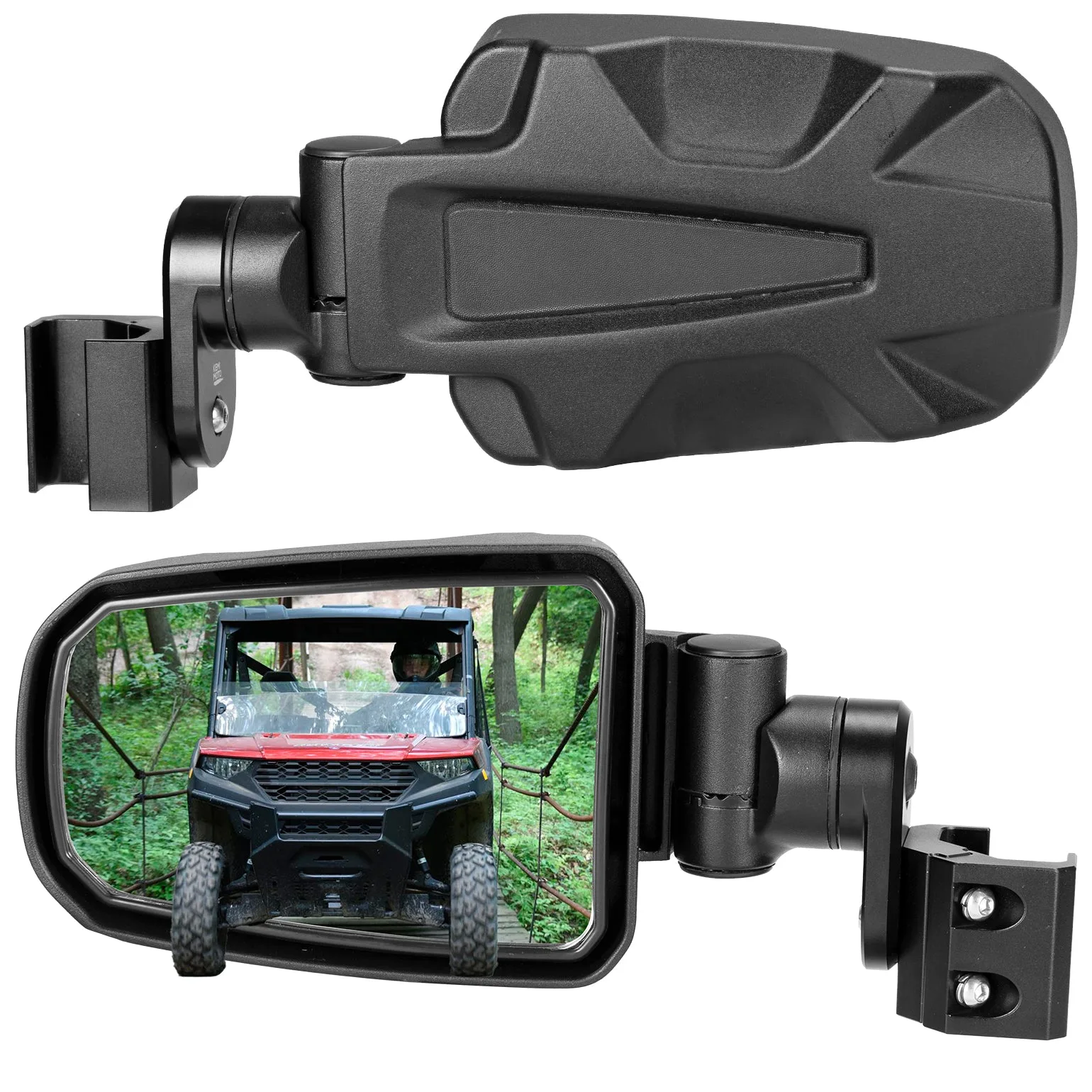
If you have added accessories such as side mirrors, route straps so they cannot crush the mirror housing during suspension movement. Parts mounted with clamps, like the CNC aluminum clamp design used on many UTV side mirrors, are built to stay put on the trail but are not load-bearing tie-down points.
Set Strap Angles That Resist Fore, Aft, and Side Movement
A UTV can slide forward under braking, rearward under acceleration, and sideways in a turn, so four straps arranged in a cross pattern control all three directions. Aim each strap outward at roughly 30 to 45 degrees from the trailer deck and angle the front pair slightly forward and the rear pair slightly backward.
Avoid near-vertical straps. A strap pulling almost straight down lets the machine walk sideways because it has almost no horizontal holding force. If your trailer deck is short, move the anchor points outward rather than shortening the straps.
Compress the Suspension Slightly, Not Fully
Tighten until the suspension compresses a small amount and the tires stay planted on the deck. Over-tightening can bottom out the shocks, stress the frame, and cause the strap to lose tension as the suspension rebounds on rough roads.
Do not strap the wheels or axles in a way that prevents suspension movement entirely. The machine needs a little compliance so the trailer's motion does not transfer directly into the frame.
Do a Rolling Recheck Before You Commit to the Highway
Drive a short distance, then stop and check every strap. Straps stretch, knots settle, and the machine shifts slightly on the first few bumps, so a second tightening pass is normal and expected.
Recheck tension at every fuel stop and after any hard braking or rough section. If a strap has gone slack, find out why before simply tightening it again, because a shifted load can mean a contact point has moved or a hook has started to open.
Step-by-Step UTV Trailer Tie Down Procedure
- Park and set the trailer: Position the trailer on level ground, chock the wheels, and set the tow vehicle's parking brake before driving the UTV up the ramp. Checkpoint: the trailer must not rock or roll when you step onto the deck.
- Center the machine and set the parking brake: Drive forward until the UTV sits centered over the axles, then set the parking brake and shift to park or gear. Leave enough room behind the machine for rear straps. Common mistake: loading too far forward or back, which overloads the tongue or lightens it.
- Identify four load-rated anchor points: Choose frame rails or factory tie-down loops on the machine and rated D-rings or E-track on the trailer. Do not use mirrors, roof panels, or cargo bed rails. Checkpoint: each anchor and strap should be rated for at least a quarter of the machine's wet weight.
- Attach the trailer ends first: Hook or clip the trailer side of each strap before reaching across the machine. This keeps you from standing in an awkward position while the UTV is only partly secured. Common mistake: hooking the machine first and then pulling straps across the deck at a bad angle.
- Set the cross pattern: Run front straps outward and slightly forward, rear straps outward and slightly backward, with each strap angled about 30 to 45 degrees from the deck. Checkpoint: no strap should be near vertical, or the load can slide sideways.
- Tighten evenly with ratchets: Snug each strap in stages rather than fully tightening one at a time, so the machine stays centered and the suspension compresses only slightly. Common mistake: over-tightening until the suspension bottoms out.
- Secure loose strap tails: Roll or clip excess strap so it cannot flap, catch a tire, or drag on the road. Checkpoint: nothing should hang below the trailer deck.
Gear That Helps on Hauling Days
- CNC Aluminum Clamp Pro-Fit Side Mirrors for Polaris Ranger Can-Am Defender Maverick Trail: Adjustable mirror surface with a ball head, three adjustment methods, and an extended mount for easier positioning. Folding mirrors inward before loading keeps them out of the way of straps and trailer walls, and the extended mount helps you restore a clear view once the machine is unloaded.
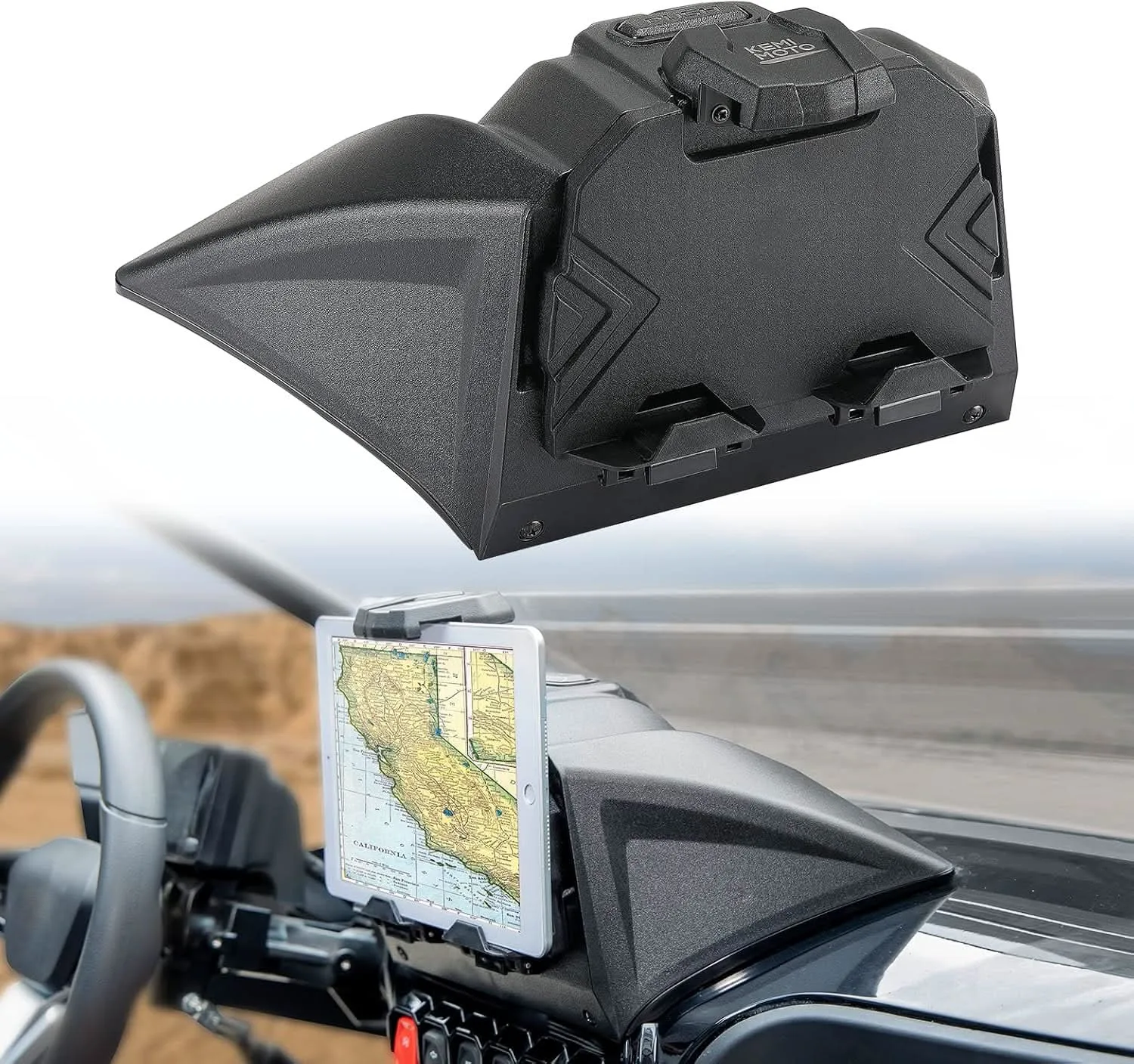
- UTV Tablet Holder For CFMOTO ZForce 950,Fits G1 models: Holds devices from 5 to 8 inches, adds a dashboard storage box, and uses sponge gasket tapes for a secure grip. Stowing a phone or tablet in a dedicated holder keeps loose electronics out of the cab while the UTV is on the trailer, and the added storage gives you a place for small tools you may need at the ramp.