Quick answer
Match the beam pattern to your speed and terrain: a flood beam for slow, wide trail work, a spot beam for distance at speed, and a combo bar when you need both. For size, measure your mounting width and check the bar's overall length and bracket spread before ordering.
Light bar shopping gets confusing because beam pattern, size, and mounting width are three separate decisions that people often mix into one. This FAQ answers the questions we hear most from UTV and truck owners, with straight answers you can use before checkout.
Each answer stands alone, so you can jump to the question that matches your build. Where a product record is relevant, we use the supplied catalog facts and avoid guessing at specs that are not published.
What is a UTV light bar beam pattern and why does it matter?
Beam pattern describes how the light is shaped and thrown. A spot pattern concentrates light into a narrow, long-distance beam. A flood pattern spreads light wide and short. A combo bar mixes both, usually with spot reflectors in the center and flood on the ends. The pattern matters more than raw brightness for how usable the light feels on the trail.
For UTVs, the right pattern depends on speed. Slow technical riding benefits from a wide flood that lights the edges of the trail. Faster sections benefit from a spot that reaches further ahead. If you ride both, a combo bar is the practical compromise.
- Pick flood for low-speed, wide visibility.
- Pick spot for high-speed distance.
- Pick combo if you do not want two separate bars.
Spot vs flood light bar: which should I choose?
Choose spot when you need to see far down the trail or road, such as open desert or long straightaways. Choose flood when you need to see what is immediately around and beside the vehicle, such as tight woods, campsites, or work areas. Many riders run a flood bar for close work and a spot bar for distance.
If you only want one bar, a combo pattern is the most flexible. It gives you a usable center hotspot and some side spill without running two circuits. The tradeoff is that it does neither job as purely as a dedicated bar.
- Spot: distance, narrow, less side spill.
- Flood: width, close range, less reach.
- Combo: mixed, good single-bar compromise.
How do I measure light bar size fitment before buying?
Measure the mounting surface first, not the bar. Check the distance between your mounting points, the available height, and whether the bar will block a windshield, camera, or grille opening. Then compare that to the bar's overall length and bracket spread, which are often different numbers.
Also confirm the mounting hardware type. Some bars use side brackets, some use bottom brackets, and some include both. If your roof or bumper has limited flat space, bracket style can decide whether a bar fits at all. When a listing does not publish bracket spread, treat that as a limitation and ask before ordering.
- Measure mounting points, not just the bar.
- Check bracket style and spread.
- Leave clearance for windshields and cameras.
What mounting width should I look for on a truck or UTV?
Mounting width should match your available flat surface plus a little clearance on each side. A bar that is wider than the roof or bumper can overhang, which may be fine on a truck but risky on a UTV where branches and rollovers are common. Narrower bars are easier to fit but throw less total light.
If you are between two sizes, go with the one that fits your mounting points cleanly. A well-mounted smaller bar beats a larger bar that vibrates, blocks your view, or needs custom brackets.
- Match width to flat mounting surface.
- Avoid overhang on UTVs where branches hit.
- Prioritize clean mounting over maximum size.
Do more lumens always mean better off-road lighting?
No. Lumens measure total light output, but they do not describe beam shape, color, or how well the light is aimed. A very bright bar with a poor pattern can create glare and blind you or others. Beam pattern and aim usually matter more than the lumen number for real trail use.
Use lumens as a rough comparison between similar bars, not as the deciding factor. If a listing does not publish lumens or beam details, do not assume a number. Ask the seller or rely on the pattern description instead.
- Lumens are total output, not usable light.
- Pattern and aim matter more than the number.
- Do not guess at unpublished specs.
What should I check before installing a truck light bar?
Before installation, confirm the wiring path, switch location, fuse rating, and whether you need a relay. Check that the bar does not block airflow to the radiator or interfere with sensors and cameras. Also verify local rules for on-road use, since many areas restrict light bars to off-road only.
For UTVs, route wiring away from moving suspension parts and hot surfaces. Use a switch that matches your bar's current draw, and test the pattern at night in a safe area before final tightening. If your bar includes a wiring harness, follow its fuse and relay setup rather than improvising.
- Plan wiring, switch, fuse, and relay.
- Check airflow, sensors, and camera clearance.
- Verify local on-road rules.
Light bar FAQ quick reference
Beam pattern
Spot for distance, flood for width, combo for one-bar flexibility. Choose pattern before you compare brightness.
Size fitment
Measure mounting points and bracket spread, not just overall length. A clean fit beats a bigger bar.
Mounting width
Match the bar to your flat surface and leave clearance for view and airflow. Avoid overhang on UTVs.
Lumens
Lumens are total output, not usable beam shape. Do not treat lumens as the only spec.
Installation
Plan wiring, switch, fuse, relay, and local rules before mounting. Test the pattern at night before final tightening.
Catalog facts that help with light bar decisions
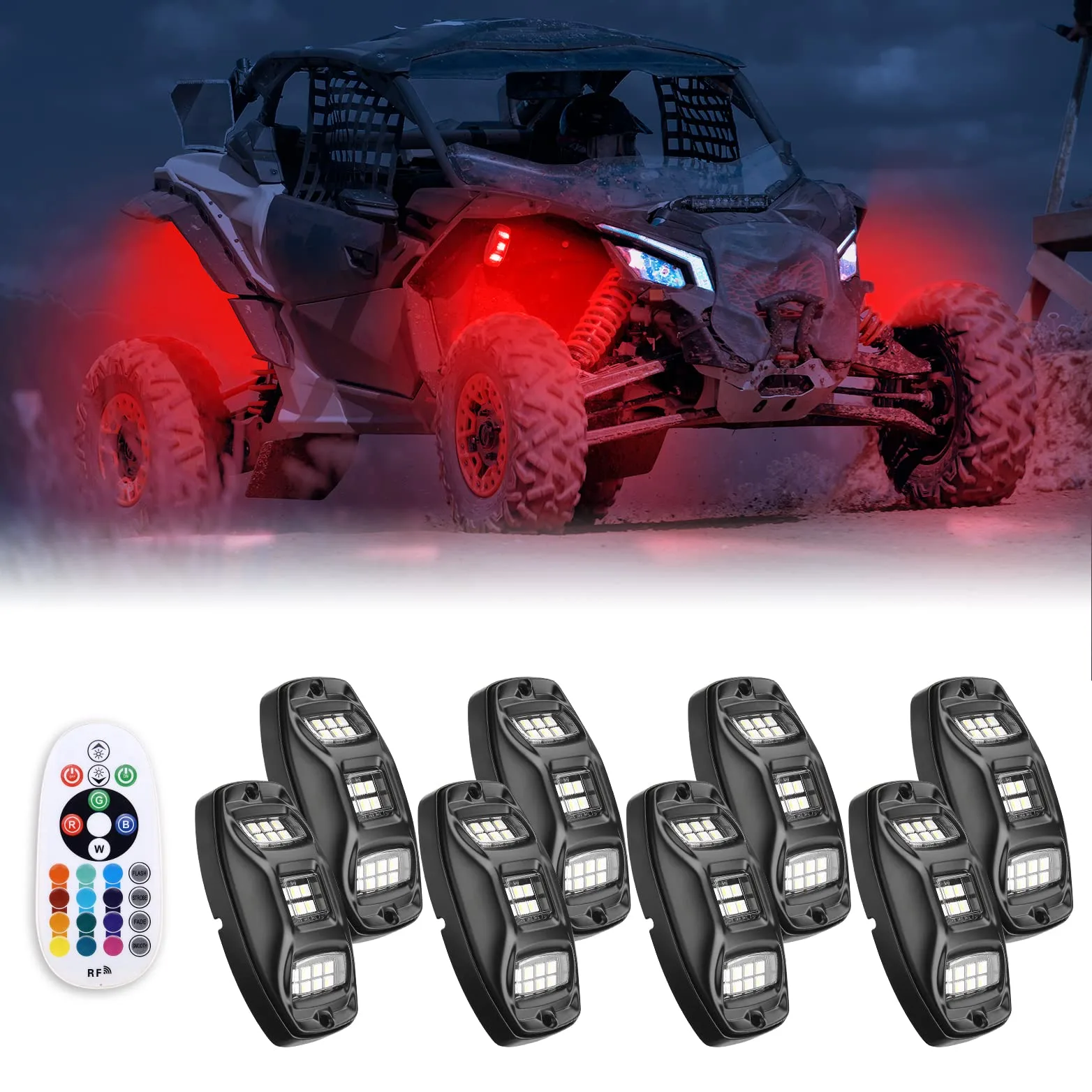
- Universal 8 Pods RGB Rock Light Kit for UTV ATV Jeep Truck SUV Car: The kit uses 5050 RGBW LEDs with a 9V-32V working voltage, 22 multi-color rock lights, and up to 232.8 degrees of wide-angle lighting, with IP68 ultrasonic welding for waterproofing. Wide-angle, multi-color pods are useful for ground-level accent and area light, not for long-distance beam work, so treat them as a complement to a forward-facing bar.
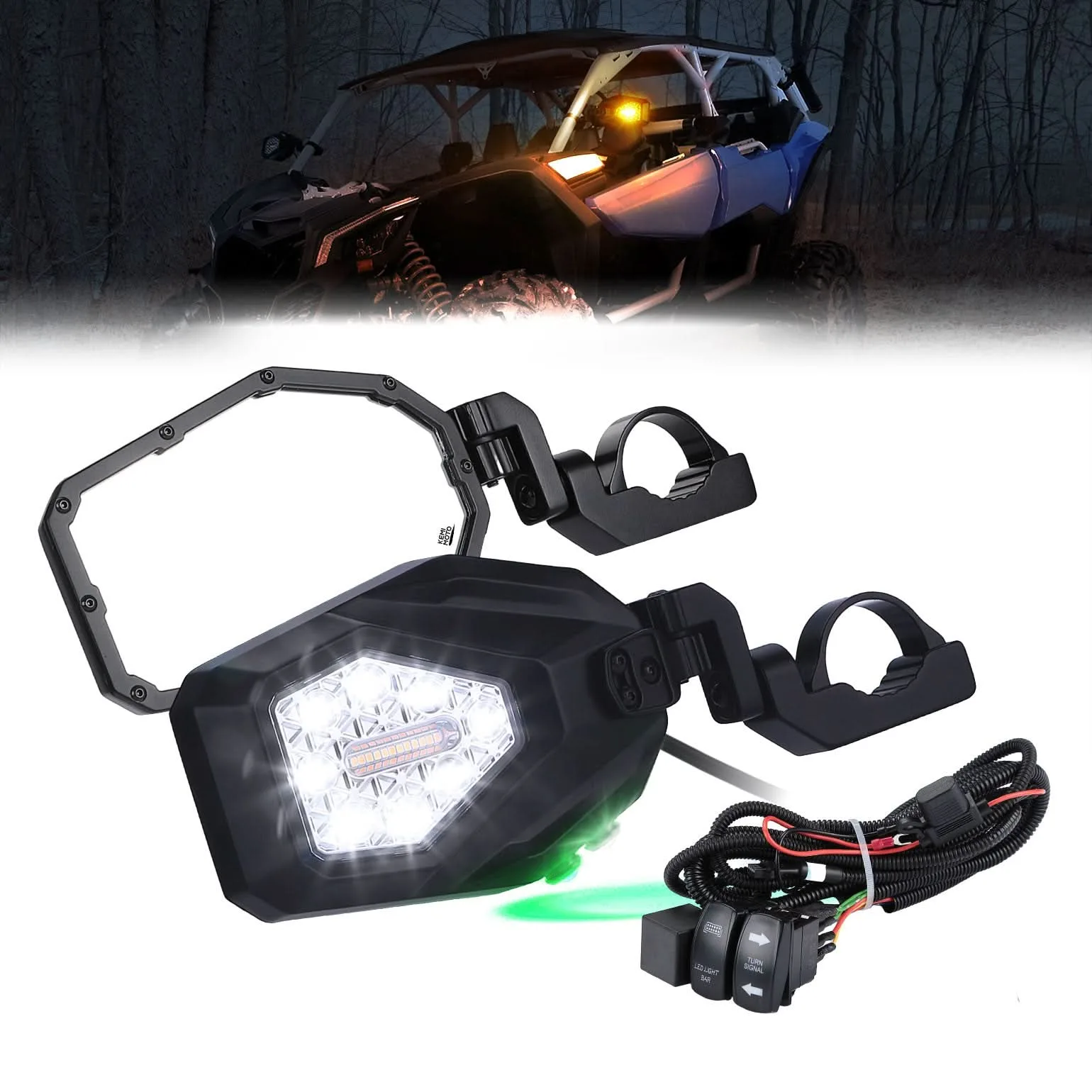
- UTV LED Lighted Side Mirrors with Flowing Turn Signal for Polaris RZR Talon 1000 Can Am X3: These mirrors add three night-vision lights: an emerald Hawkeye light for ground obstacles, an amber flowing turn signal, and a spotlight, with a breakaway design. If you want more light without adding a roof bar, mirror-mounted lights can cover close-range visibility and signaling at the same time.
- SxS UTV Sound Bar System Bluetooth Speaker 500W 28" Outdoor Marine Soundbars: This sound bar offers Bluetooth connection, a wireless remote with about 10m range, and a waterproof, heavy-duty build. A 28-inch bar is a useful size reference when you are measuring roof or cage space and comparing how much width you can spare for lighting.
Match beam pattern to how you ride, measure your mounting width before ordering, and treat lumens as one data point rather than the whole decision. If a listing does not publish a spec you need, ask before you buy.