Quick Answer
A UTV turn signal kit is worth it if you ride on public roads, cross highways, or live in a state that requires signals for street legal UTV registration. If you only ride on private trails, the money is better spent on lighting, mirrors, or protection. Check your state's street legal UTV rules before buying, because the kit alone does not make a side by side road legal.
Turn signals are one of those upgrades you do not think about until a ranger or a highway patrol officer asks why your side by side has no blinkers. For many riders, a UTV turn signal kit is the difference between staying on the trailer and legally driving to the trailhead.
The catch is that road legality is a patchwork of state and local rules. Some states require signals, a horn, mirrors, and a license plate; others allow limited road use with almost nothing. This guide gives you concrete decision rules so you can figure out whether a turn signal kit is worth it for your machine, your state, and your riding style.
What a Turn Signal Kit Actually Does
A turn signal kit adds front and rear indicators, a dash or column switch, and a flasher relay to your UTV's 12V system. Most kits tap into the existing harness, though some require splicing. The result is a hand signal you do not have to make with your arm while holding a steering wheel on a rough trail.
Some kits bundle a horn, license plate bracket, and brake light integration. Others are signals only. That difference matters because many street legal UTV checklists require a horn and a plate light in addition to blinkers. If you already run a light bar or whip lights, check that your stator and battery can handle the extra load before adding more.
- Confirm your machine has a 12V accessory circuit or a bus bar available for the kit.
- Look for a kit that includes a relay and fuse, not just the lamps and switch.
Street Legal UTV Rules: What to Check First
No kit makes a UTV street legal by itself. States set their own requirements, and they often include a windshield, wipers, a horn, mirrors, DOT tires, a license plate, and sometimes an inspection. Some states allow UTVs on certain roads with a slow-moving vehicle emblem instead of full street legal equipment.
Before you buy, pull up your state's motor vehicle department page for off-highway vehicles or utility vehicles. Look for the words 'street legal,' 'road use,' or 'highway.' If the rules are unclear, call a local dealer or the DMV. A five-minute call can save you from buying a kit that does not meet your state's checklist.
- Write down every required item on your state's list before ordering parts.
- Keep receipts and documentation; some inspections require proof of equipment.
RZR Turn Signals and Fitment: What Fits Your Machine
Fitment is where most turn signal kit purchases go wrong. Kits are often model-specific because the harness connectors, switch mounts, and lamp brackets differ between a Polaris RZR, a Can-Am Maverick X3, and a Honda Pioneer. A universal kit can work, but you may need to fabricate brackets or splice wires.
Check the model years listed by the seller, not just the model name. A kit for a 2020 RZR PRO XP may not plug into a 2016 RZR 900. If you run aftermarket doors, a hood scoop, or a rear windshield, make sure the signal lamps and wiring have a clear path and are not blocked by those accessories.
- Match the kit to your exact model and year, not just the brand.
- If you have aftermarket doors or a rear windshield, plan the lamp locations before drilling.
Turn Signal Kit Installation: Time, Tools, and Difficulty
A basic kit can take two to four hours if the harness is plug-and-play. A universal kit with splicing and custom brackets can take a full weekend. You will need basic hand tools, a test light or multimeter, zip ties, and a drill if you are mounting new lamps in plastic bodywork.
The hardest part is usually routing wires from the front to the rear without pinching them in the suspension or door travel. Take your time, use loom, and leave a service loop near moving parts. If wiring is not your thing, factor in the cost of a shop install before deciding the kit is a bargain.
- Disconnect the battery before splicing into the harness.
- Use dielectric grease on connectors if you ride in mud or water.
Side by Side Turn Signals: Cost vs. Value
Turn signal kits range from basic indicator sets to full street legal bundles with horns and plate lights. The value depends on how often you actually need them. If you ride from your property to a nearby trail, or if your state requires signals for registration, the kit pays for itself in convenience and compliance.
If you trailer your UTV to private land and never touch pavement, signals are low priority. Put that money toward mirrors, a rear windshield, or lighting you will use every ride. The honest tradeoff is that turn signals are a compliance item, not a performance upgrade.
- Count how many times per season you ride on or cross a public road.
- If the answer is zero, skip the kit and upgrade comfort or visibility instead.
Pairing Signals With Mirrors and Visibility Upgrades
Turn signals only work if other drivers can see them and you can see them. Adding side view mirrors and a rear view mirror makes lane changes and road crossings safer, especially when your UTV has a full cab or a rear windshield that blocks the view. A sliding rear windshield can also help you manage airflow while keeping the rear glass in place.
If you are building a street legal setup, think of signals, mirrors, and a horn as one system. Buying them together often costs less than piecing them out, and you avoid a second round of wiring later.
- Add mirrors before signals if you ride in traffic; visibility comes first.
- A rear windshield with a vent helps in summer without removing the glass.
Decision Rules: Buy or Skip a Turn Signal Kit
- You ride on public roads or cross highways: Buy a kit that matches your state's street legal UTV checklist, including a horn and plate light if required. Compliance first; confirm the checklist before ordering.
- You only ride private trails and never touch pavement: Skip the turn signal kit and spend the money on mirrors, lighting, or a rear windshield you will use every ride. Signals are a road-use item, not a trail performance upgrade.
- You are unsure about your state's rules: Check your state DMV or off-highway vehicle page for street legal UTV requirements before buying any kit. A five-minute check prevents a wasted purchase.
- You want plug-and-play versus universal: Model-specific kits cost more but install faster; universal kits save money but may need splicing and custom brackets. Match the kit to your exact model and year.
Products That Support a Street Legal Setup
- UTV Rear View Side Mirrors for 1.6" -2" POLARIS RZR XP 4 1000 (1 pair): Made of high-impact ABS plastic and stainless bolts; adjustable horizontally or vertically with a breakaway feature that folds away if they hit a branch. Mirrors are often required for street legal UTV use, and breakaway mounts survive trail branches without shattering.
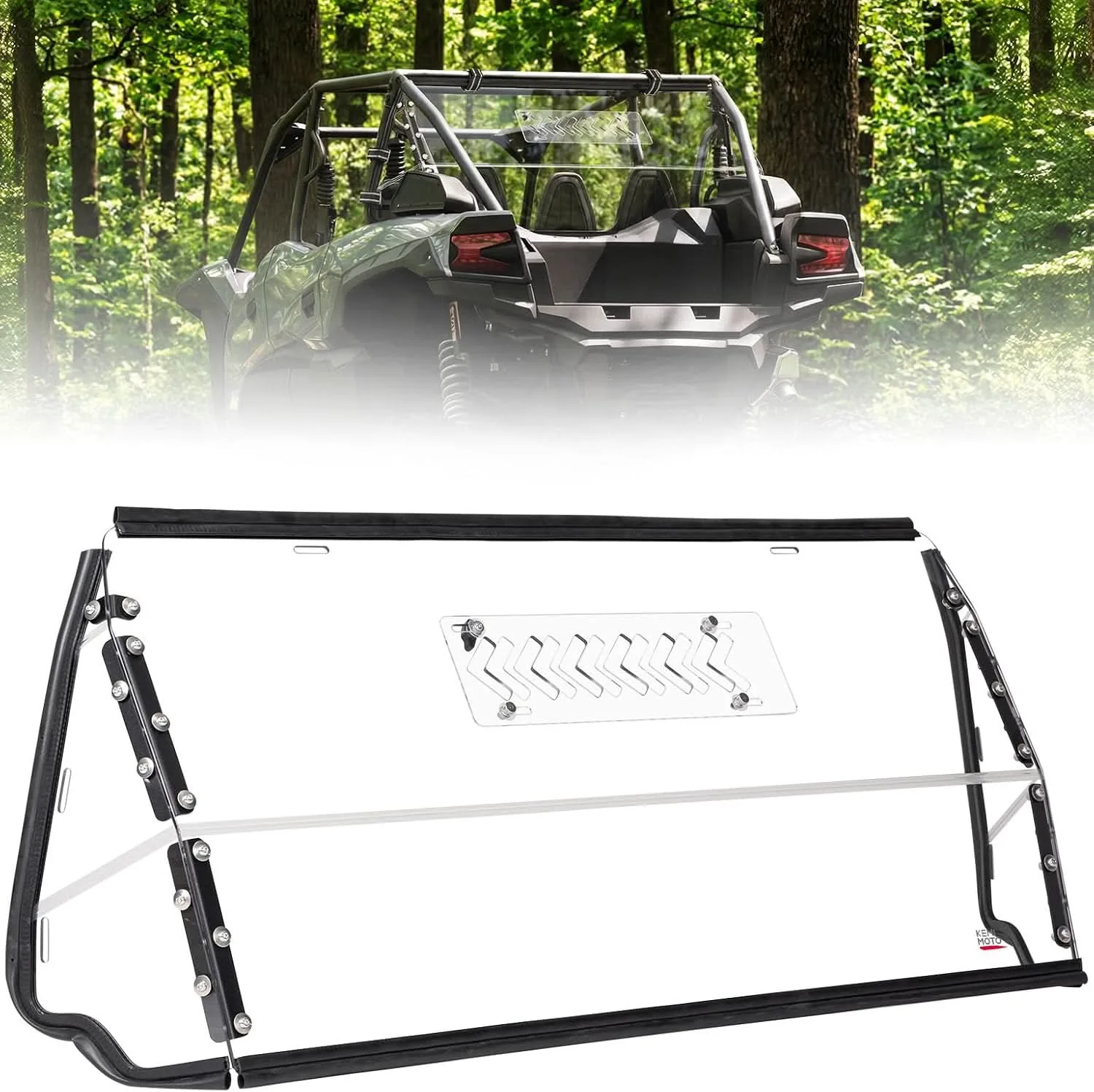
- UTV Sliding Rear Windshield For Kawasaki Teryx KRX 4 1000: 2-in-1 design with a sliding vent that works as a ventilated back windshield or a full windshield; close the vents in winter, open them in summer. A rear windshield completes the cab and helps with dust and cold, while the vent keeps summer airflow without removing the panel.
- UTV Hunting Tool Holder Rack for Ranger General Can-Am Defender Pioneer: Made from enhanced EVA material with a clamping design that holds tools firmly without rattling or bouncing; no-drill installation. If you carry tools or gear on road-legal rides, a secure rack prevents rattles and keeps cargo from shifting.
Is a Turn Signal Kit Right for You?
Best for
- Riders in states that require signals for street legal UTV registration
- Owners who ride from home to trails or cross public roads regularly
- Anyone building a full street legal setup with mirrors, horn, and plate light
Not for
- Trail-only riders who trailer their UTV to private land
- Owners who have not confirmed their state's road-use rules
- Riders looking for a performance or comfort upgrade rather than compliance
A UTV turn signal kit is worth it when road use is part of your riding, and a waste when it is not. Check your state's street legal UTV rules, match the kit to your exact model, and pair it with mirrors and a rear windshield so the whole setup works together. If you never touch pavement, put the money into visibility and comfort instead.