Quick answer
Measure your stock wheel's backspacing and offset before buying anything, then choose a new wheel that keeps the tire in roughly the same place or moves it outward in small steps. Most UTV owners should stay within about 1 inch of stock offset unless a lift, long-travel kit, or wider tires require more. More negative offset widens the stance but adds leverage on bearings, ball joints, and steering.
Offset and backspacing confuse a lot of side-by-side owners because the two numbers describe the same thing from different reference points. Offset tells you how far the mounting pad sits from the wheel's centerline, while backspacing tells you the distance from the mounting pad to the inner lip. Once you know one, you can estimate the other. The problem is that guessing either one is how people end up with tires rubbing control arms or wheels sticking out past the fenders.
This guide walks through the actual steps: measuring your stock wheel, reading the numbers correctly, checking clearance, and picking a UTV wheel offset that works with your suspension and tire size. It also covers where the common mistakes happen, because most fitment problems trace back to skipping a measurement or trusting a forum post instead of your own machine.
Offset vs. backspacing: the difference that trips people up
Offset is measured in millimeters from the wheel's centerline to the mounting surface. Positive offset means the mounting pad sits toward the outside face, tucking the wheel inward. Negative offset pushes the mounting pad inward, moving the wheel outward. Backspacing is measured in inches from the mounting pad to the inner edge of the wheel. A wheel with more backspacing sits farther inboard; less backspacing pushes it outboard.
You need both numbers when comparing wheels, because offset alone does not tell you whether the inner lip will clear a control arm. A wider wheel with the same offset as stock will have more backspacing and can rub on the inside. That is why a UTV backspacing guide matters even if the offset looks familiar.
- Write down your stock wheel width, offset, and backspacing before shopping.
- Convert carefully: 25.4 mm equals 1 inch, so a 12.7 mm offset change is half an inch.
How to measure your stock UTV wheel
Pull one front wheel and one rear wheel, because some side-by-sides use different widths front and rear. Lay the wheel face down on a flat surface. Place a straightedge across the inner lip and measure down to the mounting pad with a tape measure. That is your backspacing. To estimate offset, measure the wheel's overall width, divide by two to find the centerline, then compare the centerline to the mounting pad distance.
If the mounting pad is outboard of the centerline, offset is positive. If it is inboard, offset is negative. Record everything in millimeters and inches so you can compare against aftermarket specs without converting on the fly.
- Common mistake: measuring a dirty or bent wheel and trusting the number.
- Checkpoint: your front and rear backspacing may differ, so measure both.
Check tire clearance before you choose an offset
Tire width and diameter affect clearance as much as wheel offset does. Turn the steering to full lock and look at the gap between the tire and the inner fender, control arms, and sway bar. Compress the suspension by loading the machine or using a jack under the lower arm to simulate travel. If you are adding taller or wider tires, you need more room than the stock setup shows.
A small offset change can fix light rubbing, but it can also create new contact points at the rear of the front wheel well. Measure twice, and if you are close, consider a lift or a different tire size rather than pushing the wheel out aggressively.
- Checkpoint: turn the wheels lock to lock and inspect both sides.
- Do not assume a lift kit solves every clearance issue.
Pick an offset that matches your riding and suspension
For trail riding, stock or near-stock offset keeps steering light and bearings happy. For rock crawling or mud, a slightly wider stance can improve stability, but every inch you push outward adds leverage on wheel bearings and ball joints. If you run long-travel suspension, the manufacturer's recommended offset usually accounts for the added track width and geometry.
When you compare wheels, look at the available offset and spacing options rather than assuming one size fits all. A wheel like the 411 | UTV Bead Grip® | Matte Black lists size, bolt pattern, and offset or spacing as options, which means you can match the wheel to your machine instead of adapting the machine to the wheel.
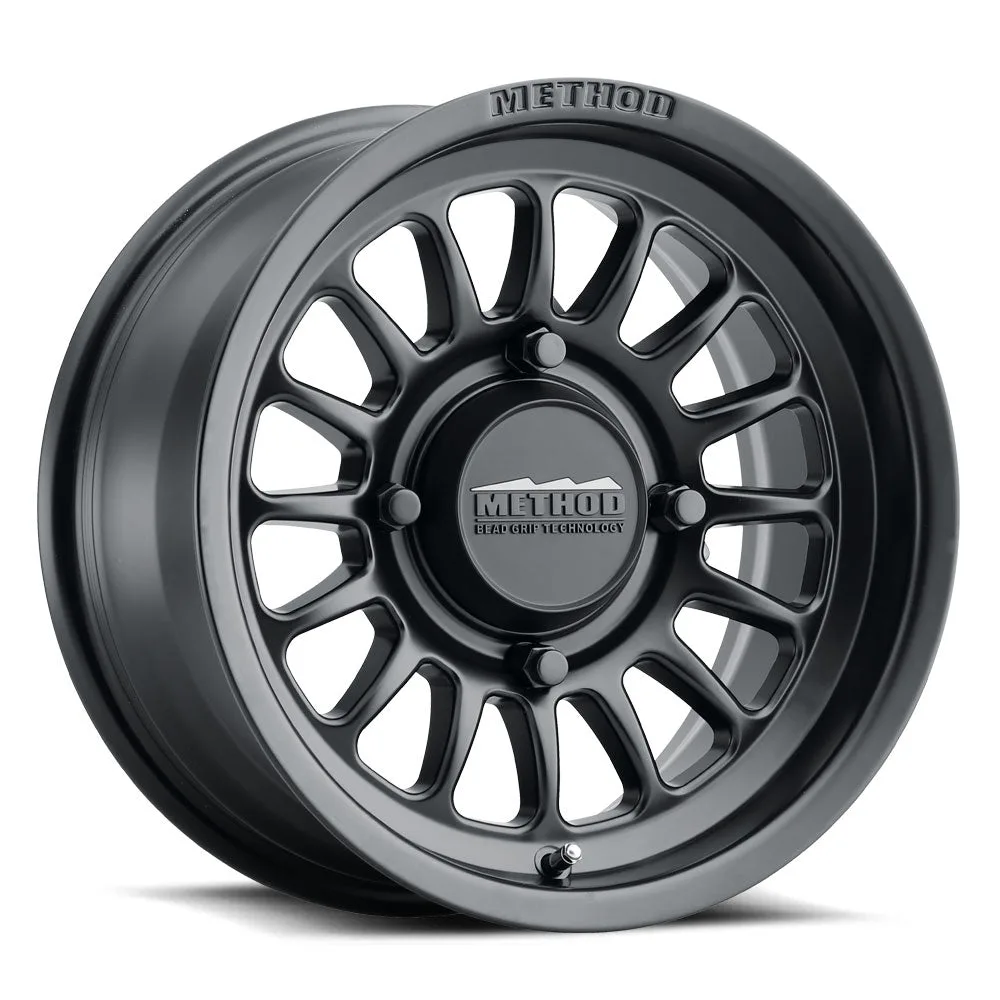
411 | UTV Bead Grip® | Matte Black
- Stay within about 1 inch of stock offset unless your suspension builder says otherwise.
- Checkpoint: confirm the bolt pattern and hub bore before ordering.
Test fit and verify before you commit
Mount one wheel and tire on the front, torque the lug nuts to spec, and cycle the suspension through its travel. Spin the wheel and listen for contact. Check the gap between the tire and the fender at full compression, and look at the inner sidewall clearance to the control arm. Repeat on the rear. If anything touches, stop and reassess before mounting the rest.
After the first drive, re-torque the lug nuts and inspect for rubbing marks on the inner fender or suspension. Small witness marks tell you where the tire is contacting under load, which is information you cannot get from a parked measurement alone.
- Common mistake: torquing one wheel and assuming the rest are fine.
- Checkpoint: re-check torque after the first 50 miles of riding.
Step-by-step UTV wheel offset and backspacing check
- Measure your stock wheel: Remove one front and one rear wheel. Measure backspacing from the inner lip to the mounting pad, then estimate offset from the centerline. Write down both numbers in millimeters and inches.
- Check clearance at full travel: Turn the steering lock to lock and compress the suspension. Look for gaps between the tire and control arms, fenders, and sway bar. If the gap is less than your finger width, you need more clearance.
- Choose an offset within 1 inch of stock: Pick a wheel offset that keeps the tire in a similar position unless a lift or long-travel kit requires more. More negative offset adds bearing and steering load. Confirm the bolt pattern and hub bore before ordering.
- Test fit one wheel: Mount one wheel and tire, torque to spec, and cycle the suspension. Spin the wheel and listen for contact. Fix any rubbing before mounting the remaining wheels.
- Re-torque and inspect after the first ride: After your first ride, re-torque the lug nuts and look for witness marks on the inner fender or suspension. Witness marks show where the tire contacts under load.
Product facts that affect fitment
- 411 | UTV Bead Grip® | Matte Black: The 411 Bead Grip® UTV wheel uses integrated grooves on both the inner and outer bead seat to engage the tire bead for a stronger hold under extreme side load and lower air pressures. If you run low pressures on trails or rocks, the bead retention helps keep the tire seated, which is separate from offset but part of the same fitment decision.
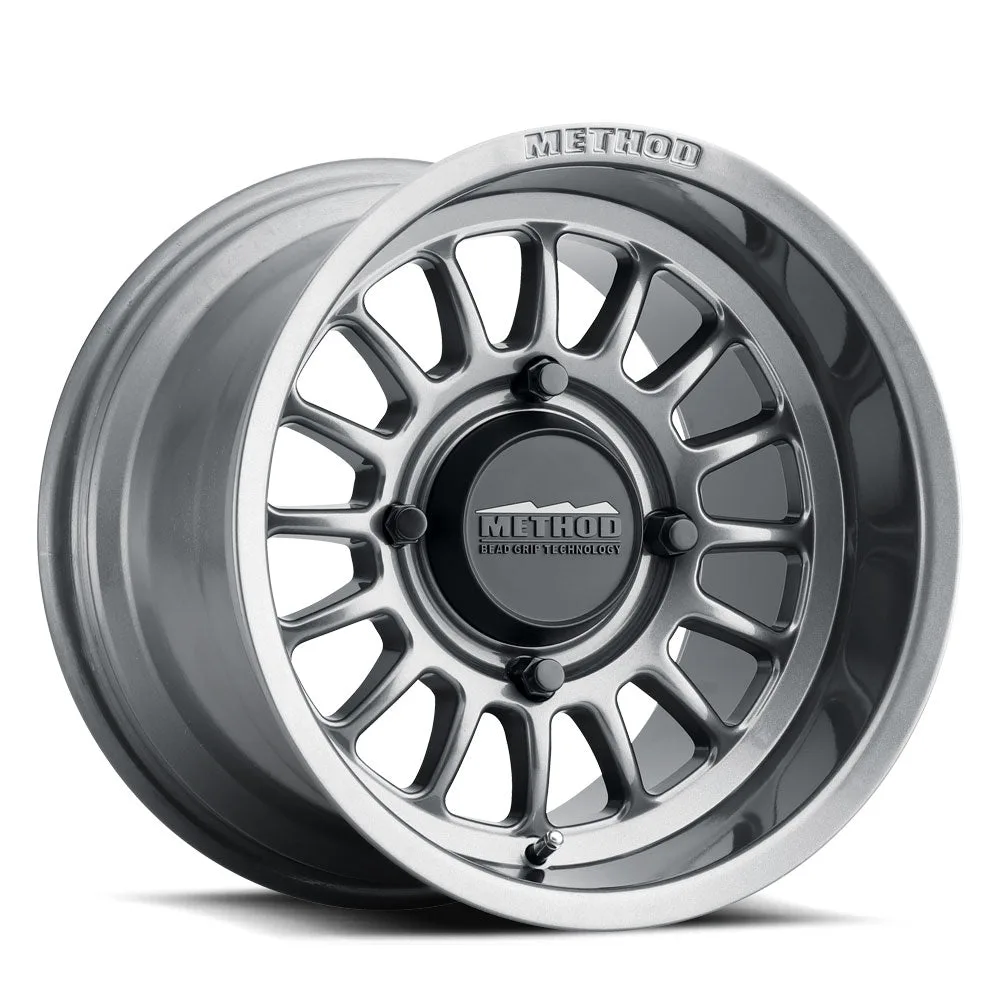
- 411 | UTV Bead Grip® | Gloss Titanium: The 411 Bead Grip® UTV wheel is available with size, bolt pattern, and offset or spacing options. Having offset and spacing as selectable options means you can match the wheel to your machine's clearance instead of compromising on a fixed offset.
Offset and backspacing are not guesswork. Measure your stock wheel, check clearance at full travel, and choose a UTV wheel offset that keeps your tires where they belong. If you are unsure, stay close to stock and let suspension and tire size drive the decision.