Quick answer
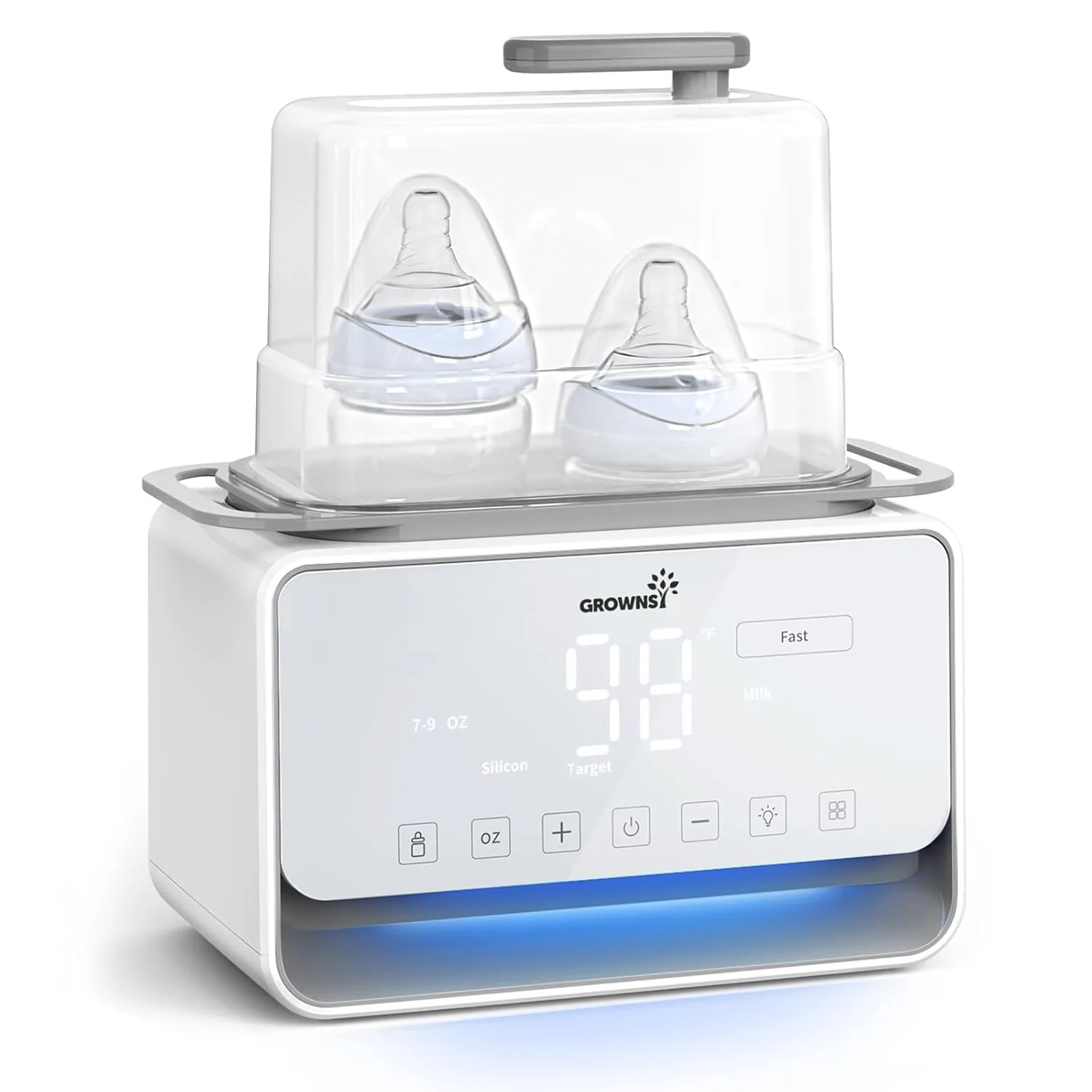
Choose steam when you want fast, low-cost sterilization with a gentle water-bath or steam warming option built into the same countertop appliance. Choose UV when you mainly want a dry, hands-off cycle for items that tolerate light exposure. If your priority is a single routine that covers warming, defrosting, and sterilizing, a multi-function steam warmer such as the GROWNSY 12-in-1 Feeding Bottle Warmer for Two Bottles or the 10-in-1 Dual Bottle Warmers with Precise Temperature Control is the more practical first purchase.
How UV and steam sterilization actually work
Steam sterilization uses heat and moisture to kill germs on bottles, nipples, and pump parts. It is the method most parents already use when they boil or use a countertop steam unit, and it works on glass, silicone, and most dishwasher-safe plastics. The trade-off is that items come out wet, so you either air-dry them on a rack or move them to a separate dryer.
UV sterilization uses ultraviolet light inside a closed chamber. It runs dry, so there is no dripping and no need for a drying rack, and the cycle is usually hands-off once you close the door. The trade-off is that UV light does not reach into shadowed areas the way steam does, so loading matters: bottles should be separated and oriented so the light hits the inside surfaces. It also adds a light-exposure step that some parents prefer to avoid for certain items.
Speed, drying, and capacity in a real feeding day
Steam cycles are typically short, and the supplied GROWNSY warmer records show steam warming in 2-4 minutes on the 10-in-1 Dual Bottle Warmers, which is the same appliance family you would use for warming rather than sterilizing alone. That matters because the fastest routine is usually the one where warming and sterilizing happen on the same countertop instead of in two separate machines.
Drying is where UV pulls ahead. A UV cycle ends dry, so you can move bottles straight to the shelf. Steam leaves condensation, and if you stack wet parts in a closed container you undo some of the benefit. Capacity is the other practical limit: a double-bottle warmer holds two bottles at once, which suits twins or back-to-back feeds, while a larger UV chamber may hold more small parts but takes up more counter space.
Safety considerations for UV and steam
With steam, the main risk is heat. Use the anti-scald basket and let the unit cool before handling, and keep the cord away from the edge of the counter. With UV, the main consideration is light exposure over time and proper loading; follow the manufacturer's guidance on which materials are approved for the chamber, and do not assume every plastic or silicone item is UV-safe just because it is steam-safe.
Neither method replaces washing. Milk residue and biofilm must be removed with soap and water first, because sterilization only works on surfaces that are already clean. If you are building a daily routine, wash, then sterilize, then dry or store covered.
Where multi-function warmers fit the comparison
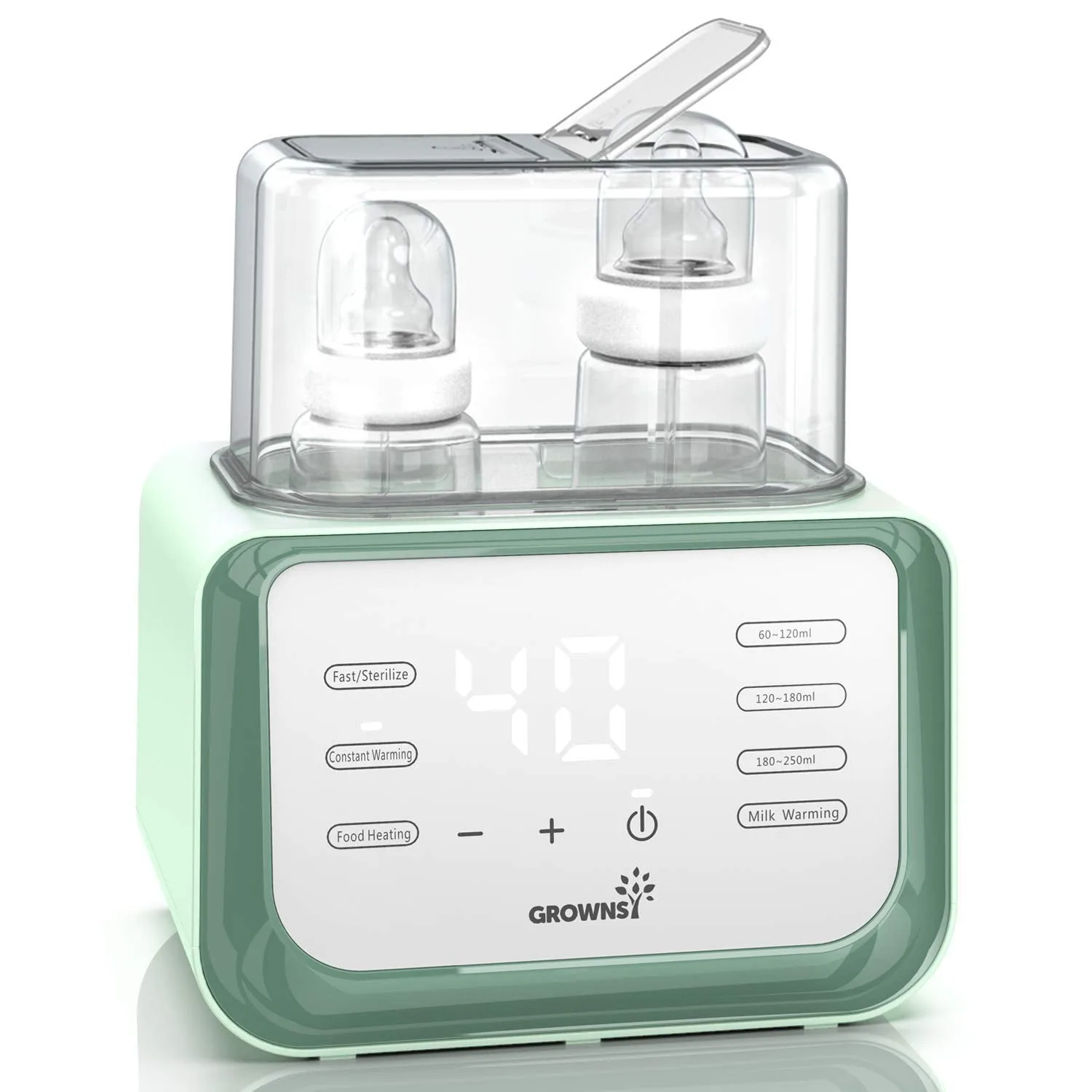
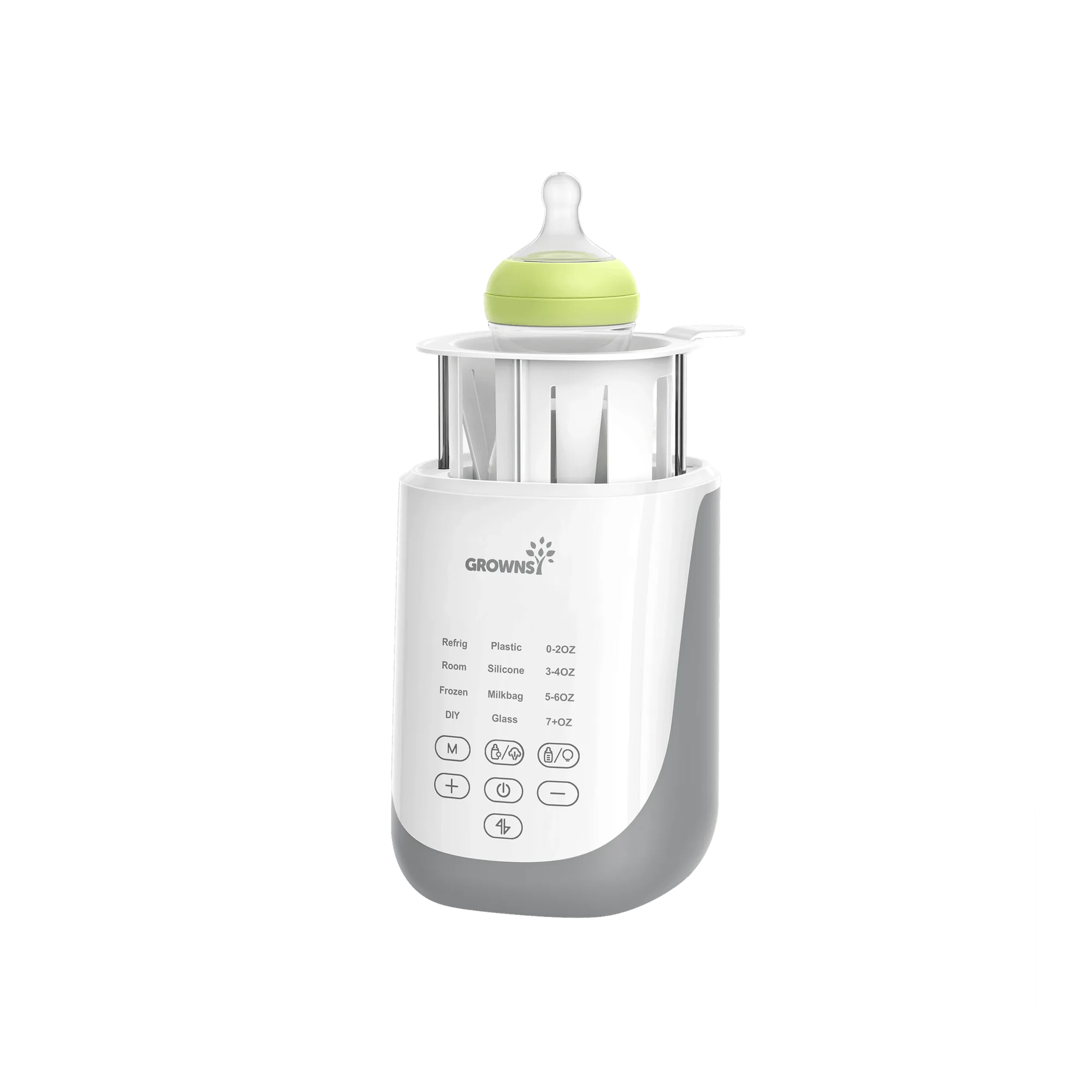
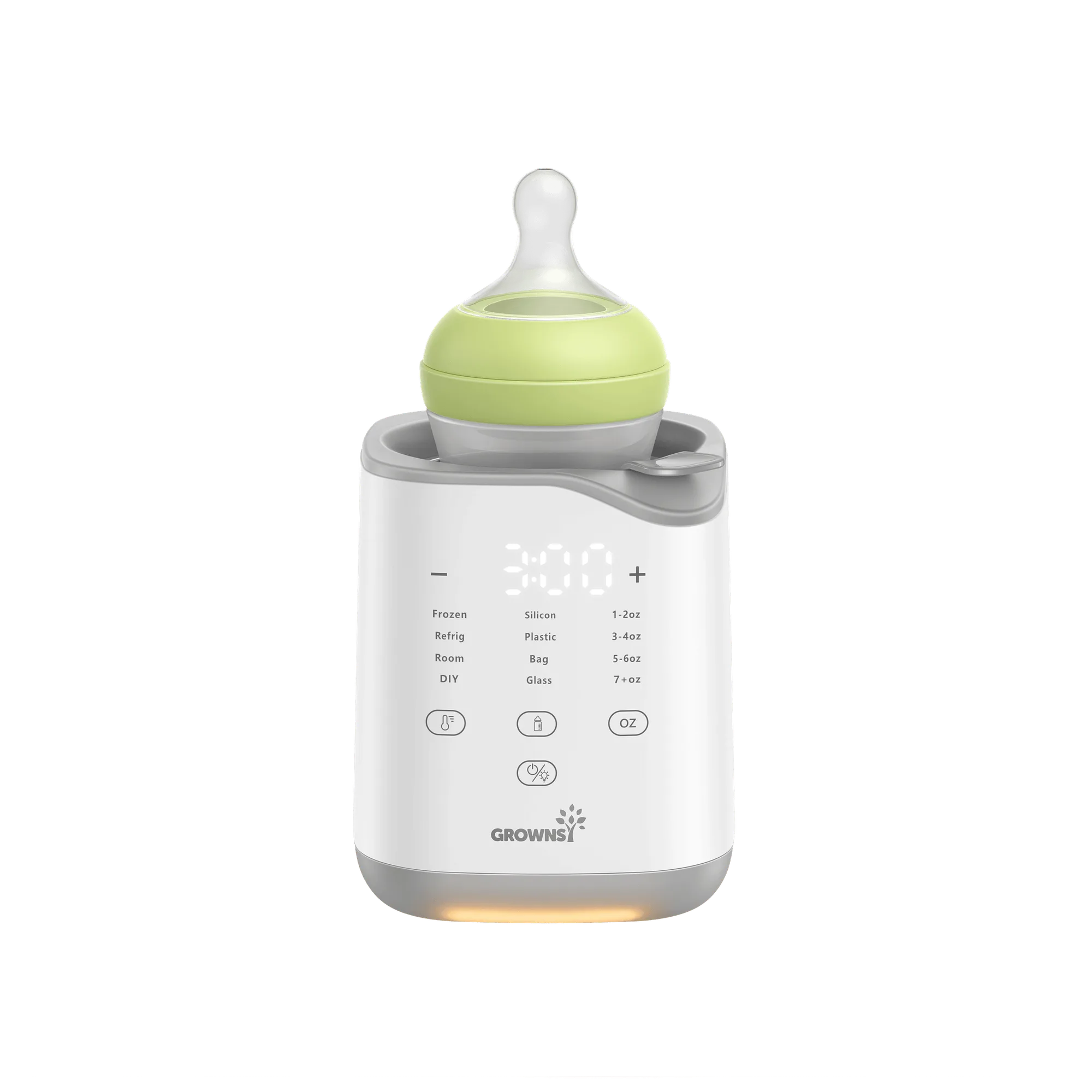
If you are still deciding on a sterilizer, it helps to know that some bottle warmers already include a sterilize function. The GROWNSY 12-in-1 Feeding Bottle Warmer for Two Bottles lists sterilize, defrost, food heating, egg boiling, and a 24-hour keep-warm mode alongside fast steam warming and a nutri-water bath, so one appliance can cover a full day of feeding tasks rather than just one. The 10-in-1 Dual Bottle Warmers with Precise Temperature Control lists fast steaming plus water-bath warming, which is the gentler option when you want to avoid overheating milk.
For families who mostly need warm water for formula rather than bottle warming, the Warm Water Dispenser with 4 Temperature Settings uses four preset temperatures (98.6°F, 104°F, 122°F, 158°F) and dispenses in seconds, which removes the kettle-and-cool-down step entirely. It is not a sterilizer, so pair it with whichever sterilization method you choose.
Trade-offs to weigh before you buy
- Speed vs. drying: Steam cycles are fast and can double as a warmer, but parts come out wet. UV cycles end dry and hands-off, but the chamber needs careful loading so light reaches every surface. If you hate drying racks, UV wins. If you want one machine for warming and sterilizing, steam wins.
- Capacity vs. counter space: A double-bottle warmer holds two bottles at once, which suits twins or back-to-back feeds. A larger UV chamber may hold more small parts but takes up more counter space. Measure your counter before choosing capacity over footprint.
- Material compatibility: Steam is broadly safe for glass, silicone, and most dishwasher-safe plastics. UV safety depends on the material and the manufacturer's guidance, so check before adding an item to a UV chamber. When in doubt, steam is the more forgiving default.
Product facts that affect the choice
- 12-in-1 Feeding Bottle Warmer for Two Bottles: 12-in-1 multi-function design covering fast steam warming, nutri-water bath warming, 24-hour keep warm, defrost, food heating, egg boiling, sterilize, night light, adjustable temperature, anti-scald basket, adjustable timer, and large capacity. One appliance can replace a separate sterilizer, warmer, and bottle rack, which is useful for twins or small kitchens.
- 10-in-1 Dual Bottle Warmers with Precise Temperature Control: Fast steam warming in 2-4 minutes, plus gentle water-bath warming to avoid nutritional losses from overheating or microwaving. Short steam cycles suit late-night feeds, while the water-bath mode gives a slower, gentler option when you are not in a hurry.
- Warm Water Dispenser with 4 Temperature Settings: Instant warm water dispensing with four temperature settings: 98.6°F, 104°F, 122°F, and 158°F. Cuts the wait for formula water, but it does not sterilize, so it complements rather than replaces a sterilizer.
Which sterilizer fits your routine
Best for
- Parents who want one countertop appliance for warming, defrosting, and sterilizing, especially with twins or back-to-back feeds
- Families who prefer fast steam cycles and a gentle water-bath warming option for milk
- Caregivers who want a low-cost, forgiving method that works with glass, silicone, and most dishwasher-safe plastics
Not for
- Parents who specifically want a dry, hands-off cycle and are willing to load items carefully so UV light reaches every surface
- Households that already own a dedicated UV chamber and only need a warmer
- Families who need warm formula water in seconds rather than bottle warming or sterilization