Quick Answer
For most sign making, choose a 90° or 60° v-groove bit for clean, wide lines; use a 15° engraving bit for fine detail and shallow, narrow cuts. The right choice depends on the line weight and depth you need.
Angle Determines Line Width and Depth
The included angle of a v-groove bit directly controls how wide and deep a single pass will cut. A 60° bit produces a narrower, deeper V than a 90° bit at the same depth, while a 120° bit creates a very wide, shallow V. For sign lettering, the angle should match the stroke width you want: tighter angles for thin, elegant letters; wider angles for bold, chunky letters.
Engraving bits, like the 15° Whiteside SC55, have a very sharp point and a small cutting diameter. They are designed for fine detail, 2D and 3D carving, and shallow engraving rather than deep, wide grooves. Because they cut a narrow line, they are ideal for intricate artwork or small text where a v-groove would be too heavy.
Flute Count Affects Finish and Feed Rate
V-groove bits come in 2-flute and 3-flute versions. A 3-flute bit (like the 90° Bits&Bits 425-375-VG90) generally provides a smoother finish and can be fed faster because it has more cutting edges engaging the material. However, 3-flute bits may require higher spindle speeds and can be more expensive. For most hobbyist CNC users, a 2-flute bit is a solid, cost-effective starting point.
The 15° engraving bit is a 2-flute design, which is typical for fine engraving work. Two flutes allow for efficient chip evacuation in shallow cuts and are easier to control at the high RPMs recommended for small bits.
Material and Shank Size Considerations
All the bits mentioned have a 1/4″ shank, which fits most routers and CNC spindles. However, the 120° Whiteside 1566 has a 1/2″ shank, which provides more stability and reduces vibration for large, wide grooves. If your router only accepts 1/4″ shanks, you’ll need an adapter or stick to smaller bits.
The coating matters too. AstraHP coating is a premium coating that reduces heat and friction, extending tool life and improving finish, especially in abrasive materials like plywood or MDF. The 15° engraving bit also features AstraHP coating, making it a durable choice for detailed work.
Trade-Offs at a Glance
- 15° Engraving Bit: Choose for fine detail, small text, and 2D/3D carving. It cuts shallow, narrow lines. Trade-off: slower material removal and not suitable for deep, wide grooves.
- 60° V-Groove Bit: Choose for medium-fine V-grooves, such as decorative lines or smaller lettering. Trade-off: narrower than 90°, so it may not be bold enough for large signs. If you often switch between fine and bold, consider having both 60° and 90° bits.
- 90° V-Groove Bit: The most versatile for general sign making. Produces a classic V-shape that is easy to read. Trade-off: not as fine as 60° for small details, and not as wide as 120° for large letters. Start with a 90° bit if you are unsure which angle you need.
- 120° V-Groove Bit: Choose for large, bold signs where you want a wide, shallow groove. Trade-off: requires a 1/2″ shank and may be overkill for small projects. Check your router's collet size before purchasing a 1/2″ shank bit.
Product Facts
-
15° Engraving Bit – Whiteside SC55 (AstraHP Coated): 15° Engraving Bit – Whiteside SC55 has a 3/32″ x 45° point and is designed for 2D and 3D carving. This sharp, narrow point produces fine, shallow lines ideal for detailed engraving and small lettering.
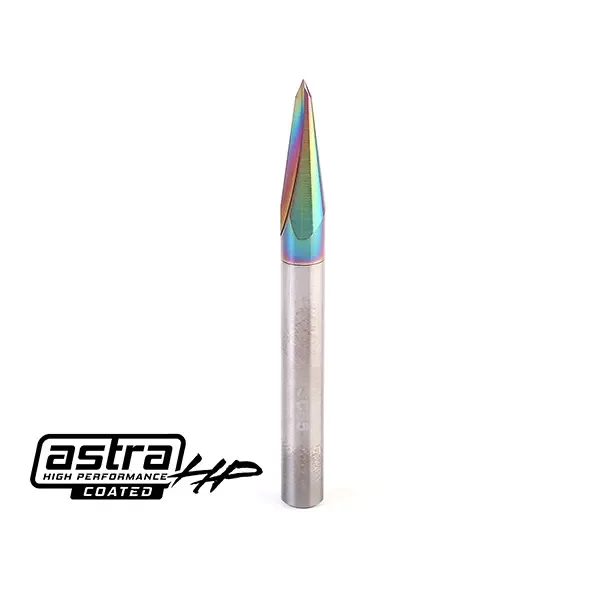
15° Engraving Bit – Whiteside SC55 (AstraHP Coated)
-
90° 3 Flute V-Groove Bit x 3/8″Dia. – AstraHP Coated – Bits&Bits (425-375-VG90): 90° 3 Flute V-Groove Bit – Bits&Bits has a 3-flute design and a 90° angle, with a 1/4″ shank. The 90° angle gives a balanced V-shape for readable sign lettering, and the 3-flute design helps achieve a smooth finish.
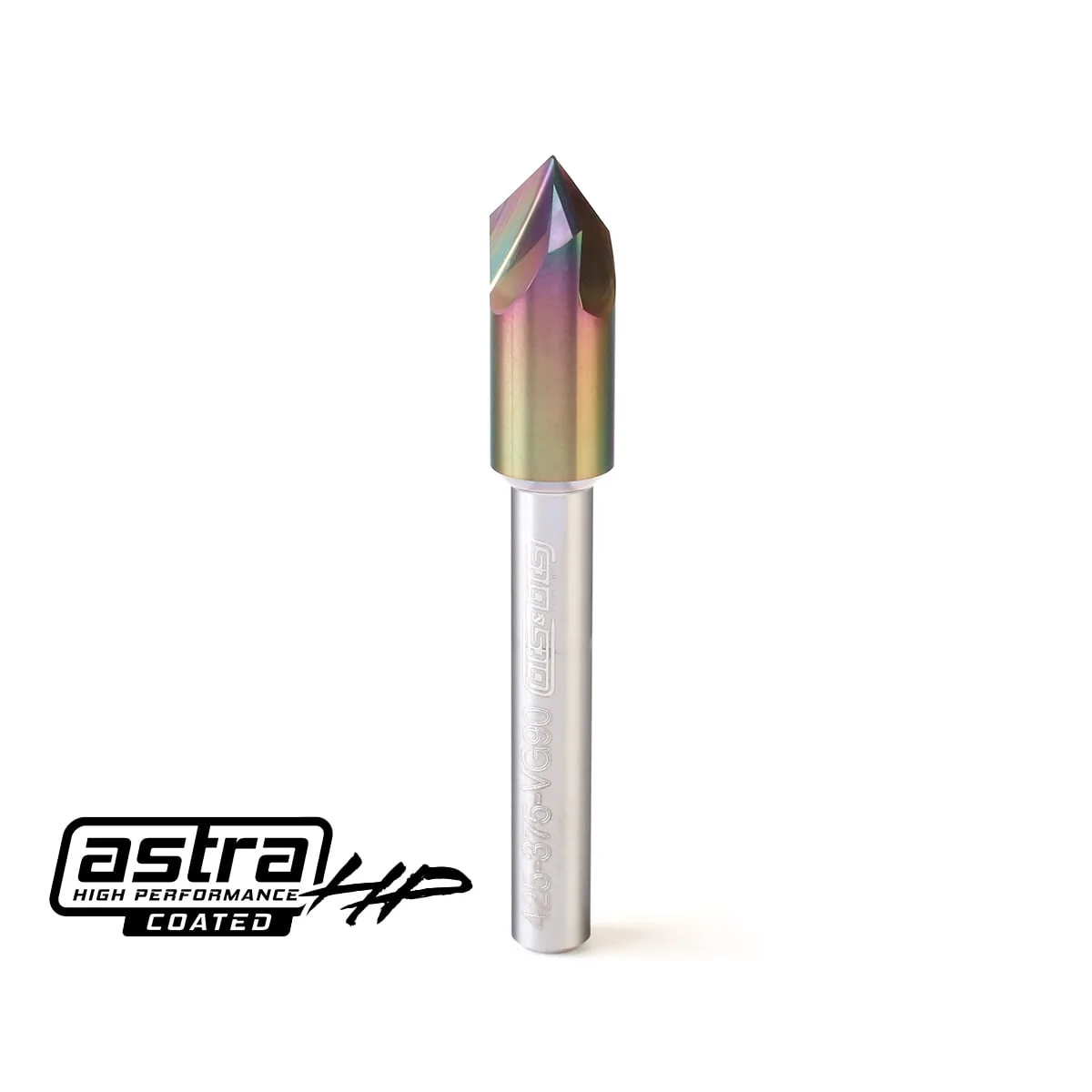
90° 3 Flute V-Groove Bit x 3/8″Dia. – AstraHP Coated – Bits&Bits (425-375-VG90)
-
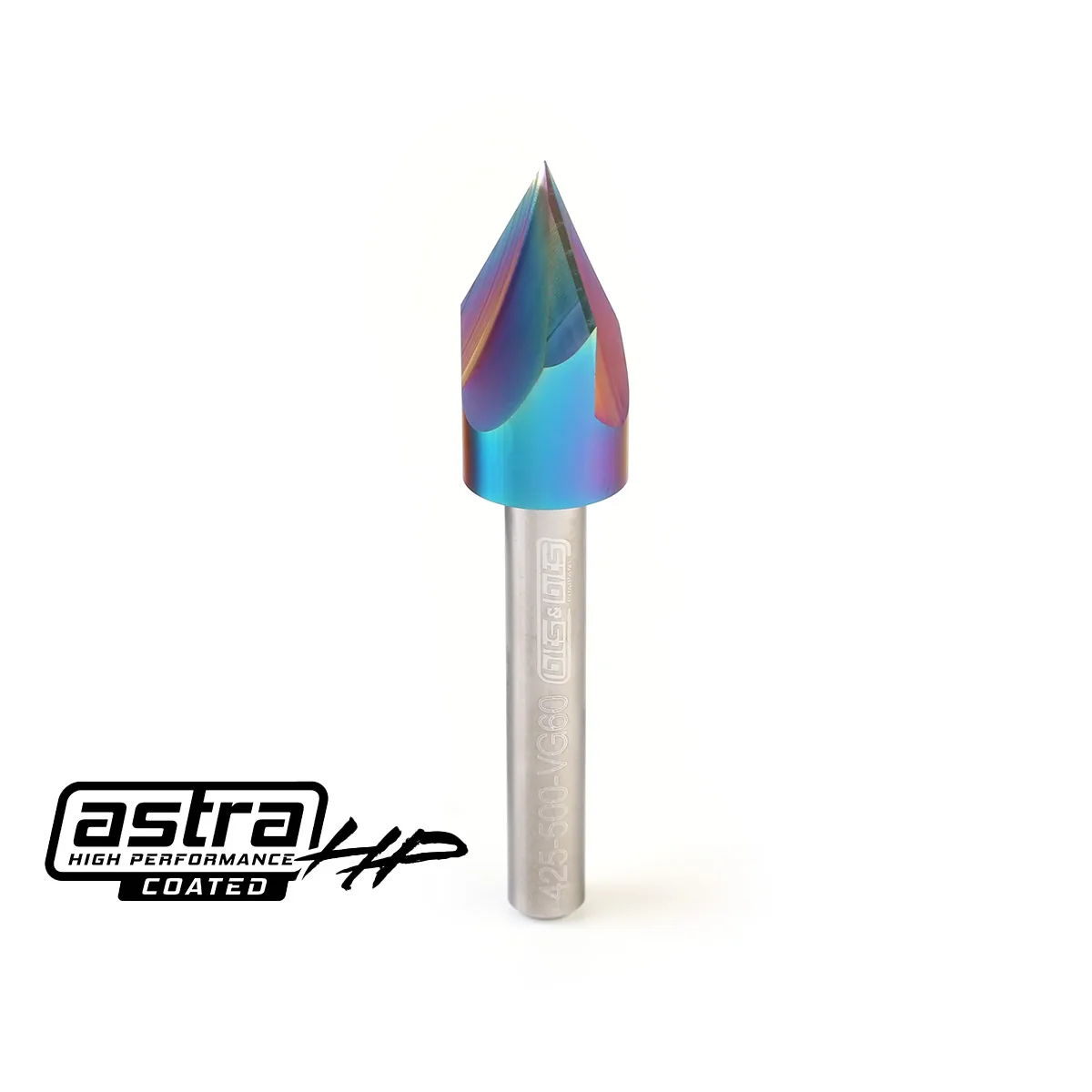
60° 3 Flute V-Groove Bit x 1/2″Dia. – AstraHP Coated – Bits&Bits (425-500-VG60): 60° 3 Flute V-Groove Bit – Bits&Bits has a 1/2″ diameter and a 60° angle, designed for precision and versatility. The 60° angle creates narrower, deeper V-grooves, making it suitable for finer sign details or decorative lines.
-
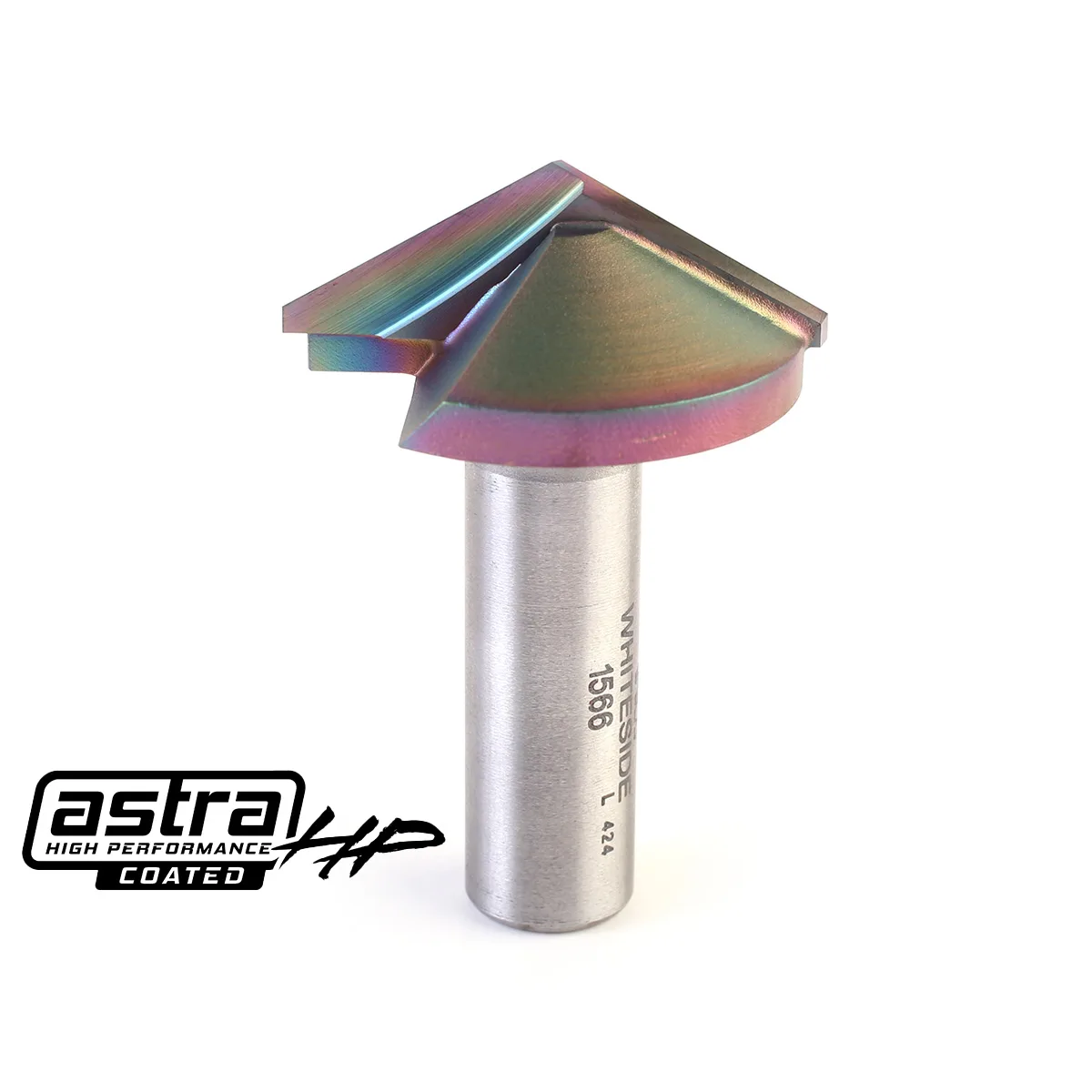
120° V-Groove x 1.5″ Dia. X 1/2″ Shank – AstraHP Coated – Whiteside (1566): 120° V-Groove – Whiteside 1566 has a 1.5″ cutting diameter and a 1/2″ shank, designed for large jobs. This wide-angle bit creates very wide, shallow grooves, perfect for bold, large-scale signage where depth is less critical.
Which Bit Fits Your Project?
Best for
- Fine detail engraving and small text: 15° engraving bit
- Versatile sign making with medium line weight: 90° v-groove bit
- Decorative fine V-grooves: 60° v-groove bit
- Large, bold signage: 120° v-groove bit
Not for
- Deep, wide grooves: use a v-groove bit instead of an engraving bit
- Large lettering with thin strokes: a 120° bit may look too shallow
- Intricate 3D carving: a v-groove bit lacks the fine point of an engraving bit