Why Value Choice Hay Needs a Different Storage Approach
Value Choice Timothy Hay is a budget-friendly option made from hay that didn’t quite meet the cut for Small Pet Select’s other products — perhaps a mixed hay, extra brown leaf, or another minor blemish. It’s still great value, but because the hay can vary from batch to batch, your storage routine matters more. Proper storage keeps it fresh and safe, and helps you manage the natural inconsistencies.
Fresh hay should make up about 80% of your small pet’s diet, so protecting that investment is worth a few minutes of setup.
What the Product Record Tells You
-
Small Pet Select Value Choice Timothy Hay: Value Choice Timothy Hay is not covered by the Picky Pet Promise 100% satisfaction guarantee. Since you can’t rely on a satisfaction guarantee, storing it well from day one helps you get the most out of every batch.
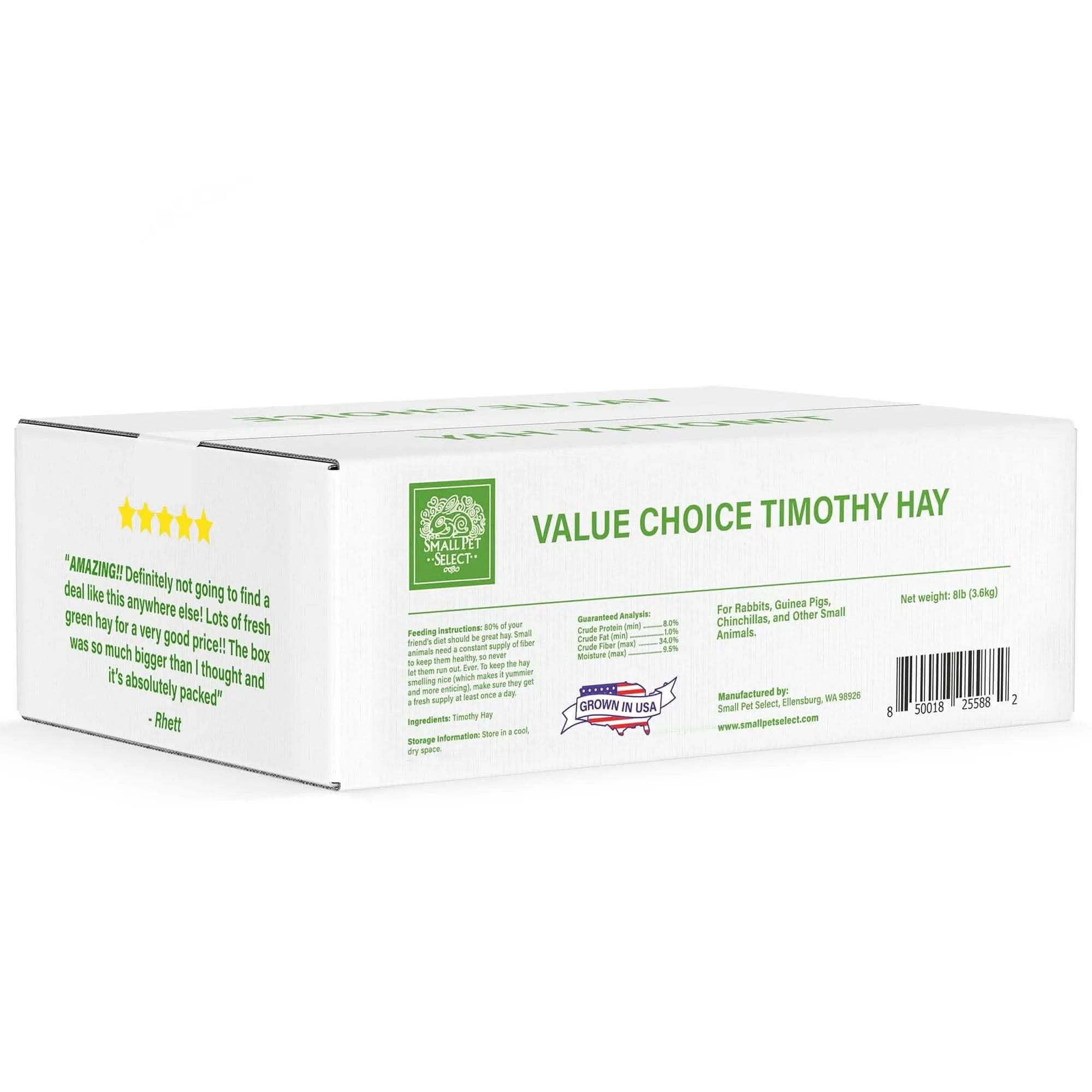
Small Pet Select Value Choice Timothy Hay
-
Small Pet Select Value Choice Timothy Hay: This hay will be switching and will not always be the same. Expect variation in texture, color, and leafiness between batches; your storage should be flexible enough to handle different hay types.
Core Storage Rules for Any Timothy Hay
These principles apply to all hay, including Value Choice. They focus on moisture control and airflow — the two factors that most affect freshness.
- Keep it dry: Moisture is the enemy of hay. Store in a dry spot away from leaks, humidifiers, or damp floors. A hygrometer can help you monitor humidity.
- Allow airflow: Hay needs to breathe. Avoid sealing it in airtight plastic bags or bins; use breathable containers like cardboard boxes, paper bags, or fabric sacks.
- Avoid direct sunlight and heat: UV light and heat can degrade nutrients and cause condensation. A cool, dark closet or pantry works well.
- Keep it off the floor: Elevate hay on a shelf or pallet to prevent moisture wicking from concrete or damp floors.
- Use the oldest first: Rotate your stock so older hay is fed before newer batches. Label bags with the date you opened them.
Choosing the Right Container
The container you choose affects airflow and protection. Here’s how common options compare.
- Cardboard box: Breathable and inexpensive. Keep the lid loose or cut ventilation holes. Replace if it gets damp.
- Fabric sack or pillowcase: Breathable and space-saving. Wash regularly to prevent dust buildup.
- Plastic bin with ventilation holes: Provides some protection from pests. Drill holes for airflow and never seal the lid tightly.
- Airtight plastic container: Not recommended for long-term storage — traps moisture and can encourage mold.
Managing Batch-to-Batch Variation
Because Value Choice hay switches, you may notice differences in color, stem thickness, or leaf content. That’s normal. When you open a new batch, inspect it for any musty smell or unusual dampness before feeding. If it looks or smells off, don’t use it — mold can be harmful. Since this product isn’t covered by the satisfaction guarantee, check each batch upon arrival and store it properly to preserve what you have.
Product Details for Your Notes
- Small Pet Select Value Choice Timothy Hay: Available size: 8LB. An 8LB bag is a manageable size for many households; store it in a container that fits the whole bag to minimize handling.
- Small Pet Select Value Choice Timothy Hay: Fresh hay is critical for your small pet's health and should make up about 80% of their diet. Proper storage protects that dietary staple, ensuring your pet gets the fiber and dental benefits hay provides.
What the Supplied Information Does Not Cover
The product record does not include specific storage instructions, shelf-life estimates, or cleaning procedures for containers. The advice above is general best practice for hay storage, not a manufacturer specification. Always use your judgment and inspect hay regularly.