Quick answer
Load Vandal Tungsten 400 when your scene is lit mainly by tungsten bulbs, and meter for the shadows at ISO 400. If daylight or fluorescent light dominates, expect a cool cast and decide whether to filter or embrace it before you shoot.
Why tungsten balance changes your exposure decisions
Tungsten-balanced color negative film is designed to render warm household and stage bulbs closer to neutral than daylight film does. That means the same lamp that looks orange on daylight film can look almost white here, while daylight turns noticeably blue.
Vandal Tungsten 400 is also built for low-light work, so you can often handhold in rooms where slower film would need a tripod. The tradeoff is that bright daylight scenes may need filtration or a deliberate cool look, and very mixed lighting will still show split colors across the frame.
Where the halo effect helps and where it distracts
The film produces a halo effect, which tends to appear around bright highlights such as bare bulbs, neon signs, or windows in dark rooms. In moody interiors it can add atmosphere; in clean product or portrait shots it may pull attention away from the subject.
Check your frame for small, intense light sources before you commit. If you want a cleaner result, compose so those highlights sit outside the frame or are diffused by a shade or bounce.
Step-by-step: shooting Vandal Tungsten 400 under artificial light
- Identify the dominant light source: Look at the room before you meter: tungsten bulbs, LED fixtures, fluorescent tubes and daylight through windows all render differently on this film. Decide which source covers most of your subject. If no single source dominates, treat the scene as mixed and expect color shifts you cannot fully correct in one exposure.
- Set your meter to ISO 400 and meter the shadows: Rate the film at ISO 400 and take a reading from a shadow area you want to keep detail in, then adjust so that area is not underexposed. Bright bulbs will often blow out, which is normal for low-light color negative work. Check the reading against a midtone as well; a big gap between shadow and midtone readings warns you the scene has more contrast than the film can hold.
- Choose a filter only if you need neutral daylight: Under tungsten light, shoot unfiltered for the intended balance. If daylight or cool fluorescent light fills the frame and you want a neutral result, add the appropriate correction filter and account for the light loss in your exposure. A filter cannot fix a scene where tungsten and daylight are both strong; move the subject or accept the mixed color.
- Compose around bright highlights: Frame so bare bulbs, neon and reflective metal sit where the halo effect supports the picture, or shade them if you want a cleaner image. The halo is most visible around small, intense sources. Take one test frame of a highlight-heavy scene before shooting the rest of the roll.
- Bracket difficult low-light scenes: In dim rooms, expose one frame at your metered setting and one a stop brighter. Color negative film tolerates overexposure better than underexposure, and the brighter frame often gives cleaner shadow detail. Note which frame you prefer so your next roll starts from a known exposure.
- Develop normally and review the color cast: Have the roll processed as standard color negative film, then compare your tungsten, daylight and mixed-light frames. Use the results to decide whether you need a filter, a different meter reading, or simply a different light source next time. Keep a short note of the lighting in each scene so you can match the cast to the cause.
Product facts
-
Vandal Tungsten 400 35mm Film - 36 Exposure: Vandal Tungsten 400 is a tungsten-balanced color negative film that produces a unique halo effect and is designed for low-light environments. It suits indoor tungsten scenes without a strong correction filter, and the halo is part of the look rather than a defect to fix.
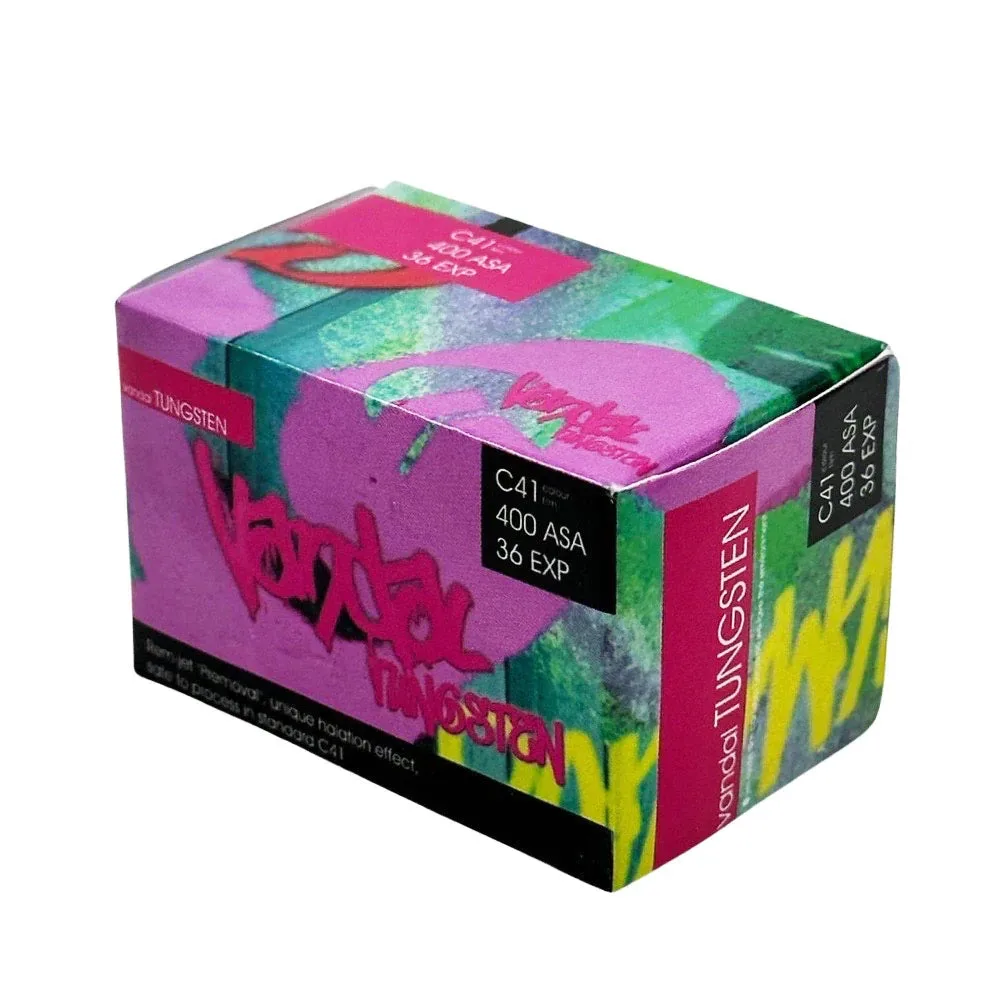
Vandal Tungsten 400 35mm Film - 36 Exposure