Vedette 400 fit and sizing questions
How do I choose the right size in the Vedette 400?
Use the waist measurement range in the product record, not your dress size. The record lists: 2XS 22–24", XS 24–25", S 26–28", M 28–31", L 32–35", XL 36–38", 2XL 38–40", 3XL 41–43", 4XL 44–46", 5XL 46–49". Measure your natural waist and match it to the closest range. If you are between sizes, the two rows of front hook-and-eye closures give you some adjustment, but the record does not specify a recommended fit preference, so choose based on your own comfort.
What torso length does the Vedette 400 suit?
The record describes the length as "average to long torso length." It also gives dimensions: for sizes XS–L, the front and back are both 13"; for sizes XL–3XL, both are 15". Compare those measurements to your own torso to judge coverage. The record does not provide a fit guide for shorter torsos.
Does the Vedette 400 work for back coverage?
The product description states it has "superior coverage to minimize back bulge" and targets the waist and back. The 4 encased spiral stainless steel bones add support and help the garment stay in place. The record does not specify how high the back rises, so check the back length measurement (13" or 15" depending on size) against your own back.
What is the difference between the hook-and-eye closure and the zipper panels?
The cincher closes in the front with two rows of hook and eye for customized comfort. Front zipper overlay panels sit over those closures to hide them and give a smooth finish. The zipper is an outer layer, not the primary closure. The record does not state whether the zipper is functional or decorative, so treat it as a cover for the hook-and-eye rows.
Vedette 400 construction details that affect fit
-
Vedette 400 Latex Underbust Strapped Shaping Cincher with Zipper panels: Strong rubber latex inner cincher with a soft cotton blend outer layer. The latex provides compression while the cotton blend outer layer creates a smoother surface under clothing.
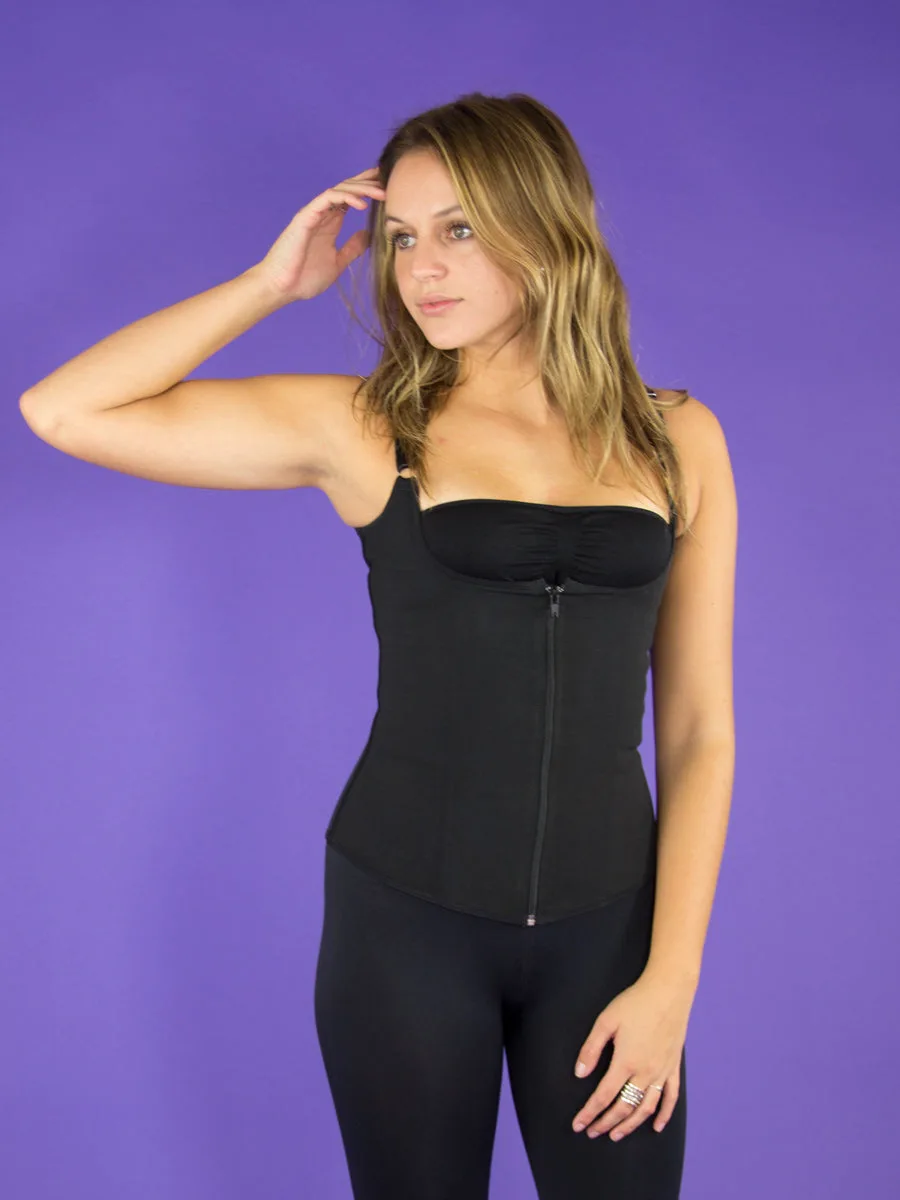
Vedette 400 Latex Underbust Strapped Shaping Cincher with Zipper panels
-
Vedette 400 Latex Underbust Strapped Shaping Cincher with Zipper panels: 4 completely encased spiral stainless steel bones. These bones add support and help the garment stay in place, which matters when you are adjusting straps or layering.
-
Vedette 400 Latex Underbust Strapped Shaping Cincher with Zipper panels: Adjustable-length, non-removable straps. The straps can be lengthened or shortened for security, but they cannot be removed, so plan for them in your outfit.
-
Vedette 400 Latex Underbust Strapped Shaping Cincher with Zipper panels: Fiber content: imported natural rubber latex, nylon, cotton, polyester and spandex. Knowing the materials helps you judge breathability and care needs, though the record does not provide washing instructions.
-
Vedette 400 Latex Underbust Strapped Shaping Cincher with Zipper panels: Bra and panty not included. You will need to supply your own bra and underwear to complete the look.
Wearing and adjusting the strapped shaping cincher
How should I adjust the straps on the Vedette 400?
The straps are adjustable in length but non-removable. The record does not give a specific adjustment procedure. A practical approach is to loosen them before putting the cincher on, fasten the front hook-and-eye closure, then tighten the straps until the garment feels secure without digging in. Adjust one side at a time and check the fit in a mirror.
Can I wear the Vedette 400 under clothes?
Yes. The outer cotton blend layer is described as giving a smooth, sleek silhouette under clothes, and the zipper panels hide the hook-and-eye closures for a cleaner finish. The record does not specify which fabrics or outfits work best, so test with your own wardrobe. The straps may show under very thin or open-back tops.
How do I put on the Vedette 400?
The record does not include step-by-step instructions. Based on the closure design, you would fasten the front hook-and-eye rows first, then adjust the straps. The zipper overlay panels go over the closures. If you are unsure, start with the looser hook-and-eye row and tighten as needed.
What should I know about latex and care?
The inner layer is natural rubber latex. The record does not provide washing or care instructions, so check the garment label or contact the seller for guidance. People with latex sensitivity should consider this before buying. The record does not state whether the latex is covered by the cotton blend on the skin side.
Sizing, colors and availability questions
Which sizes and colors are available?
The record lists sizes X-Small through 3X-Large in Beige, and X-Small through 2X-Large in Black. Not every size is offered in both colors. The size chart in the record covers 2XS through 5XL, but the available variants shown are more limited.
Is the Vedette 400 true to size?
The record does not state whether the cincher runs true to size. Use the waist measurement ranges as your primary guide. The two rows of hook and eye allow some flexibility, but the record does not define how much.
What if I am between sizes?
The record does not give a specific recommendation for between-size shoppers. The two hook-and-eye rows offer two levels of tightness, which may help. If you are unsure, compare your measurement to the upper and lower end of each range and consider your preferred compression level.