Quick answer
To verify authenticity of a signed framed couture embroidery, examine the signature and numbering, request a certificate of authenticity, and trace the piece's provenance back to the designer's atelier.
Why authenticity matters for framed couture embroidery
A signed and numbered framed couture embroidery is a one-of-a-kind artwork. Authenticity ensures you own a genuine piece from the design process, not a reproduction. It also preserves the piece's value and connection to the designer's archive.
Steps to verify authenticity
- Check the signature and numbering: Look for the designer's signature and a unique number on the embroidery or its backing. The number should match the edition stated on any accompanying documentation. Common mistake: assuming a printed label is the signature. The signature should be hand-applied or directly embroidered.
- Request a certificate of authenticity (COA): Ask the seller for a COA that includes the piece's number, title, date, and signature. The COA should come from the atelier or an authorized representative. Checkpoint: a COA without a matching number or signature is not valid.
- Trace the provenance: Obtain a history of ownership or exhibition records. Provenance from the designer's studio or a reputable gallery adds confidence. Ask for any correspondence or invoices from the original sale. Common mistake: relying only on a seller's story. Written evidence is essential.
Product facts
-
Embroidery No. 092 - Signed & Numbered Framed Couture Embroidery: Embroidery No. 092 is a graphic study in charcoal beadwork, its thorned stems set against a soft lilac ground. Each framed piece is a one-of-one work, drawn from both archive and current couture developments. This confirms that each piece is unique and part of a living archive, so verifying its number and signature ensures you have the exact original from the atelier.
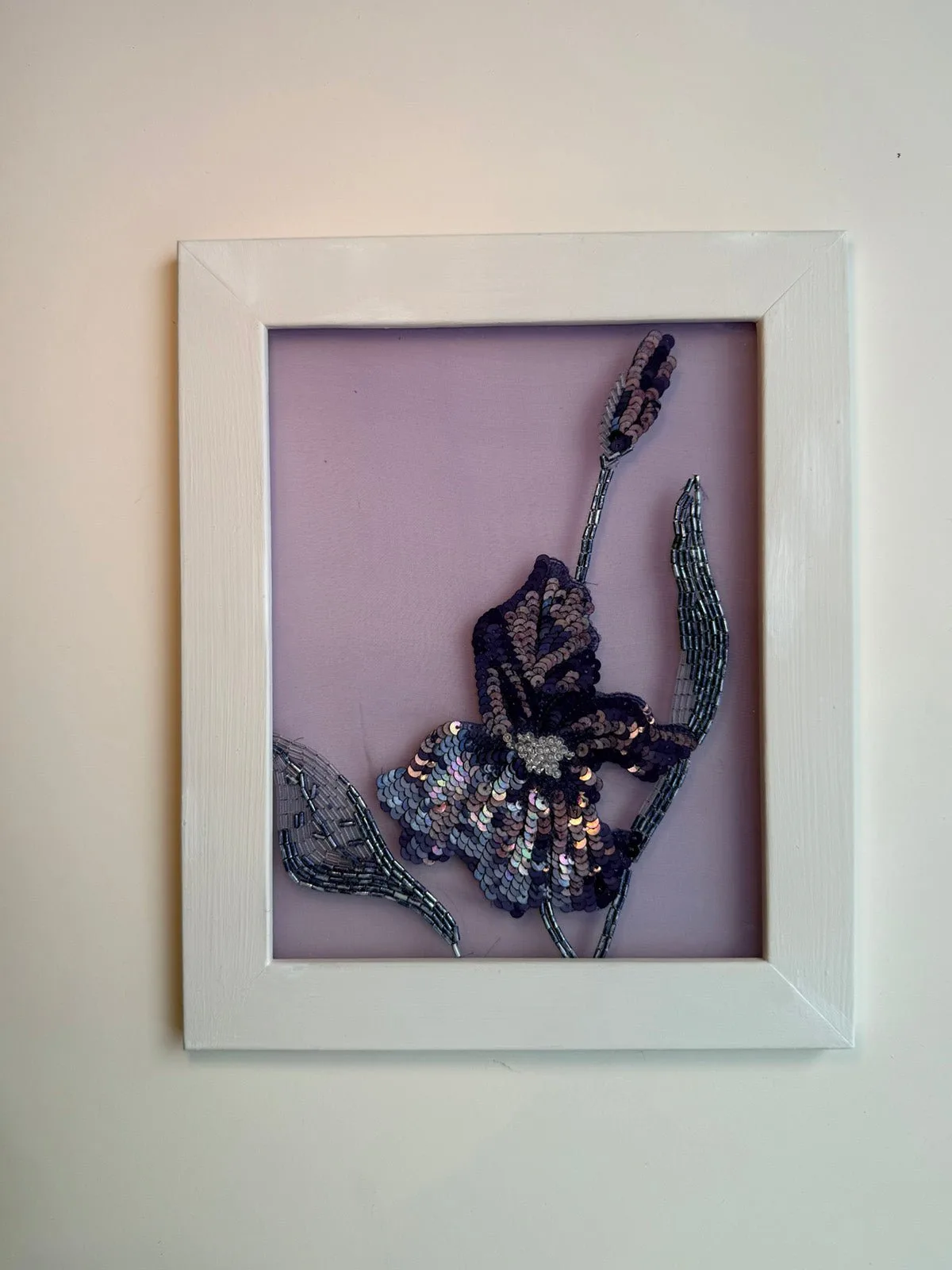
Embroidery No. 092 - Signed & Numbered Framed Couture Embroidery