Quick answer
Choose a vest when you need core warmth with full arm mobility for high-output activities, and a full zip jacket when you want versatile temperature regulation and wind protection for variable conditions.
Why the choice matters for fall layering
Fall weather swings from cool mornings to warmer afternoons, and your activity level changes too. The right midlayer helps you stay comfortable without overheating. A vest and a full zip jacket serve different purposes in a layering system, so the best pick depends on how you move and where you go.
A vest keeps your core warm while leaving your arms free to breathe and move—ideal for aerobic activities like hiking or climbing. A full zip jacket, especially one designed for layering, gives you more coverage and the ability to open or close the front to dump heat quickly.
Trade-offs at a glance
- Core warmth vs. full coverage: A vest concentrates insulation on your torso, keeping your core warm while your arms stay cooler. A full zip jacket covers your arms and torso, offering more warmth but less breathability for high-output activities.
- Mobility vs. wind protection: Vests allow unrestricted arm movement, making them ideal for climbing, paddling, or hiking with poles. Full zip jackets provide better wind resistance and can be zipped up for extra protection in gusts.
- Versatility vs. simplicity: A full zip jacket can be worn open as a light layer or zipped up for warmth, adapting to changing conditions. A vest is simpler—just put it on and go—but offers less adjustability. If you tend to run warm during activity, a vest may be all you need. If you face variable weather, a full zip jacket gives more options.
Product facts
-
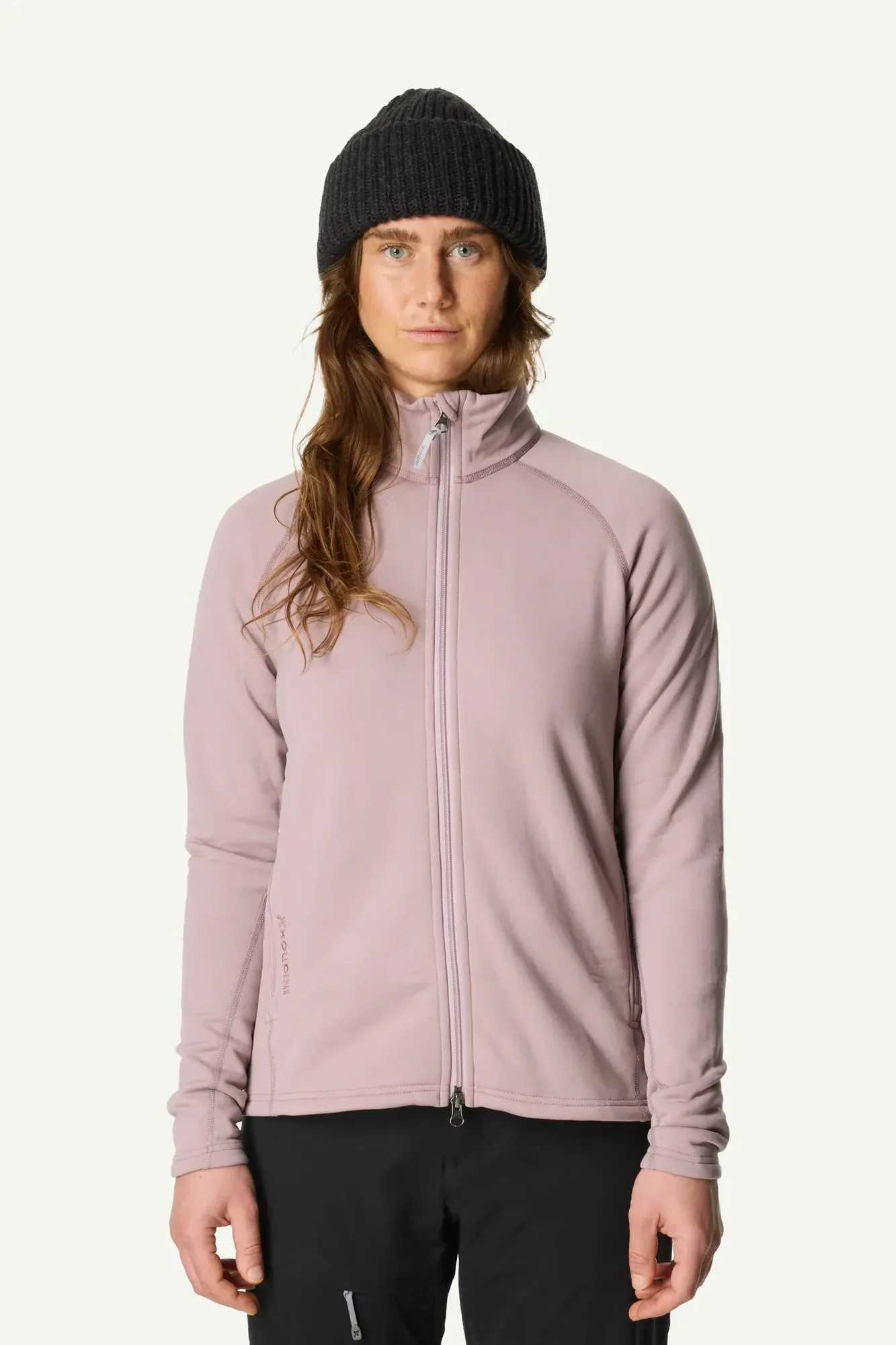
W's Power Up Jacket: The W's Power Up Jacket is a hoodless evolution of the classic Power Houdi, with a roomier fit for layering. The lack of a hood and relaxed cut make it easy to wear over a base layer and under a shell, giving you adaptable warmth without bulk.
W's Power Up Jacket
-
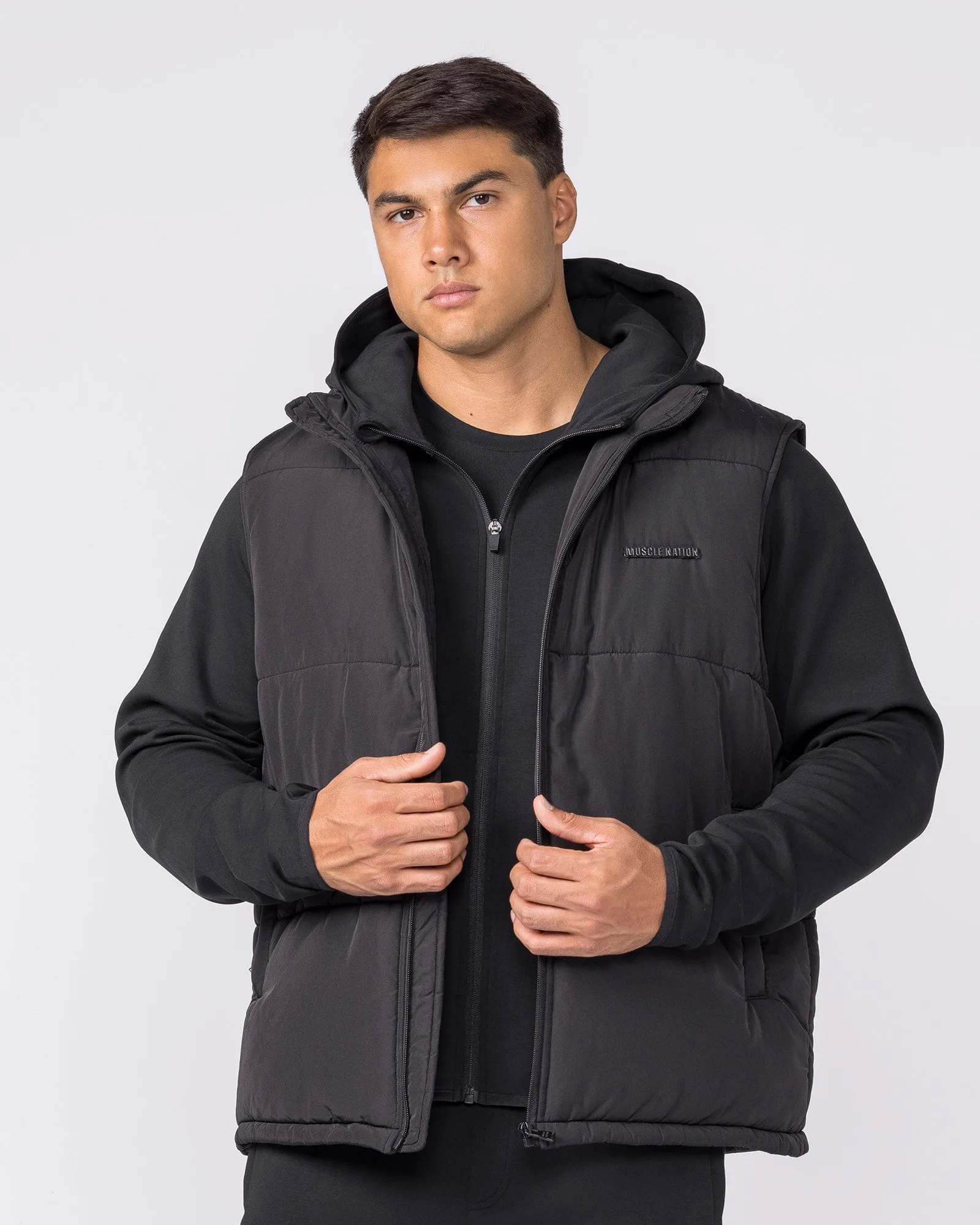
M's Dunfri Vest: The M's Dunfri Vest uses a lightweight, durable Spinner Ripstop fabric and Primaloft Gold synthetic insulation. Synthetic insulation retains warmth even when damp, and the vest's design lets you move freely—perfect for active fall days.
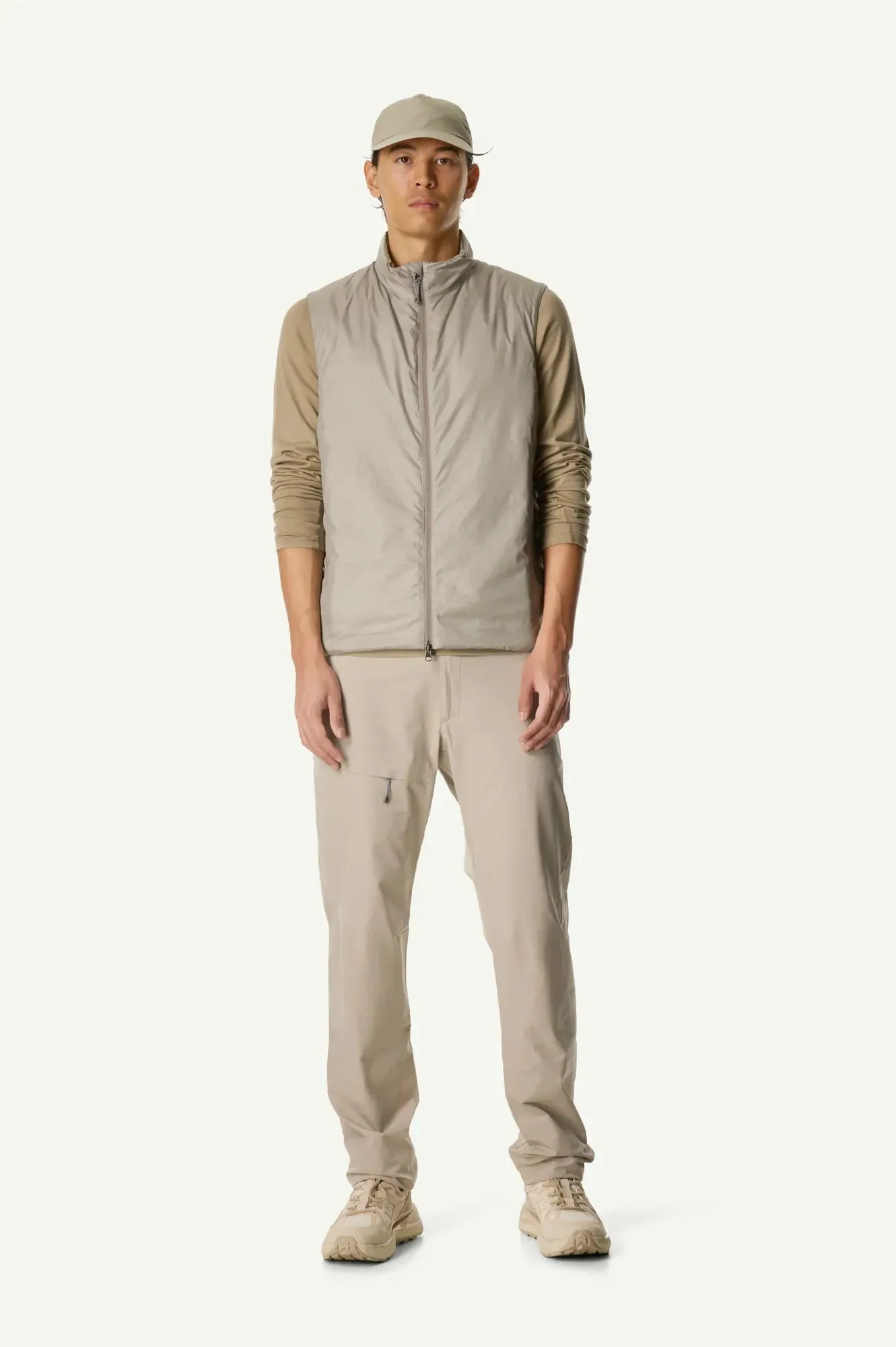
M's Dunfri Vest
Which one fits you?
Best for
- High-output fall activities like trail running, fast hiking, or climbing where arm freedom matters
- Layering under a shell when you need core warmth without restricting movement
Not ideal for
- Cold, windy days when you need arm coverage and full wind protection
- Low-output activities like walking in town where you want a jacket you can easily open and close