Quick answer
Choose the Viltrox PRO Series 85mm F1.4 for flattering portraits and low-light work where shallow depth of field matters. Choose the Canon RF 100mm f/2.8L Macro IS USM when you need true 1.4x close-up magnification and adjustable bokeh in a single lens.
Aperture and bokeh: F1.4 vs adjustable rendering
The Viltrox 85mm F1.4 gives you an ultra-large maximum aperture, which creates rich, creamy background blur and keeps shutter speeds workable in low light. That makes it a natural fit for portraits where you want the subject to separate cleanly from the background.
The Canon RF 100mm f/2.8L Macro IS USM takes a different approach. Its maximum aperture is f/2.8, so it produces less blur at the same distance, but it adds Spherical Aberration Control that lets you adjust bokeh depiction. For macro work, that control can be more useful than a wider aperture because you can shape the out-of-focus areas without changing your lighting.
Autofocus and stabilization: speed vs close-up stability
The Viltrox uses a Dual HyperVCM autofocus system with face and eye detection, which is designed to track people quickly and silently. That suits portrait sessions where the subject moves slightly between frames.
The Canon RF 100mm f/2.8L Macro IS USM offers 8 stops of image stabilization. That matters most at close focusing distances, where small movements are magnified. If you shoot handheld macro, the stabilization advantage is significant; if you mainly shoot portraits, the Viltrox's eye detection is the more relevant feature.
Magnification and working distance
The Canon RF 100mm f/2.8L Macro IS USM achieves 1.4x magnification, which is greater than life-size. That lets you fill the frame with small subjects like insects, jewelry, or product details without adding extension tubes.
The Viltrox 85mm F1.4 is not a macro lens, and its maximum magnification is not supplied in the catalog. If close-up reproduction is a core requirement, treat the Viltrox as unsuitable rather than assuming it can cover the occasional macro shot.
Trade-offs to weigh before you buy
- Bokeh and low-light capability: The Viltrox F1.4 aperture produces noticeably more background blur and lets in more light than the Canon f/2.8. If your priority is isolating a portrait subject in dim venues or at dusk, the Viltrox has the edge. Test both at your typical portrait distance if you need maximum blur.
- Close-up magnification: The Canon reaches 1.4x magnification; the Viltrox is not a macro lens. If you need to reproduce tiny details at life-size or beyond, only the Canon meets that requirement. Decide whether macro is a core use or an occasional experiment.
- Handheld stability: The Canon's 8 stops of stabilization help at close range, where handshake is magnified. The Viltrox relies on its fast autofocus for people, not on stabilization for static close-ups. For handheld macro, budget for the Canon's stabilization advantage.
Key specifications at a glance
-
Viltrox PRO Series 85mm F1.4: F1.4 ultra-large aperture with a 15-element, 11-group optical design including 3 ED, 9 HR, and 1 UA glass. The wide aperture supports low-light portrait shooting and strong subject separation, while the complex glass aims to keep edges sharp and reduce fringing.
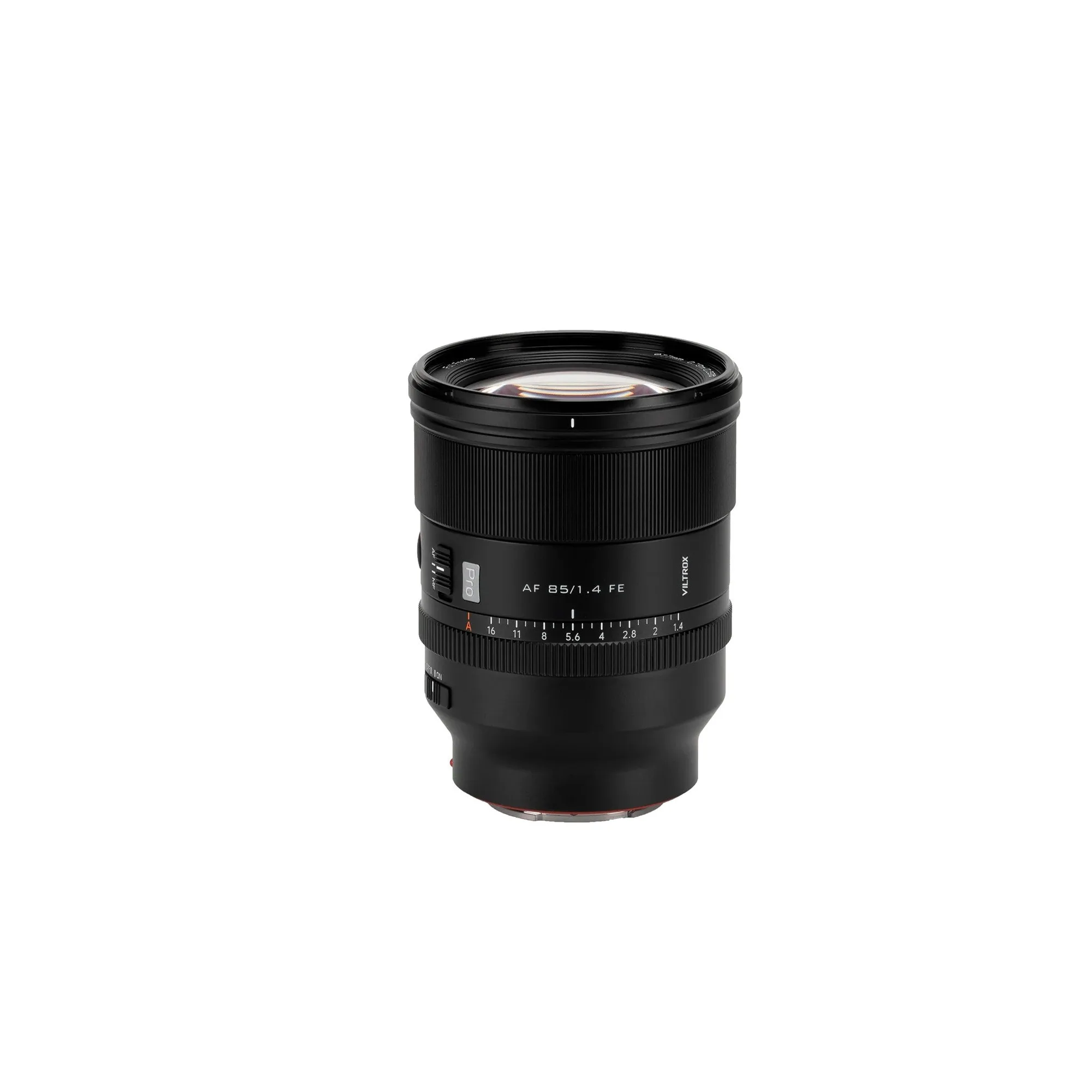
Viltrox PRO Series 85mm F1.4
-
Canon RF 100mm f/2.8L Macro IS USM: 1.4x maximum magnification and 8 stops of image stabilization, plus Spherical Aberration Control for bokeh adjustment. This combination makes handheld close-up work more practical and lets you fine-tune background blur without changing lenses.
Canon RF 100mm f/2.8L Macro IS USM
Canon RF 100mm f/2.8L Macro IS USM
Which lens fits your work?
Best for
- Portrait photographers who want strong background separation and low-light flexibility
- Wedding and event shooters who rely on face and eye detection for moving people
Not for
- Photographers who need true macro magnification for insects, products, or details
- Handheld close-up work where stabilization is critical