Cork vs. fabric: what actually affects how cool a shade feels
When you compare a cork pendant shade with a fabric one, the first question is usually about heat. A shade can feel cooler to the touch or keep a room cooler depending on the material's insulation and how it handles the heat from the bulb. But there is no single 'coolest' material for every situation. The answer depends on the bulb you use, the shade's thickness, and how much airflow the design allows.
Cork is a natural insulator, so a cork shade like the Vita Pendant Light Shade may feel warm on the outside after the light has been on for a while, but it can also slow heat transfer into the room. Fabric shades, depending on the weave and lining, can either let heat pass through quickly or trap it near the bulb. The key is to match the shade material with the bulb type and the room's needs.
Cork vs. fabric pendant shades: key differences
Here is a side-by-side look at how cork and fabric shades compare on the points that matter most for heat and light.
- Heat insulation: Cork is a natural insulator, so a cork shade can help reduce heat transfer to the room. Fabric shades vary widely: thick, lined fabrics trap heat, while thin, unlined ones let it escape more easily.
- Light diffusion: Fabric shades, especially light-colored ones, diffuse light softly. Cork, being opaque, creates more directional downlight with less glow through the shade itself.
- Durability and care: Cork is moisture-resistant and easy to wipe clean. Fabric can absorb dust and may require more careful cleaning, depending on the material.
- Style: Cork brings a natural, contemporary texture. Fabric offers endless colors and patterns, but cork's unique look is a statement on its own.
What the Vita cork shade actually offers
-
Vita Pendant Light Shade: The Vita Pendant Light Shade is a cone-shaped shade crafted from Portuguese eco-friendly cork. It arrives flat-packed and assembles with solid brass hardware. Cork's natural insulation and the cone shape affect how heat and light behave, which is central to the cooler-shade question.
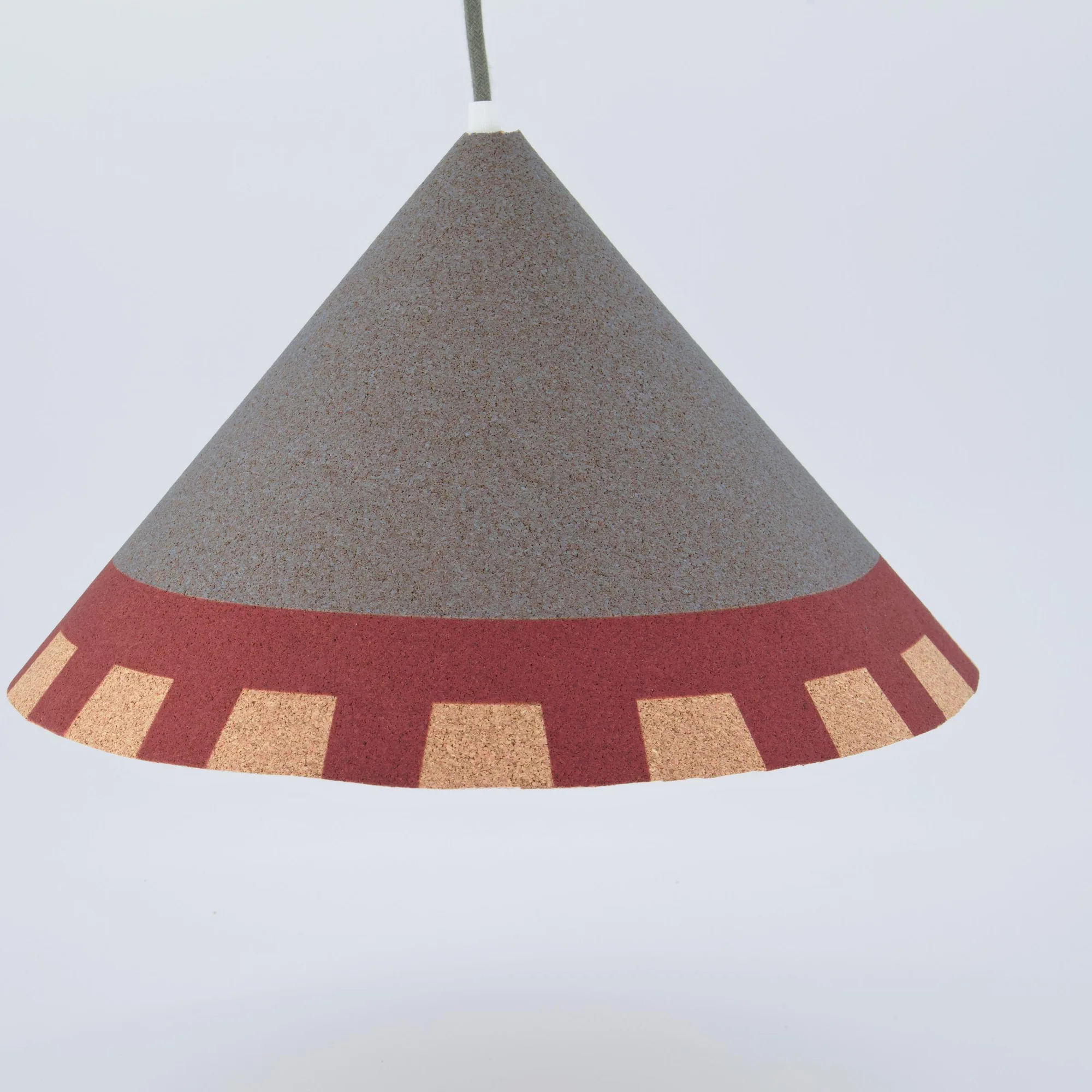
Vita Pendant Light Shade
-
Vita Pendant Light Shade: The Vita shade does not include a bulb or cord. Your bulb choice directly affects heat output. Since the shade doesn't come with a bulb, you control whether the setup runs cooler or warmer.
-
Vita Pendant Light Shade: The Vita shade is available in Light Blue. Color can influence perceived brightness and style, though it doesn't change the material's heat properties.
Why bulb choice matters more than the shade material
The shade material gets most of the attention, but the bulb inside determines most of the heat. An incandescent bulb converts most of its energy into heat, so any shade will get warm. LED bulbs run much cooler and are the better choice if you want a pendant that stays cooler to the touch and keeps the room from heating up.
Since the Vita shade does not include a bulb, you have full control over this. Pair it with an LED bulb to minimize heat, regardless of whether you choose cork or fabric. If you prefer a warmer light, consider a warm-white LED rather than a higher-wattage incandescent.
What the evidence doesn't tell you
The supplied product information confirms the Vita shade's material, shape, and assembly, but it does not specify maximum wattage, recommended bulb type, or heat resistance ratings. That means you should check the shade's label or the manufacturer's guidance before choosing a bulb. Without that information, it's safest to use an LED bulb, which produces less heat and is compatible with most fixtures.
For fabric shades, the same caution applies. The material and lining determine heat resistance, but without specific ratings, you can't assume a fabric shade is safe with high-wattage bulbs. When in doubt, choose a lower-wattage LED and keep the shade away from enclosed fixtures that trap heat.
Which shade is cooler for your room?
If your main goal is to keep the room from getting warmer, a cork shade with an LED bulb is a strong choice because cork's natural insulation helps slow heat transfer. If you want a shade that feels cooler to the touch on the outside, a thin, unlined fabric shade might feel cooler because it doesn't hold heat as much—but it also lets more heat escape into the room.
Think about what 'cooler' means for you: cooler to the touch, cooler room temperature, or a cooler visual look. The Vita cork shade delivers a natural, modern aesthetic and good insulation, while a fabric shade offers more light diffusion and style variety. Match the material to your priority, and always pair it with an LED bulb to keep heat low.