Quick Answer
Vitamin A tablets can support immune function, vision, and skin health, especially if your diet is low in retinol-rich foods. The typical dosage is 10,000 IU per day, but individual needs vary.
Who might need a vitamin A supplement?
Vitamin A is essential for immune cell production, night vision, and skin repair. While many people get enough from food, those on a plant-based diet, with certain digestive conditions, or with increased needs (e.g., during illness) may benefit from a supplement. Retinyl acetate, a vegan-friendly form, is well absorbed and avoids animal-derived sources.
What to watch out for with vitamin A
Vitamin A is fat-soluble, meaning excess is stored in the liver and can build up over time. Stick to recommended dosages and avoid taking multiple supplements that contain vitamin A (e.g., multivitamins or cod liver oil). Pregnant women should be especially cautious, as high doses can harm fetal development.
Frequently Asked Questions
What are the main benefits of vitamin A tablets?
Vitamin A supports immune function by helping produce white blood cells, maintains healthy vision (especially in low light), and promotes skin cell turnover for a clearer complexion.
What is the recommended dosage for vitamin A tablets?
A common daily dose is 10,000 IU (3,000 mcg RAE). Do not exceed the tolerable upper intake level of 10,000 IU per day from supplements unless advised by a healthcare professional. Check your multivitamin or other supplements to avoid exceeding 10,000 IU total per day.
Who should not take vitamin A supplements?
Pregnant women, people with liver disease, and those taking certain medications (e.g., retinoids for acne) should consult a doctor before starting. High doses can be toxic over time. If you are pregnant or planning to become pregnant, speak with your healthcare provider first.
Can I take vitamin A tablets on an empty stomach?
It is best to take them with a meal that contains some fat, as fat improves absorption of this fat-soluble vitamin. Pair your tablet with breakfast or lunch that includes healthy fats like avocado, nuts, or olive oil.
Product Facts
-
Vitamin A Tablets: These vegan-friendly tablets use retinyl acetate, a highly absorbable form of vitamin A, instead of animal-derived retinol. This makes them suitable for vegans and anyone who prefers a plant-based source without sacrificing absorption.
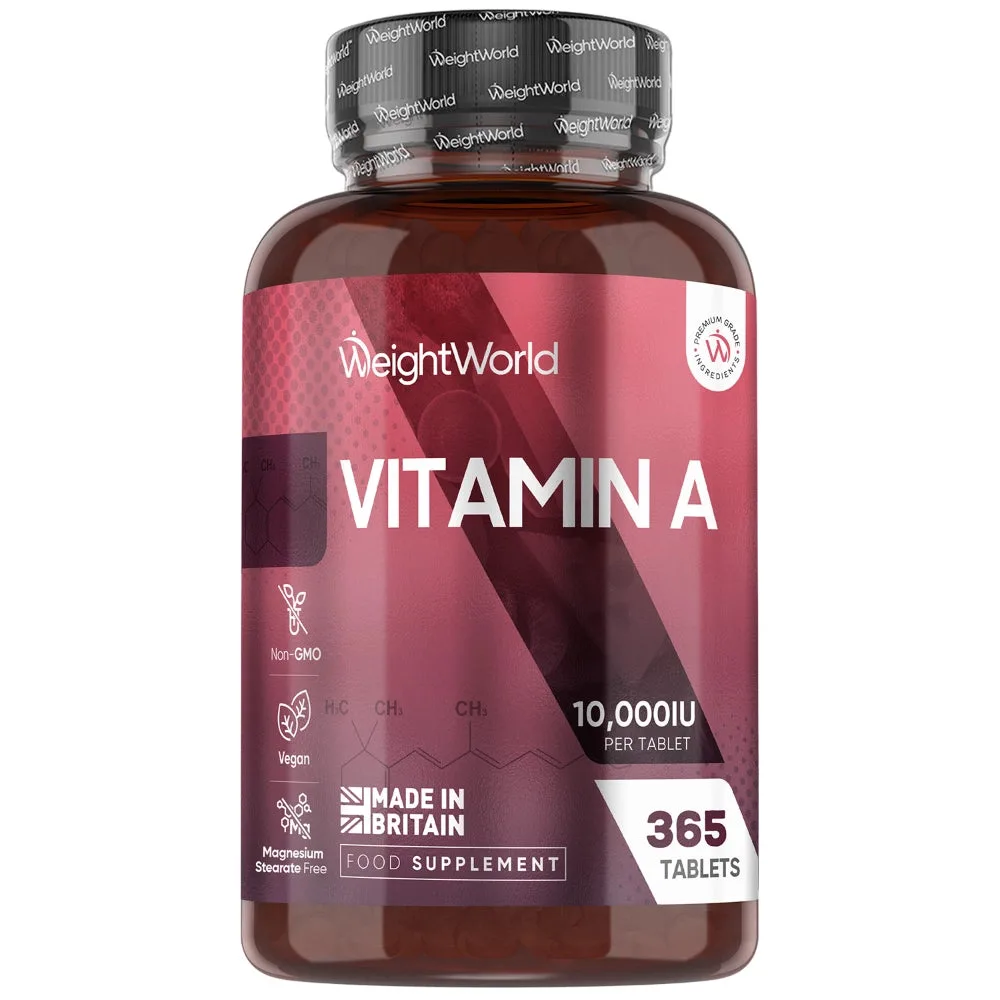
Vitamin A Tablets