The claims worth checking before you buy
A vitamin C and E serum with hyaluronic acid usually arrives with a long list of promises: brighter tone, fewer visible fine lines, protection from free radicals. Some of those claims are specific to the formula in front of you; others are broad marketing language you should read carefully. This guide separates common myths from what the supplied information for Odacité's Brightening Serum • Vitamin C & E + Hyaluronic Acid actually supports, and flags where the evidence is silent.
Four vitamin C serum myths, tested against the evidence
- Myth: any vitamin C serum will visibly brighten your skin: Brightening depends on the formula, its delivery system and how consistently you use it. The supplied record for the Brightening Serum describes a dark spot correcting Clean-ical Vitamin C & E Serum formulated with patented Advanced Encapsulation Technology to visibly brighten and even out skin tone. That is a product-specific formulation claim, not a guarantee that every vitamin C serum behaves the same way.
- Myth: vitamin C and E together are just a trend: The supplied record pairs vitamin C and E in the product name and describes the formula as fighting oxidative damage from free radicals. It does not provide a separate breakdown of each vitamin's role or concentration, so treat the combination as the product's stated positioning rather than a detailed ingredient study.
- Myth: hyaluronic acid makes a serum a hydrating treatment first: Hyaluronic acid appears in the product name, but the supplied record frames the Brightening Serum primarily around brightening, evening tone and reducing the appearance of fine lines and wrinkles. If hydration is your main goal, this serum's supplied evidence does not quantify a hydration benefit.
- Myth: a serum replaces your sunscreen or moisturizer: Nothing in the supplied record describes the Brightening Serum as sun protection or as a substitute for moisturizer. The formula is described as fighting oxidative damage from free radicals, which is not the same as blocking UV rays.
What the consumer study does and does not tell you
The Brightening Serum record includes results from an independent consumer study conducted on 50 real women over 4 weeks. According to the supplied information, 82% agreed the serum restored a more luminous glow, and 78% agreed their skin looked healthier after using the product.
Those figures are self-reported agreement rates from a small, four-week study, not clinical measurements of pigment or wrinkle depth. They tell you how a group of users described their skin; they do not tell you how quickly you personally will see a change, or whether your skin will respond at all. The record does not supply a recommended usage frequency, so follow the product's own directions when you receive it rather than assuming a schedule.
The supplied record behind the claims
-
Brightening Serum • Vitamin C & E + Hyaluronic Acid: 1oz | 30ml, also available in a Petite Size 10ml The petite size lets you try the formula before committing to the full bottle.
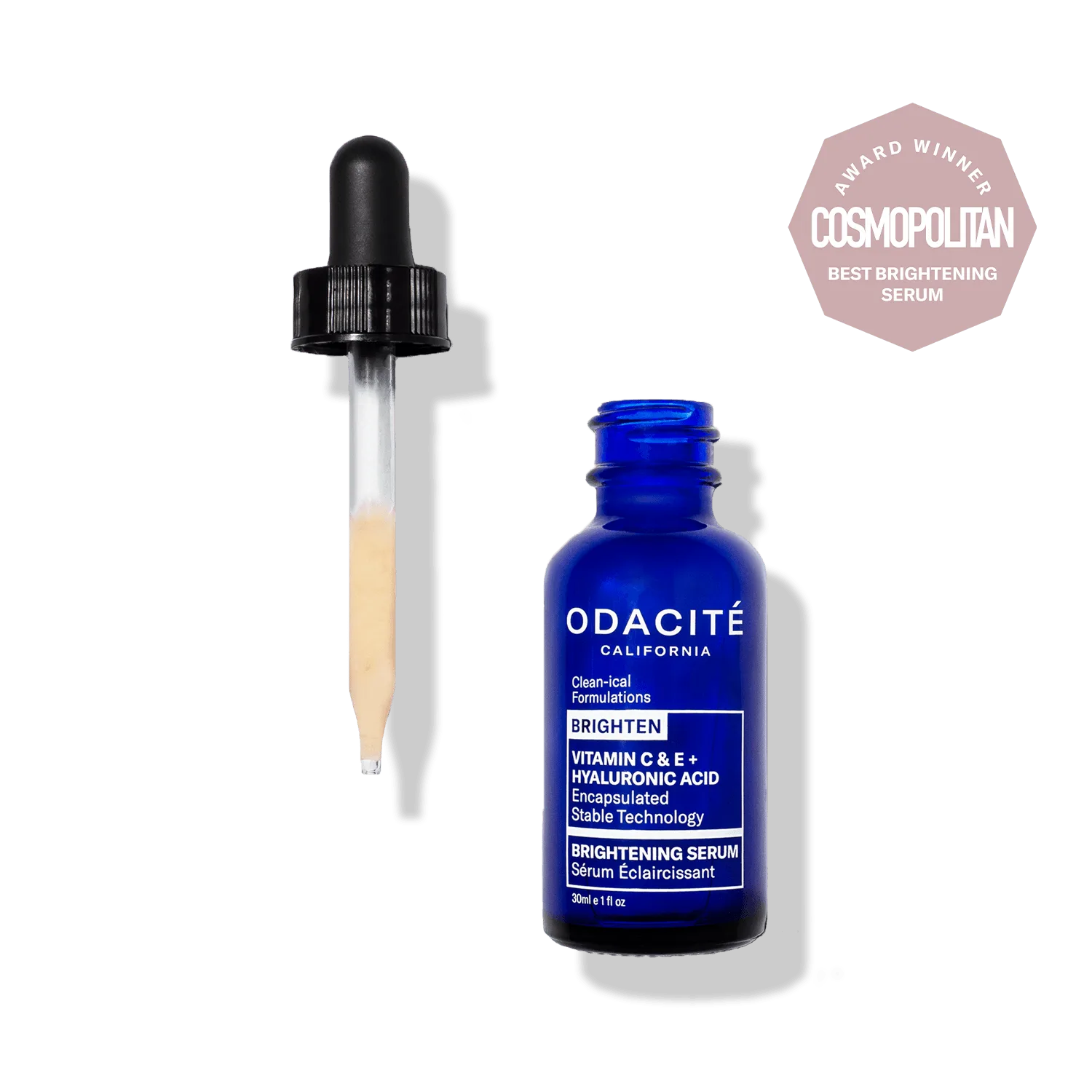
Brightening Serum • Vitamin C & E + Hyaluronic Acid
-
Brightening Serum • Vitamin C & E + Hyaluronic Acid: Best Brightening Serum Winner by Cosmopolitan An external award is a signal of editorial recognition, not proof of results on your skin.
-
Brightening Serum • Vitamin C & E + Hyaluronic Acid: Patented Advanced Encapsulation Technology, described as visibly brightening and evening out skin tone and reducing the appearance of fine lines and wrinkles This is the core formulation claim to weigh against your own priorities.
Where the supplied information stops short
The record does not list a full ingredient panel, vitamin C concentration, pH, texture, fragrance status or a recommended frequency of use. It also does not state whether the formula suits sensitive skin or how it interacts with retinoids, acids or other actives. Those gaps are decision limitations, not evidence that the product lacks a feature. If any of them matter to you, check the full product page or the packaging before buying, and patch test as you would with any new serum.
Is the Brightening Serum the right buy for you?
- Choose it if: You want a serum positioned around brightening, more even tone and the appearance of fine lines, and you value the encapsulation technology and the consumer-study results as supporting context.
- Pause if: Your main goal is measured hydration, you need a documented concentration of vitamin C, or you want confirmed guidance on layering with prescription actives. The supplied record does not answer those questions.
- Try the petite size first if: You are new to vitamin C and E formulas or want to see how your skin tolerates this one before buying the 30ml bottle.