Two Sources, One Nutrient
Vitamin D is essential for immunity, bone health, and muscle function. Your body can make it when skin is exposed to sunlight, but you can also get it from supplements like vitamin D gummies. Both routes raise your vitamin D levels, but they work differently in practice.
This comparison looks at how each source delivers vitamin D, the real-world barriers to sun exposure, and when a supplement becomes the more reliable option. It is not medical advice — use it to decide which approach fits your situation, then consult a professional if needed.
Sun Exposure vs. Vitamin D Gummies
- How vitamin D is made: Sun exposure: UVB rays trigger vitamin D synthesis in the skin. Gummies: provide pre-formed vitamin D3 (cholecalciferol) that the body can use directly.
- Dependability: Sun exposure depends on latitude, season, time of day, cloud cover, and skin pigmentation. It is unreliable in dark winters or rainy climates. Gummies deliver a fixed dose (e.g., 4000 IU per serving) regardless of weather or location.
- Control over dosage: With sun, you cannot measure how much vitamin D you produce. With gummies, each serving provides a known amount, making it easier to track intake.
- Risk factors: Excessive sun exposure increases skin cancer risk. Gummies carry no UV risk, but taking more than the recommended serving does not provide extra benefit and is not advised without professional guidance.
- Who each suits best: Sun exposure works well for people in sunny climates with regular outdoor time. Gummies suit those with limited sun access, darker skin, or a known deficiency.
What the Vitamin D Gummies Label Confirms
-
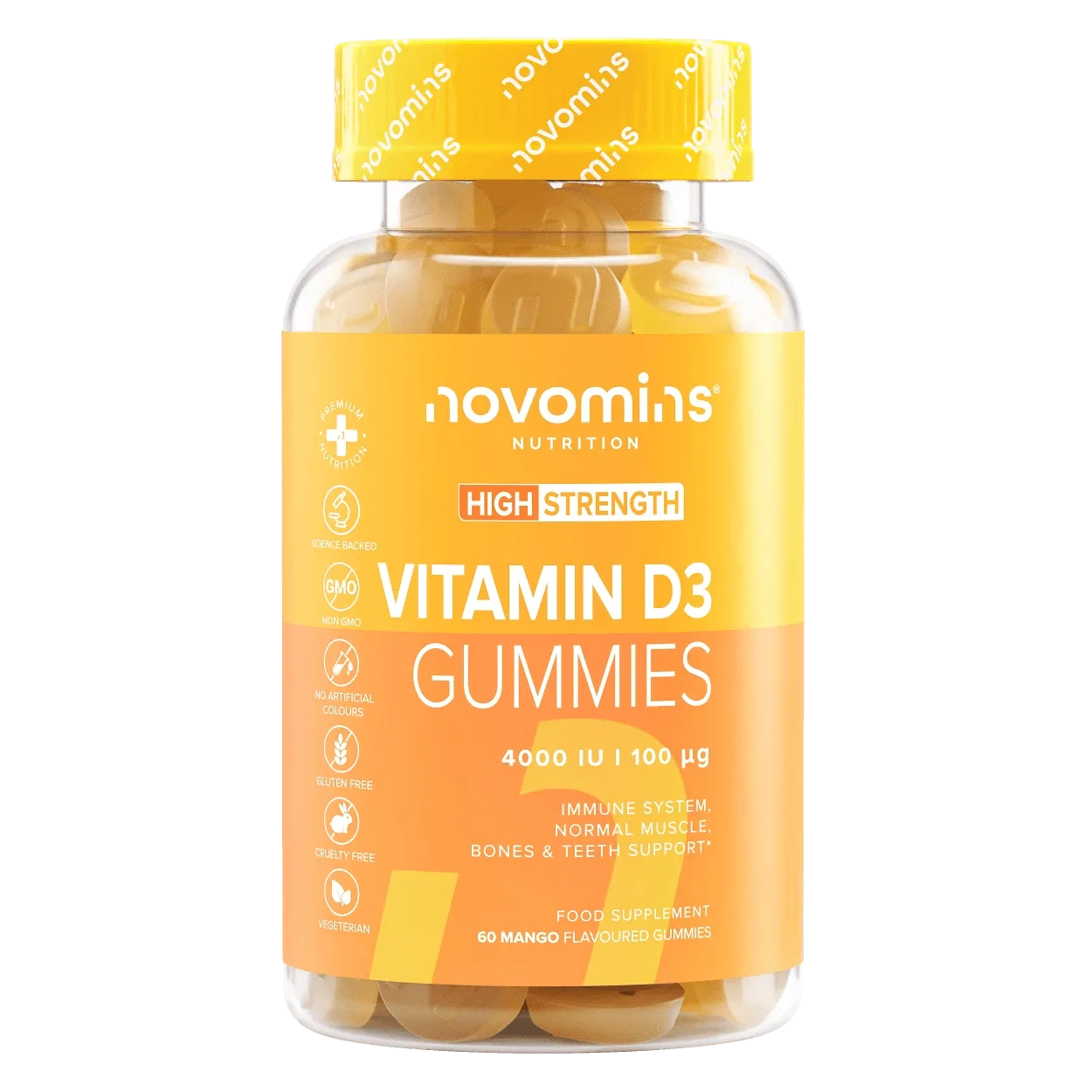
Vitamin D Gummies: Each Novomins Vitamin D3 Gummy contains 4000 IU of vitamin D3, a high-strength formulation. 4000 IU is a common supplemental dose for adults with low sun exposure or a deficiency. It provides a consistent daily amount that sun exposure cannot guarantee.
Vitamin D Gummies
-
Vitamin D Gummies: The product is positioned as 'your daily dose of sunshine, ideal for those with a vitamin D deficiency, dark winters and rainy days.' This directly addresses the main limitation of sun exposure: it is not a reliable source when weather, season, or lifestyle keep you indoors.
-
Vitamin D Gummies: The gummies support immunity, bones, and muscle health. These are the same functions that vitamin D from sun exposure supports, so the supplement covers the same roles when sun is unavailable.
When Sun Exposure Is Not Enough
For many people, getting enough vitamin D from sunlight alone is difficult. During winter months in northern latitudes, UVB rays are too weak to trigger synthesis. Cloud cover, air pollution, and spending most of the day indoors also reduce production. People with darker skin need longer exposure to produce the same amount as lighter skin.
In these cases, depending solely on sun exposure can lead to a vitamin D deficiency. A supplement like vitamin D gummies provides a predictable alternative that does not rely on weather or behavior.
Choosing What Works for You
Both sun exposure and vitamin D gummies can help maintain healthy vitamin D levels. The choice depends on your environment, routine, and health needs. If you live in a sunny area and spend time outdoors regularly, sun exposure may be sufficient. If you have limited sun access, a deficiency, or simply want a consistent daily dose, a vitamin D supplement is a practical option.
The Novomins Vitamin D3 Gummies offer a straightforward way to get 4000 IU of vitamin D3 daily. They do not replace sunlight entirely, but they fill the gap when the sun is not enough.