The real difference is the format, not the IU
When you compare vitamin D3 drops vs capsules, the number that matters first is the IU per serving, not the delivery method. A 1000 IU capsule and a 1000 IU liquid deliver the same labeled amount of vitamin D3. The choice comes down to how you prefer to take it, who in your household is taking it, and what the product label actually confirms.
Zahler's Advanced Nutrition Vitamin D3 Liquid 1000 IU is a liquid product that provides 1000 IU of vitamin D3 per serving. The catalog describes it as suitable for children, teenagers, and adults. That broad suitability is the main practical difference from a capsule, which is typically swallowed whole and may not suit every age group in the same way. The supplied record does not include capsule products for direct side-by-side comparison, so this article focuses on what the liquid record confirms and what you should check on any capsule label before choosing.
Drops vs capsules: practical points to weigh
- Who it suits: The Zahler liquid record states it is suitable for children, teenagers, and adults. Capsule suitability depends on the individual capsule product and its label; the supplied evidence does not include a capsule record to confirm age ranges.
- How you take it: The liquid is taken as a liquid serving. The supplied record does not include preparation or operating instructions, so follow the directions on the bottle rather than a generated routine. Capsules are typically swallowed with water, but check the specific product label.
- Dose flexibility: Both formats are labeled at 1000 IU per serving in this comparison. The liquid record confirms 1000 IU per serving but does not supply a dropper volume or measurement detail, so do not assume a drop count without checking the label.
- Ingredient and allergen checks: The supplied record does not list full ingredients, allergens, or care instructions. For either format, read the actual label for excipients, sweeteners, or carriers that matter to you.
- Storage and handling: No storage instructions are supplied for the Zahler liquid. Capsule storage also varies by product. Check each label for storage guidance before you buy.
What the Zahler Vitamin D3 Liquid 1000 IU record confirms
-
Vitamin D3 Liquid 1000 IU: Provides 1000 IU of vitamin D3 per serving in liquid form. This is the core dose comparison point: a 1000 IU capsule and this liquid are labeled at the same IU per serving, so the decision is about format and suitability, not strength.
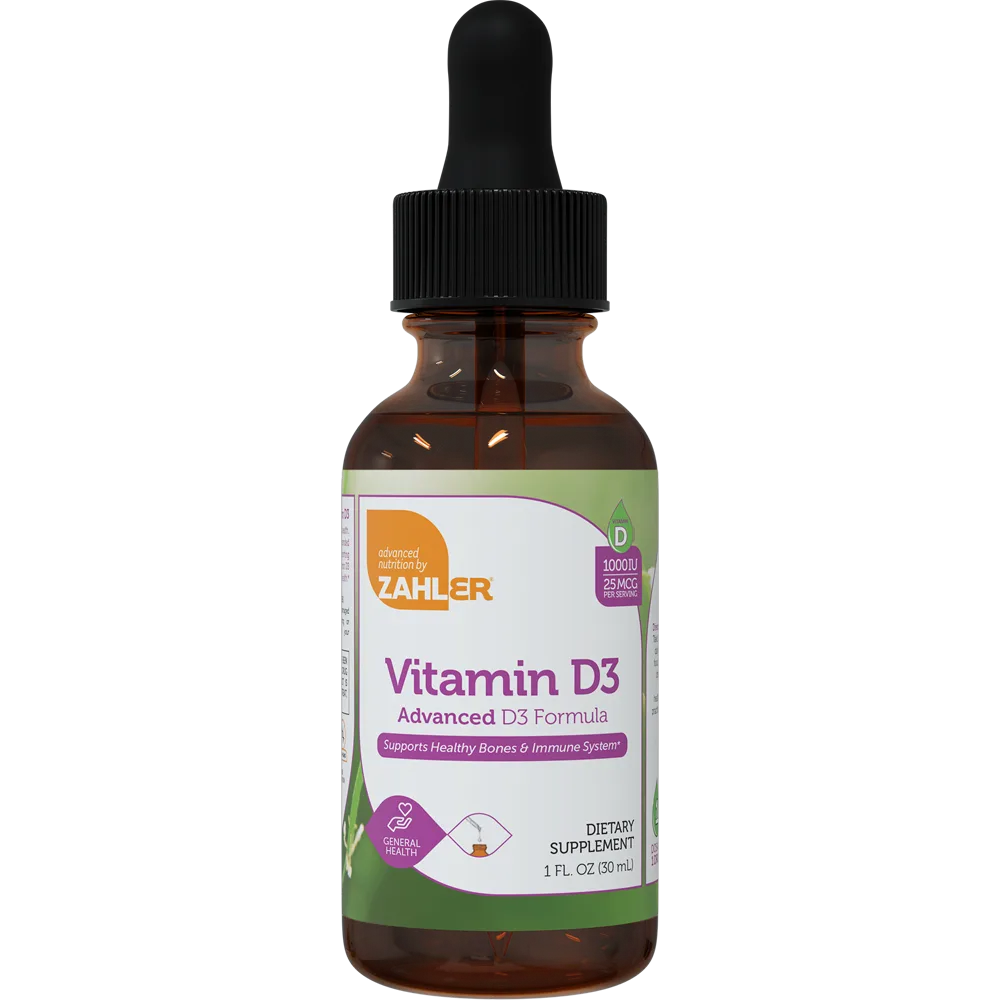
Vitamin D3 Liquid 1000 IU
-
Vitamin D3 Liquid 1000 IU: Designed to support general health, including bone health and immune function. These are the intended-use claims in the supplied record. They describe the product's purpose, not a guaranteed outcome, and should not replace advice from a healthcare professional.
-
Vitamin D3 Liquid 1000 IU: Suitable for children, teenagers, and adults. This is the clearest practical difference from a capsule in the supplied evidence. If you are choosing for a household with mixed ages, the liquid record explicitly covers a wider age range.
How to take vitamin D3 liquid without guessing
The supplied record does not include preparation or operating instructions, so the bottle label is the only reliable source for how to take this product. Use these steps to build a routine around the label rather than around a number you found online.
- Read the serving size on the bottle: The catalog confirms 1000 IU per serving but does not supply a dropper volume or drop count. Measure according to the label, not by counting drops from memory.
- Check the age guidance on the label: The catalog says the product is suitable for children, teenagers, and adults. The label may give more specific directions for different ages; follow those directions.
- Decide on a consistent time: The supplied record does not specify a time of day. Choose a time you will remember and keep it consistent, then confirm with the label or a healthcare professional if you are unsure.
- Do not double up after a missed day: The record does not provide instructions for missed servings. Do not assume that taking two servings makes up for one missed serving; check the label or ask a professional.
- Keep the label with the bottle: Because storage and care instructions are not in the supplied record, keep the original label accessible so you can follow its guidance.
Liquid vitamin D3 dosage: what 1000 IU actually means
A 1000 IU serving is a labeled amount, not a personal recommendation. The Zahler liquid record confirms 1000 IU per serving, and the catalog describes the product as suitable for children, teenagers, and adults. That does not mean 1000 IU is the right amount for every person in those groups. Individual needs vary, and a healthcare professional is the right person to help you decide whether a 1000 IU product fits your situation.
This is also where the drops vs capsules comparison gets honest. A capsule labeled at 1000 IU and this liquid labeled at 1000 IU are comparable on the labeled dose. The difference is that a liquid may be easier to measure in smaller or adjusted servings if the label allows it, while a capsule is a fixed unit. The supplied record does not confirm whether the liquid can be split into smaller servings, so do not assume you can adjust the dose without label guidance.
Where the evidence stops, and what that means for your choice
The supplied record for Zahler Vitamin D3 Liquid 1000 IU does not include full ingredients, allergen information, storage instructions, a dropper volume, or specific directions for children versus adults. It also does not include a capsule product record for a direct comparison. That means you cannot conclude from this article that the liquid is better or worse than a capsule on absorption, purity, or convenience. Those claims would need evidence that is not in the supplied record.
What you can conclude is narrower and more useful: if you want a 1000 IU liquid that the catalog describes as suitable for children, teenagers, and adults, this product matches that description. If you prefer a capsule, compare the capsule label on the points above: IU per serving, age suitability, ingredients, and storage. The right choice is the one whose label you can follow confidently.