Start with the label, not a guess
Solgar Vitamin E with Yeast-Free Selenium comes in vegetable capsules, and the directions on the record are specific: adults take one to two capsules daily, preferably at mealtime, or as directed by a healthcare practitioner. That is the whole dosing framework — no complicated ramp-up, no cycling. The practical question is how to fit that range into your day and what to expect from it.
The formula combines natural vitamin E (d-alpha tocopherol) with yeast-free selenium. The vegetable capsule is designed to support absorption of this fat-soluble nutrient, which is why the label points you toward mealtime rather than an empty stomach.
A simple daily routine
Use these steps to turn the label directions into a repeatable habit.
- Choose your dose within the label range: The record allows one or two capsules daily for adults. Pick one and stay consistent unless a healthcare practitioner advises otherwise.
- Take it with a meal that contains some fat: The label says preferably at mealtime. Vitamin E is fat-soluble, and the vegetable capsule form is described as supporting absorption of this nutrient.
- Keep the bottle where you eat: Since timing is tied to meals, storing it near your breakfast or dinner spot makes the habit easier to keep.
- Do not exceed the directions: The record explicitly says do not exceed directions for use. More is not better here.
When to take selenium capsules: morning or evening?
The supplied record does not specify a time of day beyond 'preferably at mealtime.' It does not say morning or evening is better. That means the best time is the meal you reliably eat and can attach the capsule to. If you usually skip breakfast, a lunch or dinner anchor will serve you better than an ideal-sounding schedule you won't follow.
One practical note: the formula includes selenium, and the record lists normal thyroid function among selenium's roles. If you take thyroid medication or any other prescription, the label's fallback — 'or as directed by a healthcare practitioner' — is the relevant instruction, not a guess about spacing.
What the formula actually contains
-
Vitamin E with Yeast Free Selenium Vegetable Capsules: Natural vitamin E (d-alpha tocopherol), which the record says has been shown in studies to be 1.3 times more bioavailable than synthetic forms. If you are comparing labels, this is the form difference the record actually supports.
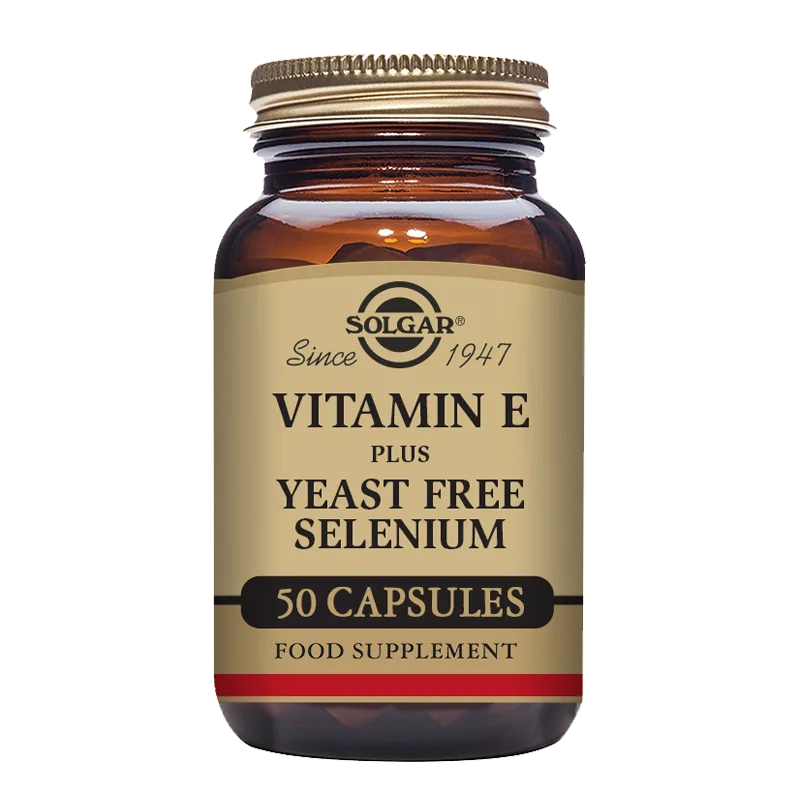
Vitamin E with Yeast Free Selenium Vegetable Capsules
-
Vitamin E with Yeast Free Selenium Vegetable Capsules: Yeast-free selenium is added alongside vitamin E in a 1–2 capsule daily dose. The 'yeast-free' wording is a formulation choice, not a dose instruction; the dose range is the same regardless.
-
Vitamin E with Yeast Free Selenium Vegetable Capsules: Available in 50-capsule and 100-capsule counts. At one to two capsules daily, the 50-count lasts 25–50 days and the 100-count lasts 50–100 days — useful for judging how often you'll reorder.
What to expect — and what not to
The record lists the nutrients' contributed roles, not a timeline of effects. Keep expectations tied to what is stated.
- Vitamin E is listed for protection of cells from oxidative stress: That is the role the record assigns to vitamin E; it is not a promise of a visible change by a certain date.
- Selenium is listed for immune, thyroid, hair, nail, and spermatogenesis support: These are normal-function claims from the record, not treatment claims.
- The record does not give a 'loading phase' or a start/stop schedule: So don't invent one. Follow the label range and the healthcare-practitioner fallback.
The honest limitation: diet comes first
The record is clear that a healthy, balanced diet should bring sufficient vitamin E for most people, and that food supplements should not replace a varied diet and healthy lifestyle. That framing matters for how you use this product: it is a supplement alongside meals, not a substitute for nuts, oils, green leafy vegetables, avocados, Brazil nuts, eggs, fish, or poultry — the food sources the record names.
If you already eat a varied diet, the decision is less about 'needing' vitamin E and more about whether a consistent one-to-two-capsule routine fits your day. If you take medication or have a thyroid condition, the label's instruction to follow a healthcare practitioner's direction is the checkpoint that matters most.