Quick answer
To run a burnout cycle on the Vulcan Burnout Furnace, load fully set invested flasks, program a ramp‑and‑hold schedule that matches your investment and metal, and let the furnace cool to the casting temperature before removing flasks. Always follow your investment manufacturer’s burnout recommendations.
Why the burnout cycle matters for jewelry casting
Burnout does two jobs: it removes wax and moisture from the investment, and it brings the mold to the right temperature for casting. Rushing the ramp can crack the investment or leave carbon residue; overshooting the hold can weaken the mold. The Vulcan furnace’s uniform heating and accurate control help you repeat a proven schedule, but the schedule itself must come from your investment and metal supplier.
Setting up the furnace and flasks
Place the furnace on a level, heat‑resistant surface with clearance for ventilation. Check that the muffle is clean and free of debris. Load flasks only after the investment has fully set (typically 1–2 hours, but follow your investment instructions). Arrange flasks so they don’t touch the heating elements or each other, and ensure the furnace door seals properly. The Vulcan’s available interior muffle dimensions (L" x W" x H") let you match the chamber size to your flask workload; choose a size that leaves room for air circulation.
Common mistakes to avoid during burnout
The most frequent errors are skipping the initial low‑temperature hold (which can cause steam explosions and investment cracking), ramping too fast, and opening the door during the cycle. Also, don’t overload the furnace—crowding flasks restricts airflow and creates cold spots. Finally, never cast into a mold that is too hot or too cold; use a pyrometer or the furnace’s readout to confirm the casting temperature.
Step-by-step burnout workflow
- Prepare invested flasks: Allow investment to set completely per manufacturer instructions. Trim any excess investment from the flask rim and remove the rubber base. Place flasks on a clean kiln shelf, spacing them at least 1 inch apart and away from the walls. Checkpoint: flasks should feel hard and cool before loading.
- Load the furnace: Open the door gently and slide the shelf in. Close the door firmly. Set the door latch if provided. Do not force flasks into a tight fit; if the chamber is too full, split the load into two cycles. Checkpoint: the door must seal evenly, with no visible gaps.
- Program the burnout schedule: Enter a ramp‑and‑hold schedule based on your investment and metal. A typical starting point is 300°F (150°C) hold for 1 hour, ramp to 700°F (370°C) over 2 hours, hold 2 hours, then ramp to 1350°F (730°C) over 3 hours, hold 3–5 hours. Adjust according to manufacturer recommendations. Checkpoint: verify the program matches your investment’s published burnout curve.
- Run the cycle and monitor: Start the program. Do not open the door during the ramp or hold unless absolutely necessary. Use the controller display to confirm the furnace is tracking the setpoint. If you must check, wait until the hold phase and open briefly. Checkpoint: log the actual temperature at the end of each hold to build a record.
- Cool to casting temperature: When the burnout hold ends, allow the furnace to cool to the casting temperature recommended for your metal and flask size. For small flasks, this may mean opening the door slightly; for larger flasks, let the furnace cool naturally. Use a pyrometer to confirm mold temperature. Checkpoint: never cast into a mold above the recommended temperature—it can cause porosity.
- Unload and cast promptly: Wearing heat‑resistant gloves and face protection, remove the flask and place it on a heat‑resistant surface. Cast immediately. Do not let the flask sit and cool further, as the mold may crack or absorb moisture. Checkpoint: have your metal molten and ready before pulling the flask.
Product facts
-
Vulcan® Burnout Furnace for Jewelry Casting: Vulcan® Burnout Furnaces are engineered for jewelers using lost wax casting, with a focus on consistent temperature control and uniform heating. This helps you rely on the furnace to hold a steady temperature, so your burnout schedule behaves predictably from one batch to the next.
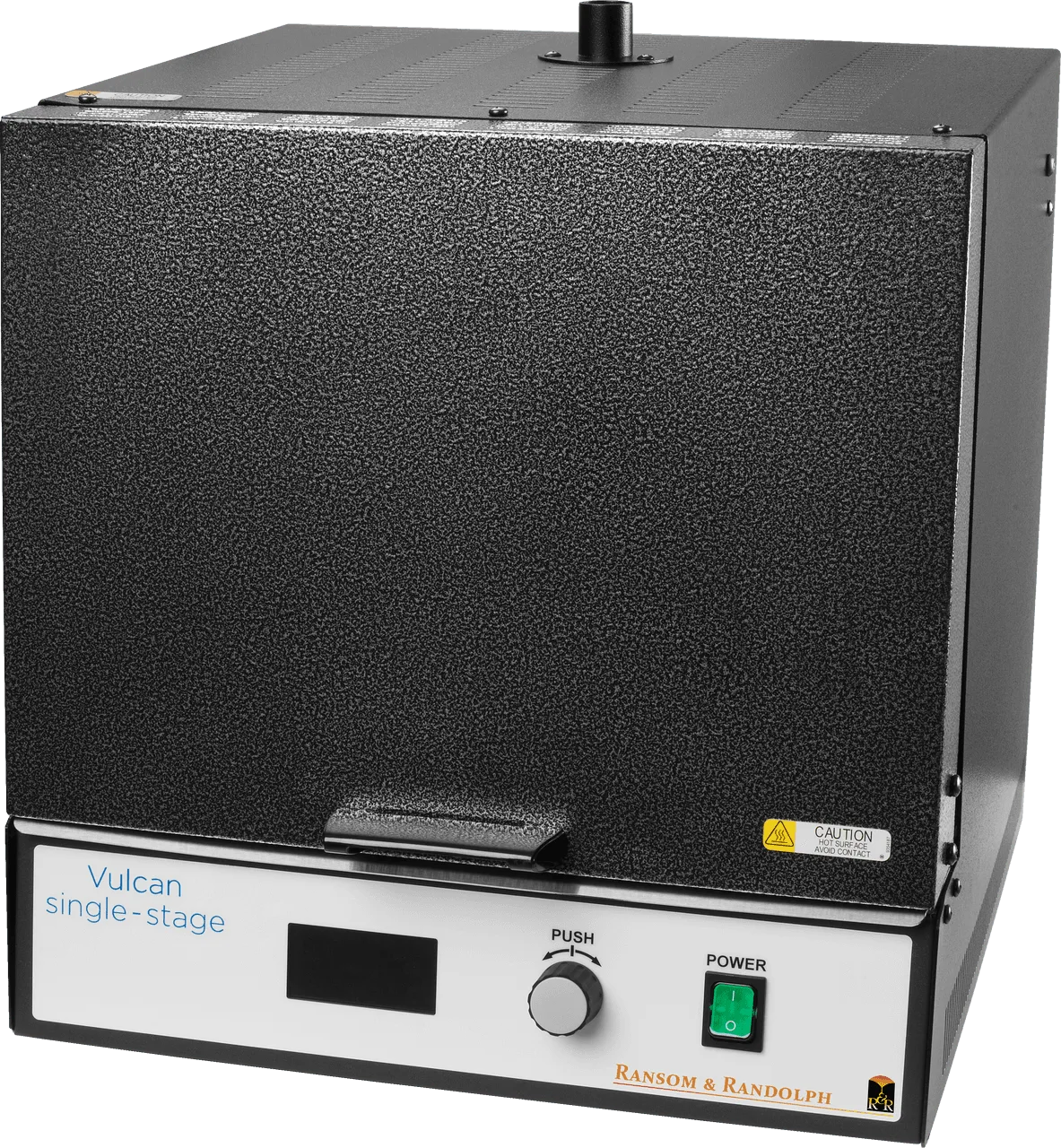
Vulcan® Burnout Furnace for Jewelry Casting