Quick Answer
Choose a waist trainer vest when you want smooth, extended coverage that moves with you through a full workday or long outing. Choose a cincher when you want targeted waist compression that is easier to hide under fitted clothes and quicker to put on and take off.
Coverage and movement are the real dividing line
A vest extends over the torso, so it distributes compression across a larger area and is less likely to dig in at one band. That broader coverage is why vests tend to suit long wear, sitting, driving, and standing routines. A cincher concentrates compression at the waist, which gives a more localized effect but can feel more noticeable at the edges during long seated stretches.
The trade-off is straightforward: more coverage usually means more fabric under your outfit, while less coverage means a lower profile. Neither is inherently better; the right choice depends on how many hours you plan to wear it and what you are wearing over it.
What a vest changes under clothing
Because a vest covers more of the torso, it can smooth the transition between waist and upper hip, which helps under knit dresses and high-waisted trousers. The cost is that seams and edges have more places to show through thin or light-colored fabrics. A cincher hides more easily under close-fitting tops but may create a visible band line at the waist.
If your daily outfit rotates between office wear and casual clothes, test the vest under your most fitted top before committing to a full day. If you mostly wear looser layers, the vest's extra coverage is rarely a problem.
When a cincher is the more practical pick
A cincher earns its place when you want compression for a shorter window, such as a few hours at an event, or when you need to change in and out quickly during the day. It is also the easier choice if your main concern is keeping the trainer invisible under a specific outfit.
The exception is anyone who needs support across the upper torso or who finds narrow bands uncomfortable after an hour of sitting. In that case, the cincher's targeted fit becomes a drawback rather than an advantage.
Vest vs. Cincher Trade-Offs
- Long wear versus quick changes: Pick a vest if you will wear the trainer for most of a workday; pick a cincher if you need to remove it at lunch or between events. Count your planned wear hours before choosing.
- Smooth coverage versus low profile: A vest smooths more of the torso but adds fabric under thin tops; a cincher stays lower-profile but can leave a band line at the waist. Try your chosen option under your most fitted outfit first.
- Firm all-over compression versus targeted waist compression: Vests spread firm compression across the torso, which can feel supportive or bulky depending on your preference; cinchers focus compression at the waist, which feels more intense in one zone.
Product Facts
-
Hourglass Waist Trainer Vest for Women: Designed in Colombia with firm compression that the catalog describes as balancing comfort with shaping, and made to move with you without limiting motion. That combination suits readers who want a vest they can keep on through a full day rather than only for a short event.
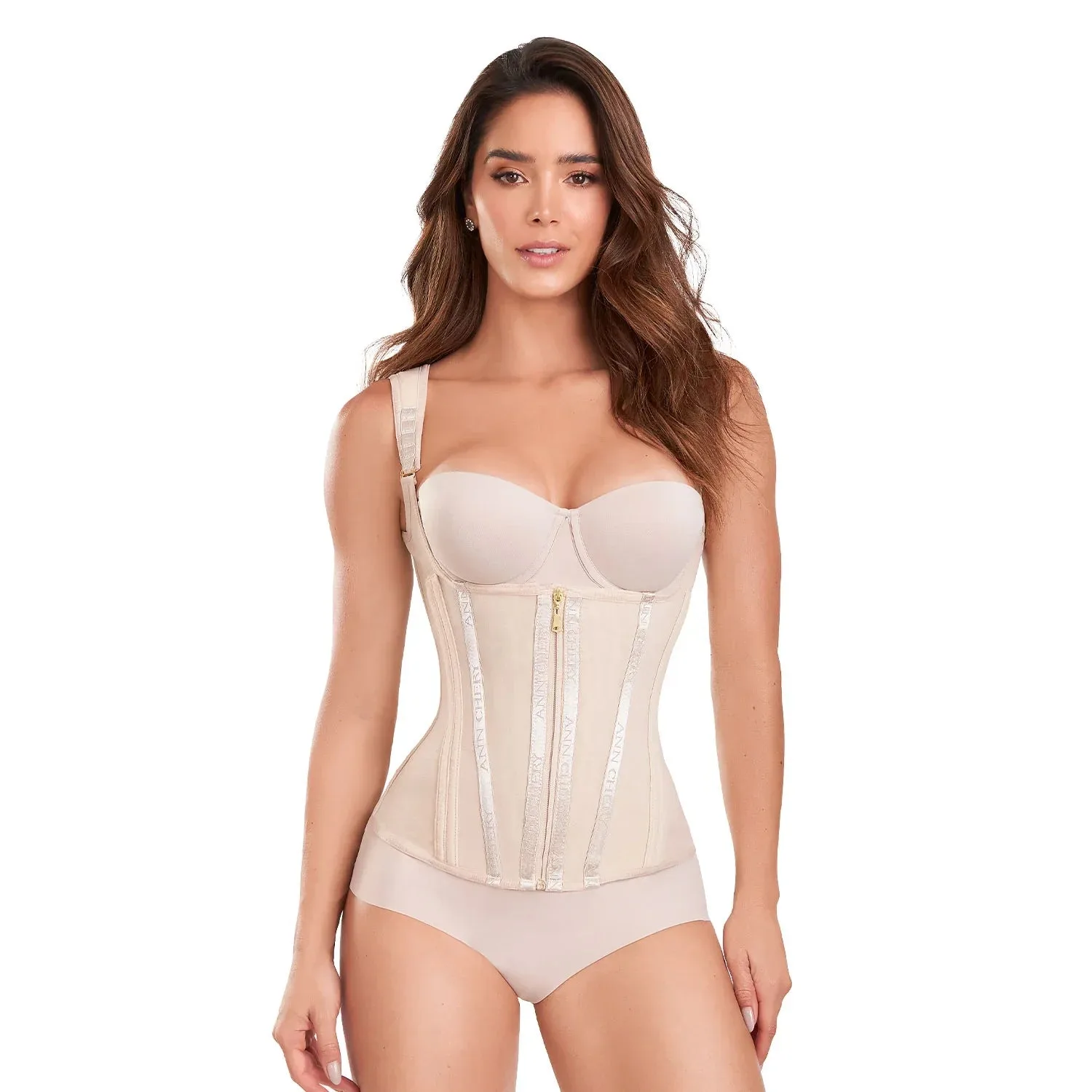
Hourglass Waist Trainer Vest for Women
Who Should Choose Which
Best for
- People who sit, stand, or move through a full workday and want one trainer for most of it
- Readers who prefer smooth torso coverage under knits and high-waisted trousers
- Anyone who wants an hourglass waist trainer vest with firm compression and freedom of movement
Not for
- People who need to remove and reapply the trainer several times a day
- Readers whose main priority is invisibility under very thin or light-colored fitted tops
- Anyone who prefers compression concentrated only at the waist rather than across the torso