Quick answer
Choose wall art size by width, not by how empty the wall feels: aim for art that spans about two-thirds of the furniture below it, and hang the center at roughly 57–60 inches from the floor. For a dining room, pick one large horizontal piece or a tight grid of two to four smaller pieces, and let the frame finish match your table and lighting rather than the wall color.
Most wall art disappointments are not about taste. They are about scale, hanging height, and frame choice. Get those three right and almost any image works; get them wrong and even a beautiful print looks like an afterthought.
This guide gives you concrete rules for sizing art, choosing a frame, and placing it in a dining room or open living space. It also covers when to buy a single statement piece, when a small set works better, and which details are worth paying for.
How to choose wall art size
Start with the furniture, not the wall. Art hung above a sideboard, console, or dining table should span roughly two-thirds to three-quarters of that piece's width. A 60-inch sideboard, for example, pairs well with art 40 to 45 inches wide. If the art is narrower than half the furniture width, it will look lost; if it is wider than the furniture, it will look top-heavy.
For a single piece, keep the bottom edge 6 to 10 inches above the furniture. For a grid of two or four smaller pieces, treat the whole group as one shape and size it to the same two-thirds rule. A wall art sizing chart is useful, but the furniture-width rule matters more than the wall's total dimensions.
- Measure the furniture width first, then multiply by 0.66 to get a target art width.
- Leave 2 to 4 inches between frames in a grid so the group reads as one unit.
- In a dining room, keep art above eye level when seated so it does not compete with conversation.
Wall art frame guide: what to look for
Frame material and depth change how art reads in a room. Thin metal frames look modern and recede; wider wood frames feel warmer and more traditional. Powder-coated aluminum is a practical choice because it resists chipping and is easy to wipe clean, while plexiglass keeps the piece lighter and safer to hang than glass in busy rooms.
Match the frame finish to something already in the room: the metal of your light fixture, the wood tone of your table, or the hardware on your cabinetry. A frame that echoes an existing finish looks intentional; a frame that introduces a new metal can look accidental. If you are unsure, a neutral frame in the same tone as your dining table is the safest bet.
- Choose a frame finish that repeats an existing metal or wood tone in the room.
- For large pieces, check the hanging hardware and weight before you buy.
- If the art will hang in a sunny spot, ask whether the glazing offers any UV protection.
Art placement guide for dining rooms and open spaces
In a dining room, art should sit above the sideboard, buffet, or the table itself, not float in the middle of a blank wall. Hang the center of the art at roughly 57 to 60 inches from the floor, which is about eye level for most adults standing. If the art hangs above a table, keep the bottom edge at least 12 inches above the tabletop so seated guests do not bump it.
In open-plan spaces, use art to define zones. A single large piece anchors the dining area; a pair of smaller pieces can mark a hallway or bar area. Keep the top edges of art in the same sightline when pieces are near each other, and avoid hanging art so high that it looks like it is trying to reach the ceiling.
- Center art over the furniture it relates to, not over the wall.
- Keep the bottom edge 6 to 10 inches above a sideboard and 12 inches above a dining table.
- In a two-story space, hang art lower than you think so it stays connected to the furniture.
One large piece vs a set of smaller pieces
A single large piece is easier to hang and creates a calm, gallery-like focal point. It works best on a wall with no competing features and above furniture that is at least 48 inches wide. A set of two to four smaller pieces gives you flexibility: you can rearrange them, move one to another room, or add to the group later.
The trade-off is visual noise. Small pieces hung too far apart look scattered, and mismatched frame sizes make a wall feel busy. If you choose a set, keep the frames identical or deliberately varied in a repeating pattern, and treat the group as one rectangle when measuring.
- Choose one large piece for a calm dining room with a clear focal wall.
- Choose a set of two to four pieces when you want flexibility or have a narrow wall.
- Avoid mixing more than two frame finishes in one grouping.
Framed art buying tips: what to check before you order
Before you buy, confirm the size options, the frame material, and what comes in the box. Some frames ship with a hanging guide and hardware; others do not, and that changes your installation time. Check whether the piece arrives as a single framed unit or as separate components, and whether the glazing is glass or plexiglass.
Also check the return policy for framed art, since large pieces are expensive to ship back. If you are buying for a rental or a room you may rearrange, stick to standard sizes so you can swap frames later. Measure your wall twice and mark the hanging points with painter's tape before you drill.
- Confirm whether hanging hardware and a guide are included.
- Measure the wall and furniture before ordering, not after.
- For rentals, choose standard sizes and lightweight glazing.
How many pieces do you actually need?
One well-sized piece is usually enough for a dining room. Two pieces work well flanking a doorway or on a long wall above a sideboard. Three or four pieces suit a gallery wall or a staircase, where the eye expects a repeating rhythm. More than four small pieces on one wall starts to feel like clutter unless the frames and spacing are very disciplined.
If you are building a grouping over time, start with the largest piece and add smaller ones around it. Keep the total group width within the two-thirds rule for the furniture below, and leave at least 2 inches between frames so each piece can breathe.
- One piece for a focused dining room wall.
- Two pieces for symmetry around a doorway or narrow wall.
- Three to four pieces for a gallery wall or staircase, with consistent spacing.
Decision rules for buying wall art
- Rule 1: Size to the furniture, not the wall: Target art width at 66–75% of the furniture width below it. For a 60-inch sideboard, look for art 40–45 inches wide. If the art is less than half the furniture width, go bigger or add a second piece.
- Rule 2: Hang at 57–60 inches to center: Measure from the floor to the center of the art. Above a dining table, keep the bottom edge at least 12 inches above the tabletop. Mark the center point with tape before you drill.
- Rule 3: Match the frame to an existing finish: Repeat the metal of your light fixture or the wood tone of your table. Powder-coated aluminum and plexiglass are practical for busy rooms. If nothing matches, choose a neutral frame in the same tone as your dining table.
- Rule 4: Choose one large piece for calm, a set for flexibility: One large piece suits a clear focal wall. Two to four smaller pieces work for narrow walls, rentals, or rooms you rearrange often. Never mix more than two frame finishes in one grouping.
- Rule 5: Confirm what is in the box: Check size options, frame material, glazing type, and whether hanging hardware and a guide are included. For rentals, choose standard sizes and lightweight glazing.
Product facts that affect your decision
- Extra Large Rounded Frame: With rounded corners driving their distinctive design, these sleek aluminum art frames bring a unique edge to any space. Crafted from powder coated aluminum and durable plexiglass. Easy to hang with step-by-step guide. Comes with 1 piece. The rounded corners soften a large piece, and the included hanging guide saves time. Plexiglass keeps the weight down, which matters for big frames on standard walls.
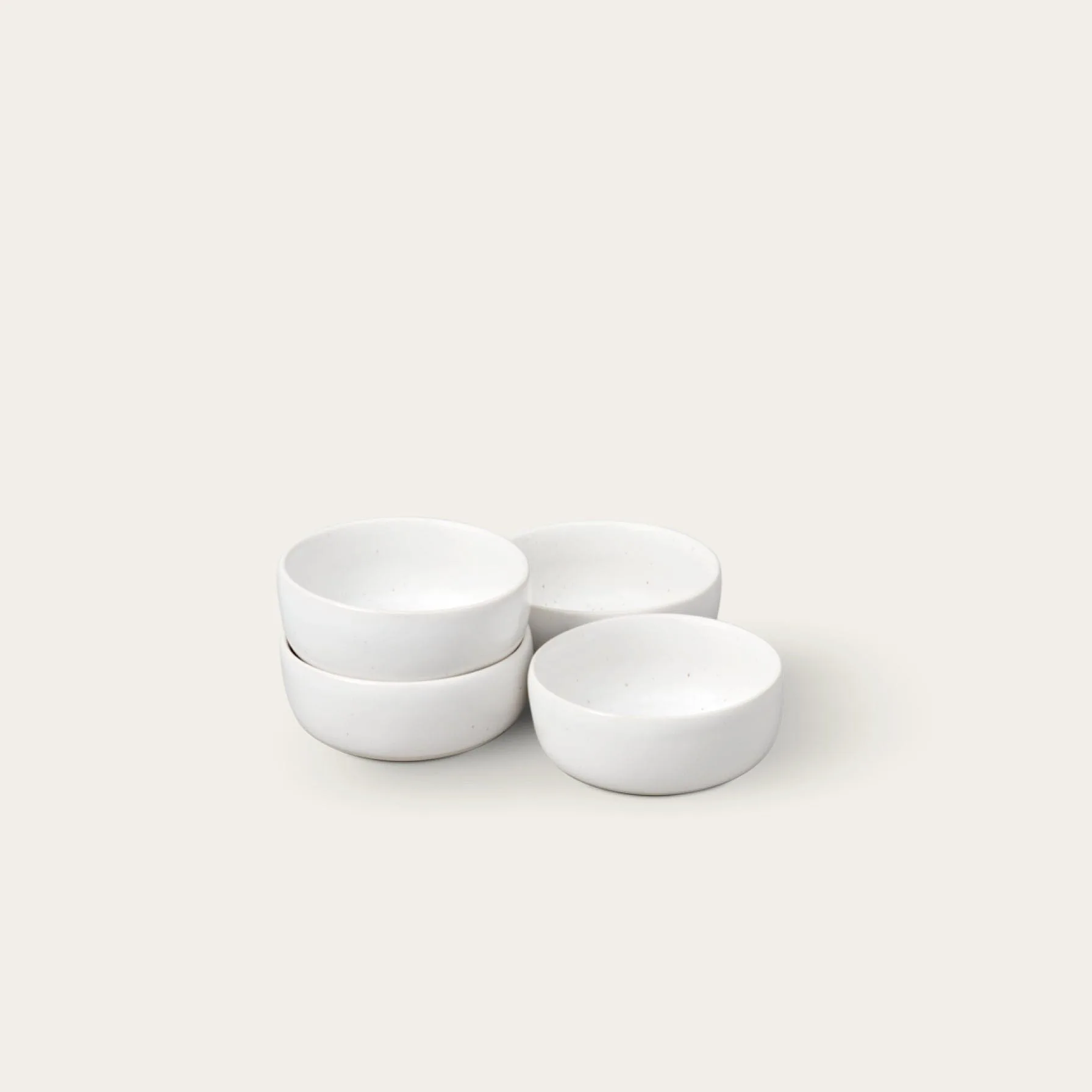
- Everything Bowls: Each bowl is organically shaped and one of a kind. Hand-finished in Portugal. Comes in a set of 4. Stoneware contains natural flecks that come to the surface during firing and may show through lighter glazes. If your dining room art hangs above a sideboard, these bowls are a practical styling partner: the organic shapes and natural flecks echo handmade art without competing with it.
- Flute Glasses: Crafted from premium crystal with pulled stems and slender silhouettes, they’re designed to preserve effervescence in every pour of Champagne or sparkling wine. Crafted in Germany from high quality lead-safe crystal. Comes in a set of 4. Tall, slender glassware sets a vertical rhythm that pairs well with narrow or stacked art. If your art is horizontal, keep the table styling low and wide instead.
Is this approach right for you?
Best for
- Anyone furnishing a dining room, entryway, or open-plan space who wants art sized and placed correctly the first time
- Renters and first-time buyers who want standard sizes, lightweight glazing, and simple hanging
- Shoppers deciding between one large piece and a small set of framed art
Not for
- Collectors seeking museum-grade framing, UV-filtering glass, or custom matting
- Anyone who wants a single statement piece wider than 60 inches without confirming wall studs and hardware
- Buyers who need art delivered already assembled and installed by a professional
Size to the furniture, hang at 57–60 inches to center, and match the frame to a finish already in the room. Do those three things and your wall art will look deliberate in a dining room or anywhere else.