Quick answer
The ideal wall art size depends on your wall space and furniture scale. A good rule is to fill 60-75% of the available wall area above a piece of furniture, and for standalone walls, the art should be about two-thirds to three-quarters the width of the wall.
Why size matters more than you think
Art that is too small gets lost on a large wall, making the room feel unbalanced. Art that is too large can overwhelm a space and crowd other elements. Getting the size right creates visual harmony and makes the art the focal point it deserves to be.
An 11x14 print, for example, is a versatile mid-size option. It works well above a narrow console table, in a hallway, or grouped with other pieces in a gallery wall. It is not ideal as a solo piece above a full-size sofa or king bed.
The measurement rule for furniture-backed walls
When hanging art above a sofa, bed, or console, the art should be between one-half and two-thirds the width of the furniture piece. For a 60-inch sofa, aim for a print or grouping that is 30 to 40 inches wide. An 11x14 print alone is too narrow for this scenario, but it works as part of a wider arrangement.
Hang the art so its bottom edge sits 6 to 10 inches above the furniture top. This keeps the art visually connected to the piece below.
Standalone walls and empty spaces
On a blank wall with no furniture beneath, the art should fill roughly two-thirds to three-quarters of the wall width. For a 48-inch wide empty wall, look for a single piece around 32 to 36 inches wide, or create a gallery grouping that covers that span.
An 11x14 print is a good anchor for a small gallery wall. Combine it with smaller 5x7 and 8x10 prints, keeping 2 to 3 inches between frames for a cohesive look.
Decision rules for choosing wall art size
- Measure your wall or furniture first: For furniture-backed walls, the art width should be 50-67% of the furniture width. For empty walls, the art width should be 66-75% of the wall width. Write down the width before shopping.
- Consider the art's orientation: Horizontal prints suit wide walls and furniture. Vertical prints (like an 11x14) work above tall, narrow furniture or in tight spaces like entryways.
- Gallery walls need a plan: Lay out your arrangement on the floor first. Use painter's tape on the wall to mark the outer boundaries. An 11x14 print works as a focal point in a 3- or 4-piece grouping. Keep 2-3 inches between frames for a clean look.
- Eye level is the anchor: Center the art at 57-60 inches from the floor to the center of the piece. In a room with standard 8-foot ceilings, this aligns with natural sightlines. Adjust for furniture: bottom of art 6-10 inches above the piece.
Product spotlight
-
Reverie Print - 11 x 14": Limited edition signed and numbered print on premium archival paper with a textured matte finish. Its 11x14 size is ideal for smaller spaces like hallways, reading nooks, or as part of a gallery wall, and the archival quality ensures it stays vibrant for years.
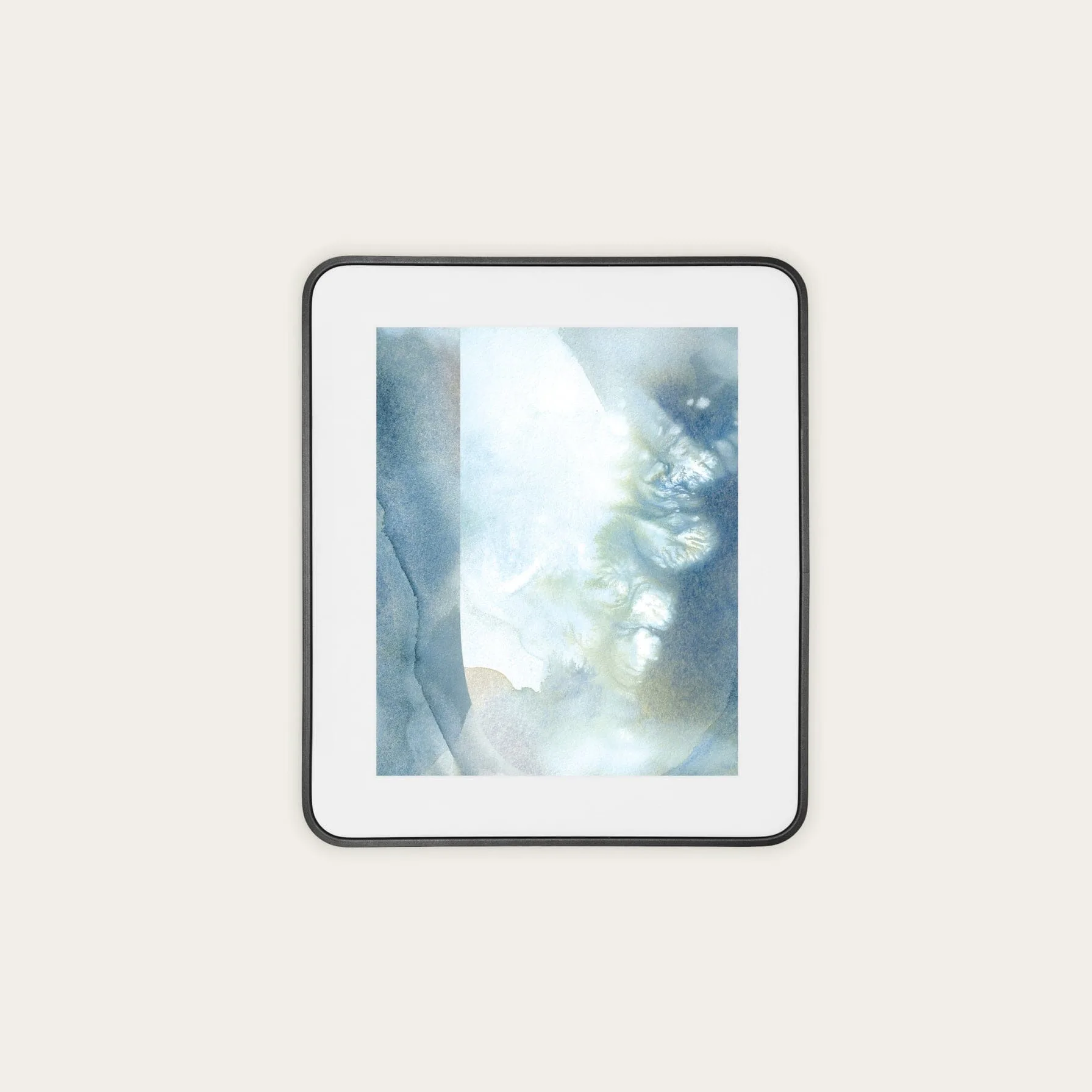
Reverie Print - 11 x 14"
Who should use this guide
Best for
- First-time art buyers unsure about proportions
- Anyone decorating a small to medium wall space (hallway, entryway, above a desk)
- Shoppers considering an 11x14 print as part of a gallery wall or in a narrow area
Not for
- Large empty walls over 60 inches wide that need a single statement piece larger than 30x40 inches
- Spaces where the art must cover a specific structural element like an electrical panel