Start with what the shelf needs to hold
A wall shelf in a small kids' room earns its place by doing more than one job. In the nursery it can hold baby essentials; as your child grows, it can display favorite knick-knacks, photos, and more. That shift in use is the best starting point for planning: decide whether you need mostly storage now, mostly display later, or a mix of both.
The Piccalio Wall Shelf is designed for exactly that kind of long-term use. It is safety certified, ethically and sustainably made, and built with sturdy construction and ample storage. Those supplied details tell you what the shelf is meant to do, but they do not prescribe a mounting height or a weight limit. Use the steps below to make your own plan, and check the shelf's included instructions for installation specifics.
Three wall shelf layouts that work in a small room
These layouts are starting points, not rules. Adjust them to your room's shape and your child's reach.
- The reading ledge: Place one shelf at a height your child can reach from a bed or floor cushion, and use it for a rotating selection of books. This keeps toddler books visible and inviting without taking up floor space.
- The toy storage strip: Use a longer shelf or a row of shorter ones to hold small bins, baskets, or toys that otherwise clutter the floor. Keep heavier items toward the middle of the shelf and lighter items at the ends.
- The display gallery: Reserve a higher shelf for photos, art, and knick-knacks that your child can enjoy looking at but does not need to handle. This is where the shelf's role shifts from storage to display as your child grows.
Choosing a height for toddlers and big kids
The supplied information does not specify a recommended wall shelf height for toddlers, so there is no single number to copy. Instead, use your child's reach as the guide. For a toddler, a shelf they can touch without climbing is the goal; for an older child, a slightly higher shelf can hold display items safely out of a younger sibling's reach.
Before you drill, hold the shelf at the planned height and watch your child approach it. If they need to stretch or climb to reach the items you want them to use, lower it. If they can easily pull down items you want to keep displayed, raise it. This simple check is more reliable than a generic measurement.
What the Piccalio Wall Shelf gives you
-
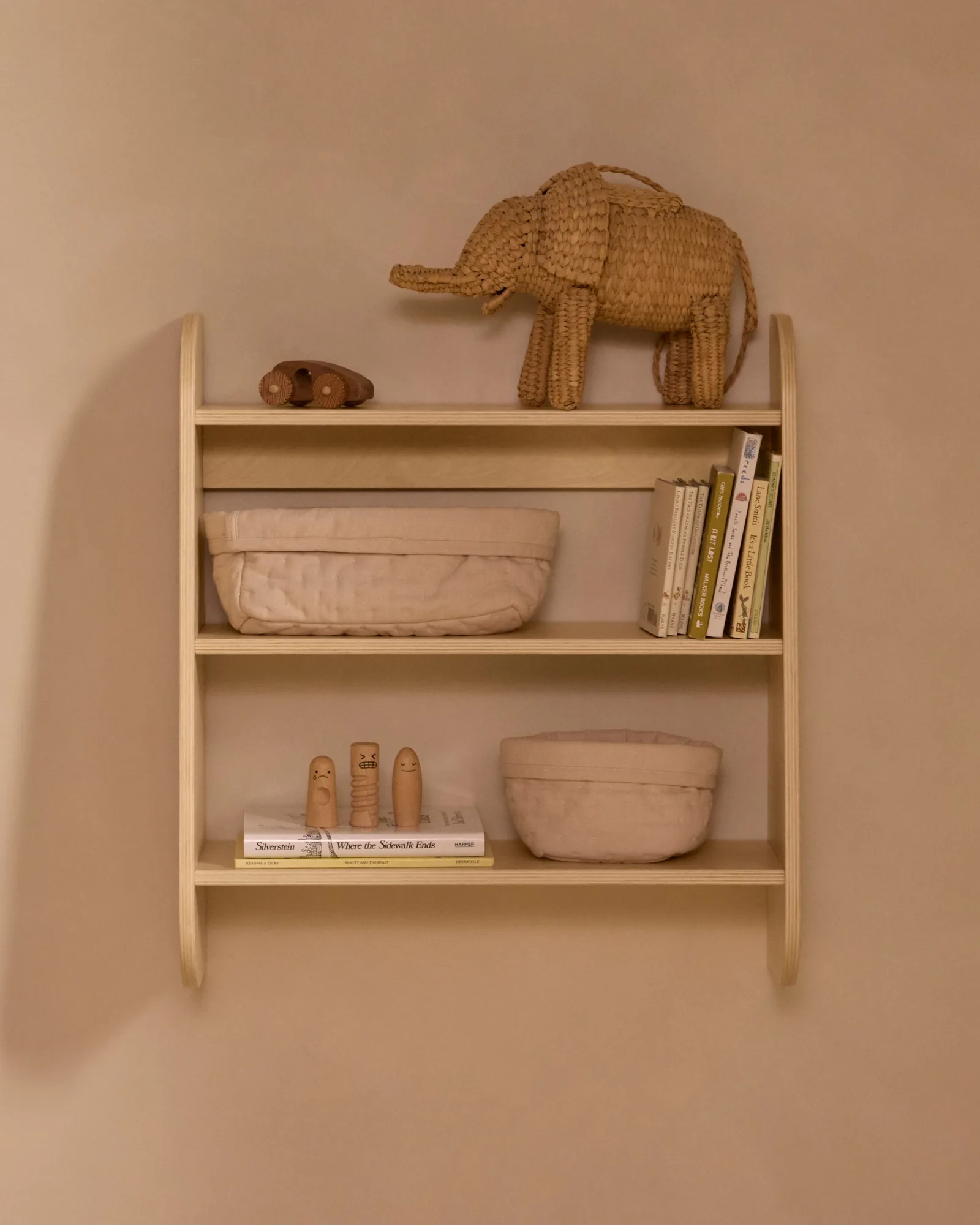
Wall Shelf: The Wall Shelf is here for every stage of your child’s life. This supports choosing a shelf that can shift from nursery storage to big-kid display without replacing it.
Wall Shelf
-
Wall Shelf: Store baby essentials in the nursery and then your big kid’s favorite knick-knacks, photos, and more. It confirms the shelf is intended for both practical storage and display, which helps you plan a layout that changes with your child.
-
Wall Shelf: Safety certified. This is a relevant starting point for a kids' room, though you still need to follow the supplied installation instructions.
A simple planning process before you install
Work through these steps in order. They help you avoid buying or mounting a shelf that does not fit your room or your child.
- Step 1: Measure the wall space: Check the width and height of the wall area you have in mind. Leave room for doors, windows, and furniture. The Wall Shelf's exact dimensions are not included in the supplied information, so confirm them from the product listing before you commit to a spot.
- Step 2: Decide what goes on the shelf now: List the items you want to store or display in the next six months. This prevents you from planning a shelf that is too small or too large for your actual needs.
- Step 3: Set a height by reach, not by habit: Use the reach test described above. Mark the height lightly with pencil and check it with your child before drilling.
- Step 4: Follow the supplied installation instructions: The supplied information does not include mounting hardware, weight limits, or wall-type guidance. Use the instructions that come with the shelf, and choose hardware suited to your wall.
Styling tips for books, toys, and display
A shelf that is easy to use stays tidy longer. These tips apply whether you choose the Birch finish or another color option.
- Face books outward for toddlers: A floating wall shelf for toddler books works best when a few covers face out. Rotate the selection every week or two so the shelf does not become crowded.
- Use small bins for toy storage: Open shelves can collect clutter. Small baskets or bins corral loose toys and make cleanup faster for little hands.
- Keep display items light and stable: Photos and knick-knacks should sit securely. Avoid stacking heavy items high, and keep the most fragile pieces on a shelf your child cannot easily reach.
- Leave breathing room: An overcrowded shelf is harder to use and harder to clean. Aim for empty space between groups of items.
What to check before you buy
The supplied information confirms the Wall Shelf is safety certified, ethically and sustainably made, and built with sturdy construction and ample storage. It also lists a Birch color option. What it does not confirm is a specific weight capacity, mounting hardware, or care instructions. Those details matter for a kids' room, so ask the retailer or check the product page before purchasing.
If you need a shelf that can handle heavy books or large toy bins, confirm the weight limit first. If you are renting or have unusual wall construction, confirm the mounting method. And if you want the shelf to match a specific room palette, check the available color options beyond Birch. The Wall Shelf is a strong candidate for a small kids' room because it is designed to adapt from nursery to big-kid use, but the right installation still depends on your wall and your child.